Ice kenkey
Chilled cooked kenkey blended with water, pasteurised milk and yogurt. Use recently cooked, correctly refrigerated kenkey; never age it in a warm place.
Ingredients
- 400 g fully cooked correctly refrigerated kenkey, unwrapped
- 400 ml cold drinking water, plus 50 to 100 ml if needed
- 400 ml chilled pasteurised milk
- 100 g pasteurised plain yogurt
- 30 g sugar
- 40 g unsalted roasted groundnuts, optional at serving
Preparation
Use recent fully cooked refrigerated kenkey. Unwrap with clean hands and reject any suspect product; do not age it warm.
Cut 400 g into small pieces and blend with 400 ml cold water in a clean blender, in short bursts.
Add milk, yogurt and sugar; blend smooth and fluid. Stop before scraping near the blades.
If too thick, add reserved 50 to 100 ml water gradually. Taste with a clean spoon and retain a little cereal acidity.
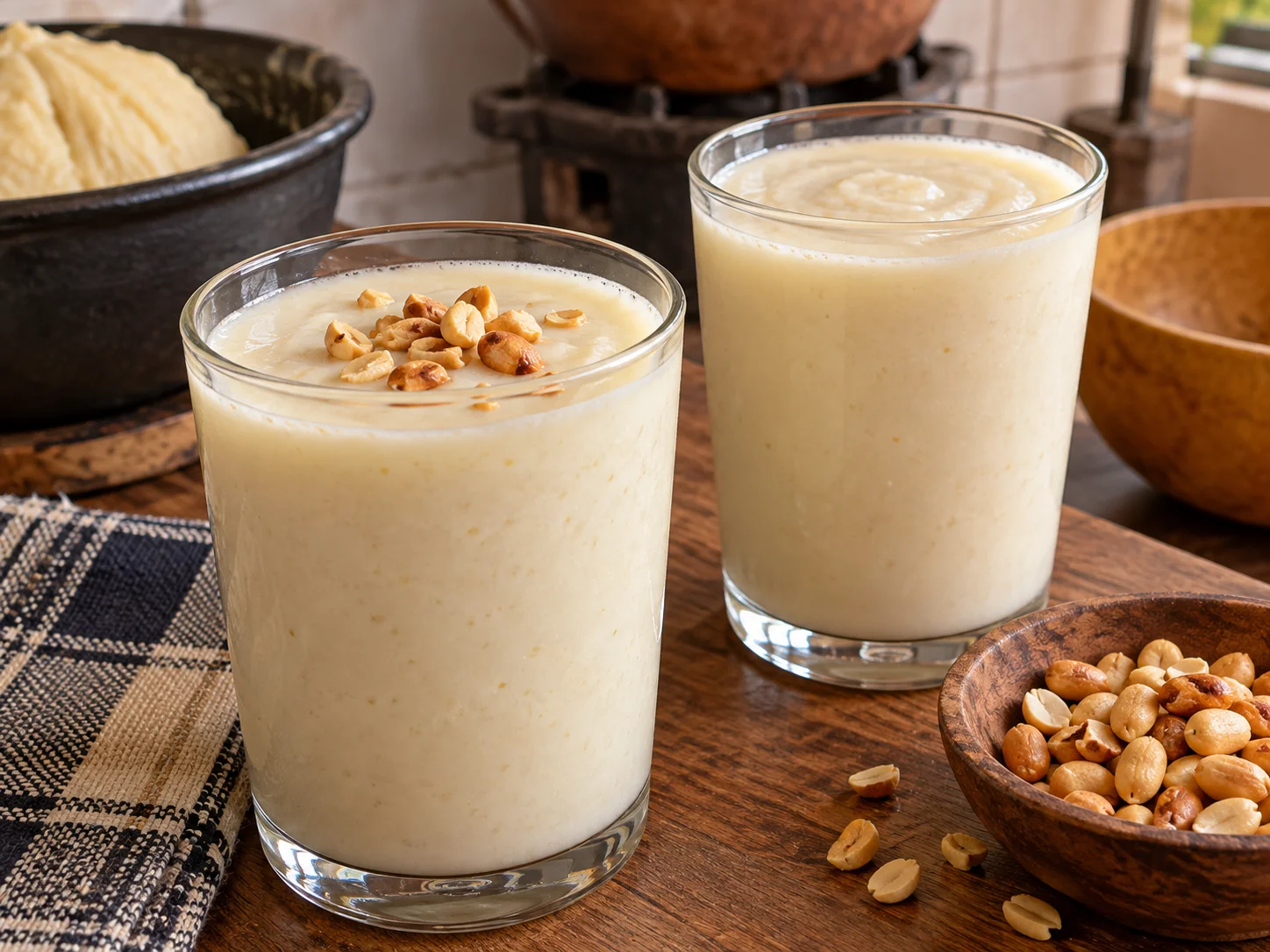
Divide into 4 glasses or bowls. Add optional peanuts only at serving and identify the allergen. Serve immediately or refrigerate promptly and consume the same day.
Introduction
Chilled cooked kenkey blended with water, pasteurised milk and yogurt. Use recently cooked, correctly refrigerated kenkey; never age it in a warm place.
Cultural context
Fafa Gilbert documents ice kenkey with water or milk and yogurt variations. This is a chilled dairy adaptation using recently cooked, refrigerated kenkey, without warm ageing.
Tips
Use clean equipment and measure the stated ingredients. Observe texture and check the finished preparation before serving.
Blenders handle volumes differently. With a small jug, make two half-batches in the same proportions and combine in a clean vessel. Do not exceed maximum capacity. Cut kenkey small enough to circulate in the liquid. Stop the machine completely before opening or scraping. Increasing speed gradually reduces splashes and reveals an overly thick mixture before straining the motor.
Use reserved water to adjust fluidity after the first blend. Equal-weight kenkey portions can have different moisture. Add fifty millilitres, blend and observe rather than adding all the reserve. Retain enough thickness for maize flavour, without dry blocks. Major dilution changes serving size and per-glass estimates; record adjustments to reproduce your preference.
Use cold, pasteurised dairy products and plain yoghurt without fruit or added sugar. Sweetened condensed milk cannot replace ordinary milk volume for volume: it substantially changes sweetness and texture. For a plant-based version, use a suitable drink and omit dairy yoghurt or clearly identify its replacement. Recalculate nutrition and check the replacement's allergens.
Last-minute peanuts add crunch and make omission easier for an allergic person. Do not share utensils between that topping and their drink. The forty grams are for the whole batch, roughly ten grams per glass. The photo is a serving suggestion with a topping on one glass, not a requirement for the base mixture. Kenkey flavour remains clear without it.
Keep chilled after blending. A thick drink in a large jug warms slowly but remains perishable; touching the glass does not establish safety. Serve small amounts, keeping the reserve refrigerated. Stir if slightly separated. Consume the same day and never pour a partly consumed glass back into the jug. It is not shelf-stable, and fermented kenkey does not guarantee prolonged preservation.
Serving
Serve promptly with separate accompaniments and identify ingredient allergens.
Storage
Refrigerate immediately at 4 °C or below and consume the same day. Keep garnish separate.
Variations
Substitutions change the texture, cooking method and nutritional estimate; identify them clearly.
Nutrition notes
Estimated values per stated portion; accompaniments and optional garnishes are separate. Actual yield and ingredients may vary.