Lamugin
Chilled strained ginger and cooked-rice drink with lemon; an unfermented household adaptation.
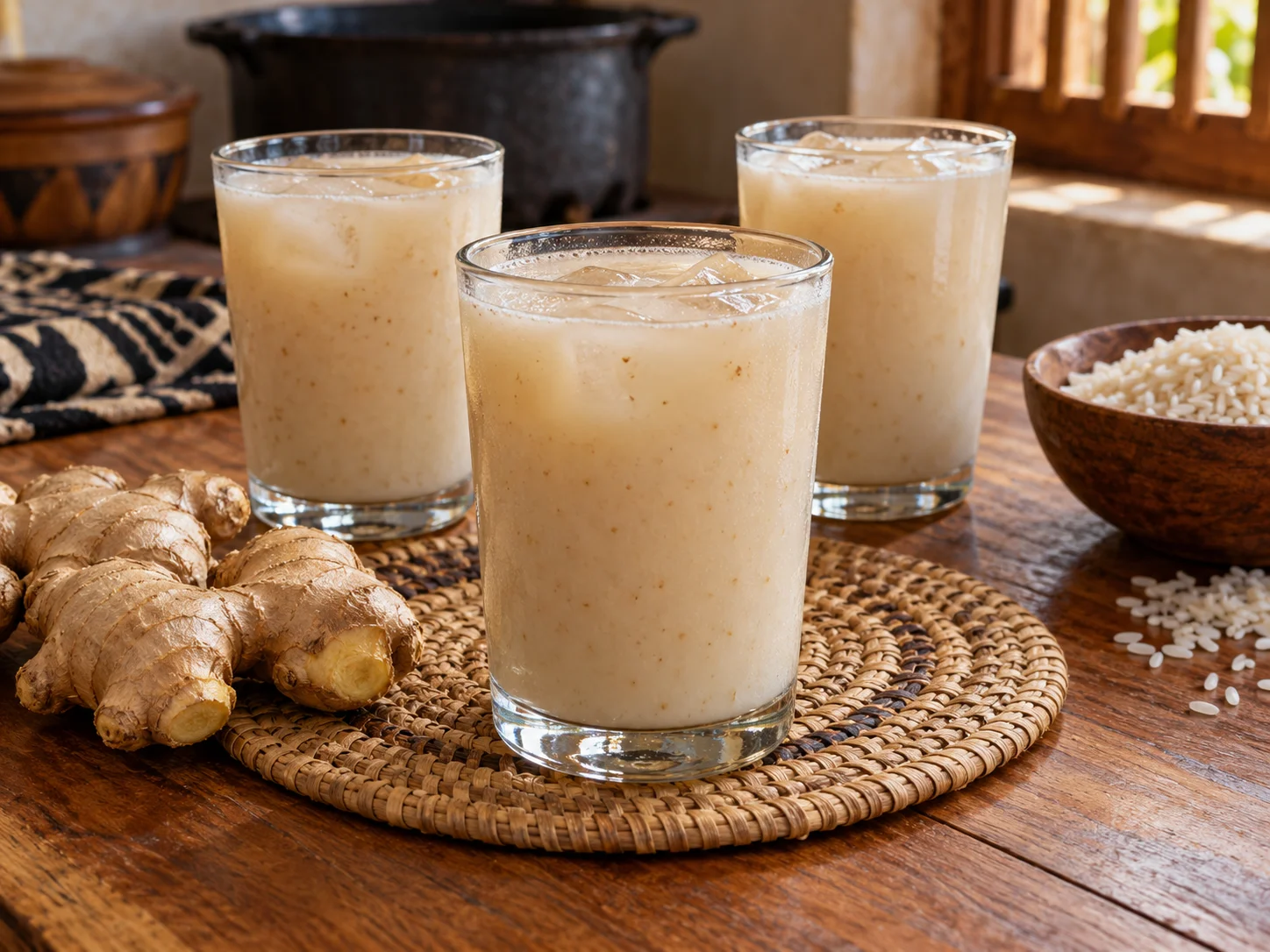
Ingredients
- 100 g fresh ginger, weighed after peeling
- Up to 1.2 litres drinking water: 300 ml rice, 700 ml ginger; adjust final yield
- 60 ml freshly squeezed seedless lemon juice
- 50 g sugar, adjusted to taste
- 30 g rinsed uncooked white rice, cooked for this adaptation
Preparation
Cook rice in 300 ml water about 15 minutes until tender. Keep its cooking liquid and cool slightly.
Clean equipment. Wash ginger, peel thinly, weigh 100 g flesh and grate into a large heatproof vessel.
Boil 700 ml water, approximately 5 minutes depending on equipment. Carefully pour over the ginger.
Cover loosely and infuse for 30 minutes. Meanwhile squeeze and strain 60 ml lemon juice.
After steeping, blend cooked rice and its liquid with the cooled ginger infusion. Strain finely into a clean vessel and discard retained solids.
Dissolve 50 g sugar, add 60 ml lemon juice and top up with drinking water to 1.2 litres total.
Cool quickly, for example in a cold-water bath, then cover and refrigerate for one hour. Do not leave a large lukewarm pitcher standing on the counter.
Stir and serve 4 chilled glasses of about 300 ml.
Introduction
Lamugin is a Ghanaian ginger drink with rice or millet. This announced household adaptation cooks the rice instead of soaking and grinding raw grain. It is not fermented. Lemon replaces the tamarind used in some versions; a slight cloudy texture is intended.
Tips
💡 Weigh ginger after peeling.
🍋 Measure juice, not lemon count.
🫖 Use heatproof equipment.
🥄 Taste a cooled sample.
🧊 Keep refrigerated until serving.
👩🏾🍳 Use a grater, heatproof bowl, fine sieve and pitcher. The 700 ml hot and 300 ml cold water make one litre; lemon juice is additional. Straining retains some liquid. Heating time varies with equipment.
Rice provides a little body, not most of the drink. Weigh its thirty grams dry, then cook it in the reserved three hundred millilitres. Keep that liquid for blending to retain the starch wanted. Once mixed with ginger and strained, it should remain a fluid drink. If it becomes a thick mass, check that thirty grams of rice were not mistaken for three hundred: restart with properly measured quantities rather than trying to dilute a major error without a reference.
Measure yield after straining. Ginger fibres and rice particles retain varying amounts of liquid. Top up in a measuring jug to one litre two hundred millilitres, rather than automatically adding the entire water reserve. Lemon and sugar already count towards this volume. Slight separation on standing is normal: stir before serving. Refrigerate promptly after mixing and consume the same day; neither ginger nor perceived acidity preserves the drink at room temperature.
Serving
🍽️ Divide into four servings. Optional accompaniments, extra water and ice are not included in the quantities or nutrition estimates.
Storage
❄️ Cool promptly, cover and refrigerate; preferably use within 24 hours. Keep out of direct sun. Use clean tasting utensils, never return served portions to the pitcher and discard unusual-smelling drink. Lemon acidity does not allow room-temperature storage.
Variations
🔄 Reduce ginger in a future batch for a gentler flavor. A small washed mint sprig may infuse and be strained out. Pineapple juice changes sweetness, acidity and dilution. Dry ginger is not a gram-for-gram substitute.
Accompaniments
🍽️ Serve small glasses with a meal or snack, especially for people discovering ginger’s bite. Offer plain water too. Optional ice dilutes the drink and is not included in the recipe volume.
Nutrition notes
📊 Energy mainly reflects 50 g sugar divided into four portions. Much of the ginger is strained out, so estimates are approximate and fibre is low. No standard vitamin content or medical benefit is claimed.