Bofrot
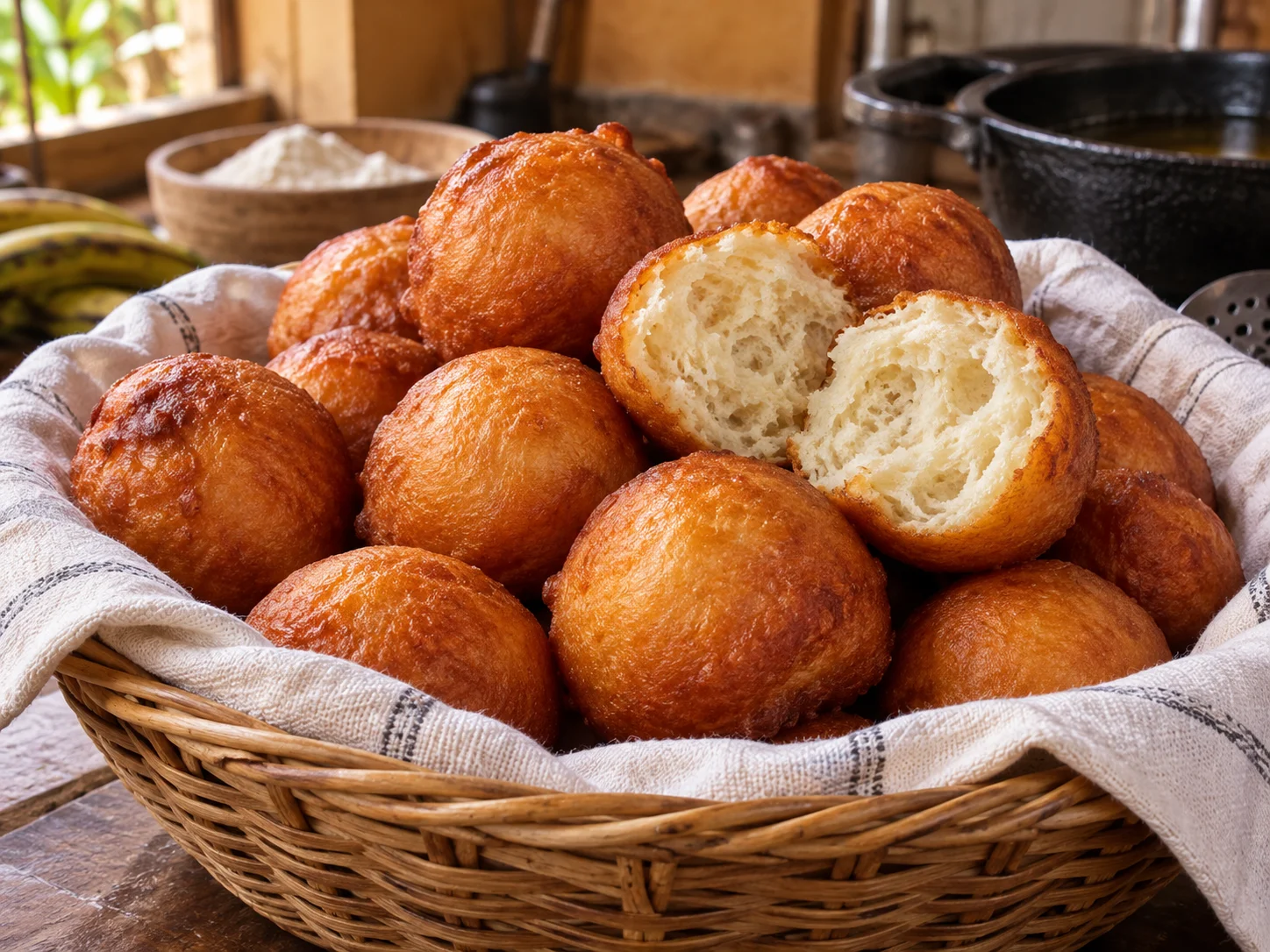
Soft and golden sweet doughnuts, a popular West African snack served at parties and celebrations.
Ingredients
- 500g all-purpose flour
- 100g sugar
- 1 sachet active dry yeast (7g)
- 1/2 teaspoon salt
- 1/2 teaspoon ground nutmeg
- 400ml lukewarm water
- Oil for deep-frying
Preparation
Mix flour, sugar, yeast, salt, and nutmeg.
Gradually add lukewarm water, mixing to obtain a smooth batter.
Cover and let rise in a warm place for 1 hour 30 minutes until doubled in size.
Heat oil to 170–175°C (350°F) in a deep fryer or pot.
Using a spoon or oiled hands, form balls of dough.
Gently drop the balls into the hot oil.
Fry for 5-6 minutes, turning until uniformly golden brown.
Drain on absorbent paper.
Serve hot or at room temperature.
Introduction
Bofrot is one of West Africa's most popular sweet snacks: small balls of leavened dough, deep-fried until golden brown on the outside and fluffy on the inside. The recipe seems very simple, with flour, yeast, sugar, water, salt, and sometimes nutmeg, but it requires a real sense of fermentation and frying.
It is found at parties, birthdays, weddings, church gatherings, markets, and street stalls. It is part of the "small chops," these small bites served before or during West African celebrations with samosas, spring rolls, mosa, or meat pies.
A good Bofrot should be light, soft, slightly elastic, and fragrant. Too much flour makes a heavy dough; too short a rise results in a compact doughnut; oil that is too cold makes it greasy. Its simplicity therefore hides a precise technique.
Cultural context
Bofrot is a Ghanaian yeast-raised fried snack, related to puff-puff elsewhere. This version uses soft water-based batter without egg or milk, with nutmeg. It differs from plantain kakro and tatale. Firmer-dough bofrot needs other proportions.
Tips
Use lukewarm water, never hot, to avoid killing the yeast.
The dough should be soft and sticky, not firm like bread dough.
Let it rise until the dough is puffy and full of bubbles.
Do not overmix after rising, otherwise it will deflate.
Keep the oil around 170-175°C (340-345°F) for even cooking.
Form small balls so that the center cooks well.
Drain on a rack or absorbent paper and serve quickly.
Yeast works before frying. Use a bowl large enough for the batter to double without overflowing. Cover with a loose lid or clean cloth, away from scorching heat. A cool room slows rising; excessive heat can damage yeast. Look for expansion and many bubbles instead of relying only on time. If nothing happens after a long wait, check yeast freshness and starting temperature before frying. Unrisen batter stays dense even in properly heated oil.
Use the first portion to adjust. With two small spoons, gently release a walnut-sized amount near the oil's surface, without splashing or dropping from a height. Let it colour, turn it, briefly cool and cut open: the centre must have a formed crumb with no sticky raw band. If the outside browns too fast, lower temperature and reduce size slightly. Adding flour to the whole bowl does not automatically correct an oversized portion.
Keep subsequent portions the same size. Fill the pot only one third with oil, leaving room between pieces for turning. The water in the batter can cause foaming, so spare space is necessary. Small batches lower oil temperature less and fry more evenly. Remove dark crumbs between batches with a dry utensil. Never cool the oil with water or hold wet spoons over it.
Soft batter need not form perfect spheres. A slightly irregular fritter is good if its middle is light and surface golden. Do not box it while hot: condensation softens the crust. Drain on a rack in one layer and serve warm. The ten reference servings equal two or three small pieces each, depending on yield. For gatherings, count and distribute pieces before offering seconds, rather than treating the entire bowl as one serving.
The sugar in the batter supplies this snack's sweetness. Extra sugar, cream or sweet sauce is a topping outside the proposed calculation. The batter contains neither milk nor egg, but does contain wheat and gluten. Never taste raw flour. For the next day, refrigerate after cooling and reheat briefly in the oven; texture will be less soft than on day one. Make an appropriate quantity rather than reheating repeatedly.
Variations
Nutmeg version: the most classic, with a warm and sweet aroma. Vanilla version: more dessert-like. Slightly spicy version: sometimes served as a sweet-savory snack. Milk version: richer crumb. Stuffed version: chocolate, jam, or cream in modern adaptations. Small chops version: small, regular balls for a buffet.
Accompaniments
Serve with tea, coffee, hot chocolate, zobo, ginger juice, or a cold drink. For a West African buffet, it accompanies samosas, spring rolls, meat pies, and fresh fruit. For dessert, it can be lightly dusted with sugar, but it remains best when its sweetness is not excessive.
Nutrition notes
Estimate for one tenth of the batch, about two or three small pieces, assuming 8 g oil absorbed per portion. Actual uptake varies. Yeast raises the batter without a digestive-health claim. No topping is included.