Kakro
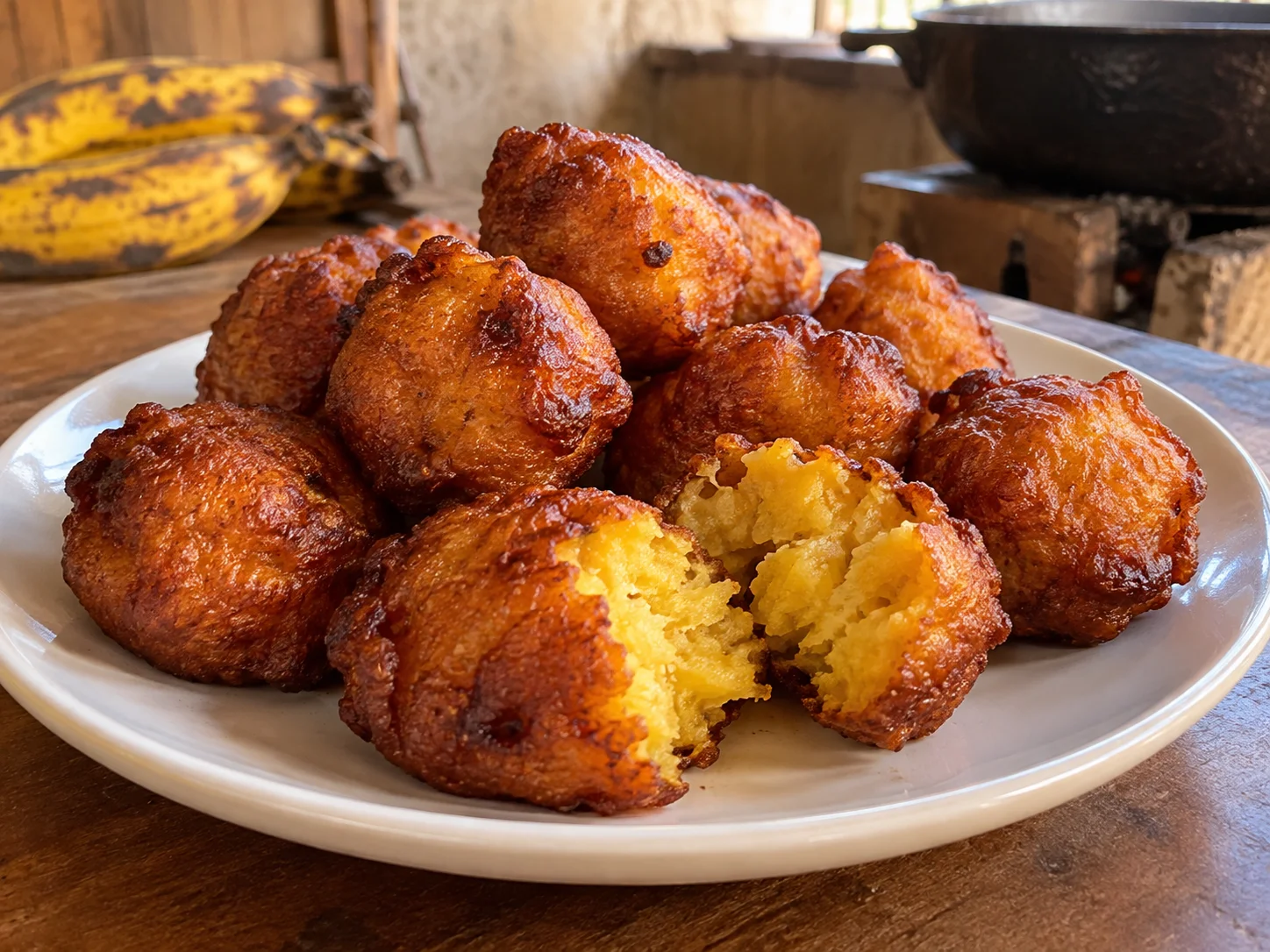
Small Ghanaian ripe-plantain fritter bites bound with wheat flour; distinct from flattened tatale.
Ingredients
- 600 g very ripe plantain flesh
- 100 g wheat flour, plus 10 to 20 g only if needed
- 80 g finely chopped onion
- 10 g grated fresh ginger
- 5 g fresh chilli, optional
- 3 g salt
- 1 litre frying oil for the bath, not entirely consumed
Preparation
Mash plantain without water. Mix in onion, ginger, optional chilli and salt.
Add 100 g flour and rest 5 minutes. Batter should hold on a spoon; add reserved flour gradually only if runny.
Heat oil to 170 °C in a stable pan no more than one-third full. Prepare a rack and two dry spoons.
Drop small walnut-sized portions without flattening, in spaced batches. Fry about 5 to 6 minutes, turning until golden.
Cool and cut the first bite: flour must be cooked without a doughy centre. Make smaller portions or cook longer over moderate heat if needed.
Drain on a rack and serve about 5 small bites per person, depending on yield. Keep them rounded rather than flat tatale.
Introduction
Small Ghanaian ripe-plantain fritter bites bound with wheat flour; distinct from flattened tatale.
Cultural context
Aftrad Village Kitchen documents kakro as a ripe-plantain snack. This wheat-flour version forms small fried bites, distinct from flattened tatale and diced kelewele.
Tips
Use clean equipment and measure the stated ingredients. Observe texture and check the finished preparation before serving.
A test portion lets you adjust cooking before using all the batter. Oversized bites colour outside while remaining wet in the centre. Make small walnut-sized portions rather than large balls and allow heat to reach the middle. Lower the heat if the crust darkens too quickly instead of waiting for a very dark surface. Plantain's natural sugars accelerate browning, so colour alone never proves the flour is cooked.
Leave plenty of space above the oil: fill the pot no more than one third, allowing room for batter and possible foam. Lower portions close to the surface with a spoon, never dropping from high up. Keep utensils dry and water away. Remove browned crumbs between batches. Do not overcrowd: bites need room to move and turn without tearing.
Finely chop aromatics; large onion pieces can detach and burn before the bite finishes cooking. Grate ginger to avoid long fibres in the crumb. If using a small processor, pulse without adding much water. Plantain texture should remain perceptible: a completely liquid purée needs extra flour and changes the intended result.
Drain in one layer to release steam. A deep plate full of hot bites quickly softens their edges. Use a rack or absorbent paper without immediately stacking. Serve warm rather than scalding to taste the fruit and avoid burns from the hot centre. Irregular shapes are fine: a light, fully cooked bite matters more than a perfect sphere.
To scale up, increase ingredients but retain the same bite size. A double batch mainly needs more rounds of frying. The stated time assumes a domestic pot and increases with a smaller oil bath. Prepare sauces before frying so the final pieces can go straight to the table. The litre of oil is the bath capacity, not the amount eaten: only a variable fraction is absorbed.
Serving
Serve promptly with separate accompaniments and identify ingredient allergens.
Storage
Keep covered at 4 °C or below. Follow the shorter storage limit in the instructions; do not leave over 2 hours at room temperature.
Variations
Substitutions change the texture, cooking method and nutritional estimate; identify them clearly.
Nutrition notes
Estimated values per stated portion; accompaniments and optional garnishes are separate. Actual yield and ingredients may vary.