Red meko
Fresh Ghanaian tomato, onion and red chilli sauce with a slightly coarse texture.
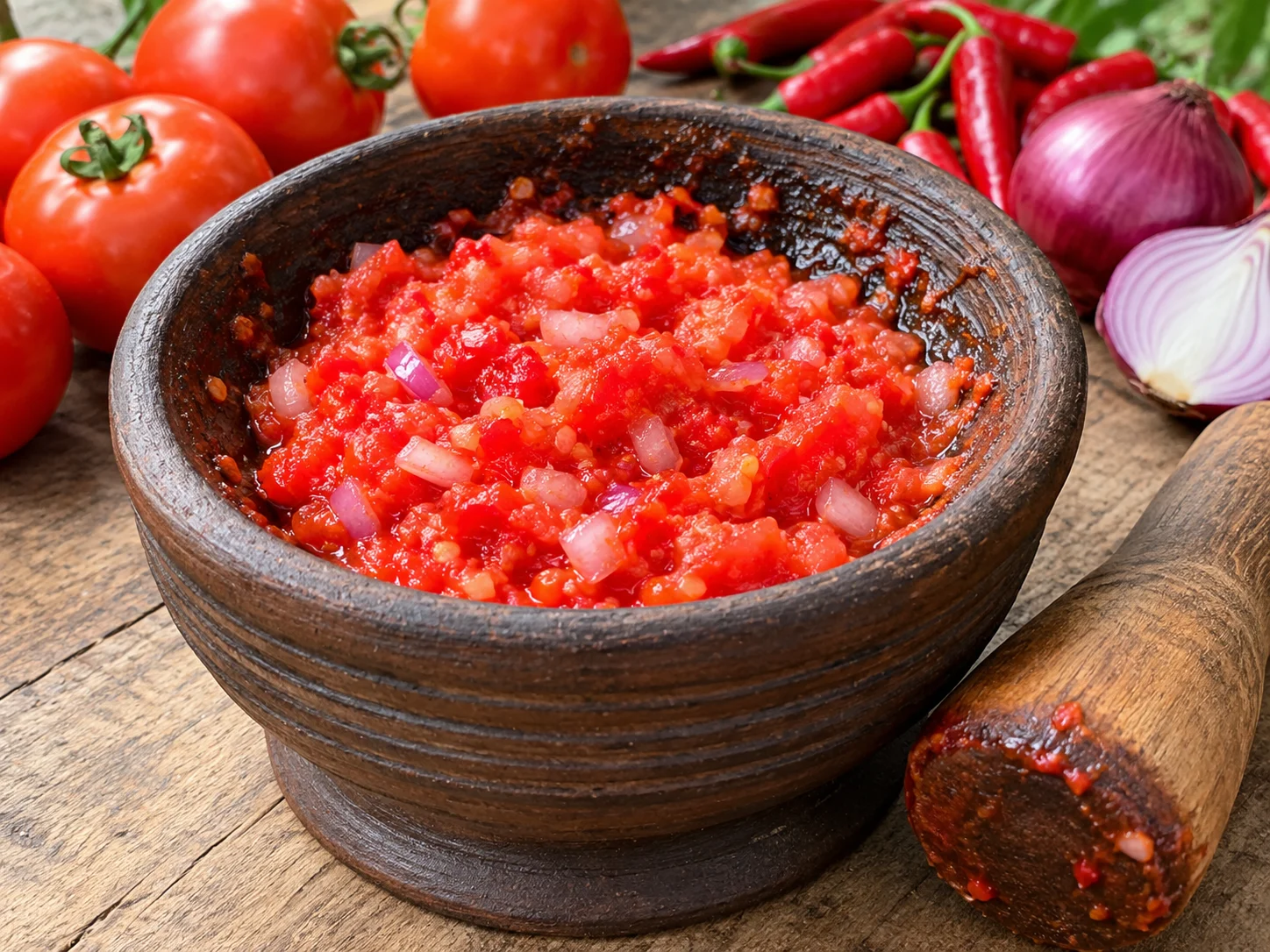
Ingredients
- 400 g firm ripe tomatoes
- 100 g peeled red onion
- 5 to 15 g fresh red chilli, according to strength
- 2 g fine salt
Preparation
Wash tomatoes and chillies with drinking-quality water and dry. Remove damaged parts. Prepare a clean food-safe mortar or asanka, pestle and serving dish; wash your hands.
Remove stems. Quarter tomatoes and drain 2 to 3 minutes without squeezing. Slice onion. Wear gloves if needed when handling chilli and avoid touching eyes.
Start by crushing 5 g chilli with the 2 g salt. Add half the onion and work with pressing and circular movements until well crushed but still textured.
Add tomatoes gradually, then remaining onion. Crush without turning into juice. With a small processor, use short pulses without water and scrape only when stopped.
Taste with a clean spoon. Gradually add reserved chilli if wanted, up to the stated total 15 g. Mix and wait briefly before deciding whether more heat is needed.
Transfer to a clean dish and serve immediately or cover and refrigerate promptly. The 8 portions are small condiment servings. Preferably consume the same day and within 24 hours refrigerated.
Introduction
Red meko keeps the taste of raw tomato and onion. It is neither simmered tomato sauce nor oily dark shito. Choose ripe but firm tomatoes; brief draining removes free juice without squeezing the flesh dry. A mortar lets you build the texture progressively: chilli and salt first, then onion and finally tomato. A clean food-safe mortar works if no asanka is available. A processor needs only short pulses; small fragments are preferable to a watery purée. Prepare close to serving.
Cultural context
Fresh tomato, onion and chilli sauces accompany Ghanaian starches and fish. Ndudu by Fafa distinguishes them from green sauces and dark shito. Meko refers to chilli in the usage described by this cook; red describes this selected version. Household proportions vary. This base contains no stock cube, oil, garlic or ginger, without excluding those ingredients in other versions.
Tips
Choose fragrant tomatoes without soft damaged patches. Keep flesh around the seeds; squeezing all the juice out changes yield and texture.
Cut onion small for easier crushing. The first half blends into the chilli base and the remainder can keep a little texture. Choose milder onion next time if necessary.
Chilli colour alone does not reveal strength. Begin with 5 g and keep the rest separate. Wash gloves, board and tools and avoid transferring chilli to eyes or handles.
Add tomato in stages. If the mortar is small, work in two batches and combine. Do not add water: tomatoes supply enough moisture.
This sauce is raw. Use sound vegetables, drinking-quality water and clean tools, separated from raw fish. Do not mix a long-exposed serving dish back into the chilled reserve.
The 2 g salt is for the whole batch, not each portion. Consider the salt in the accompanying fish or shito. Crushing salt at the start disperses it evenly.
Serving
Stir gently if juice separates. Use a dedicated spoon and let diners choose their amount. The image is generated internally.
Storage
Serve promptly. Cover and refrigerate at 4 °C or below for at most 24 hours. Do not leave at room temperature over 2 hours. Freezing softens the vegetables and is not preferred for this fresh texture.
Variations
Replace some tomato with sweet red pepper for a different flavour, or announce a little garlic or ginger as a variation. Roasting tomatoes requires a separate cooking and cooling method. Lemon or vinegar is not required, and perceived acidity does not guarantee safe storage.
Accompaniments
Serve separately with kenkey, banku, boiled yam or thoroughly cooked fish so everyone controls the heat. It has no oil and is not automatically a salad dressing. The 8 servings exclude fish and starch.
Nutrition notes
A small serving supplies little energy and some fibre, but does not replace a full vegetable portion. Estimates divide ingredients between 8 portions; draining slightly changes yield. Vitamins and minerals are unmeasured. Chilli is a flavouring, not a medical or antimicrobial claim.