Shito
Dark Ghanaian chilli condiment with smoked dried fish and dried shrimp, slowly reduced in oil.
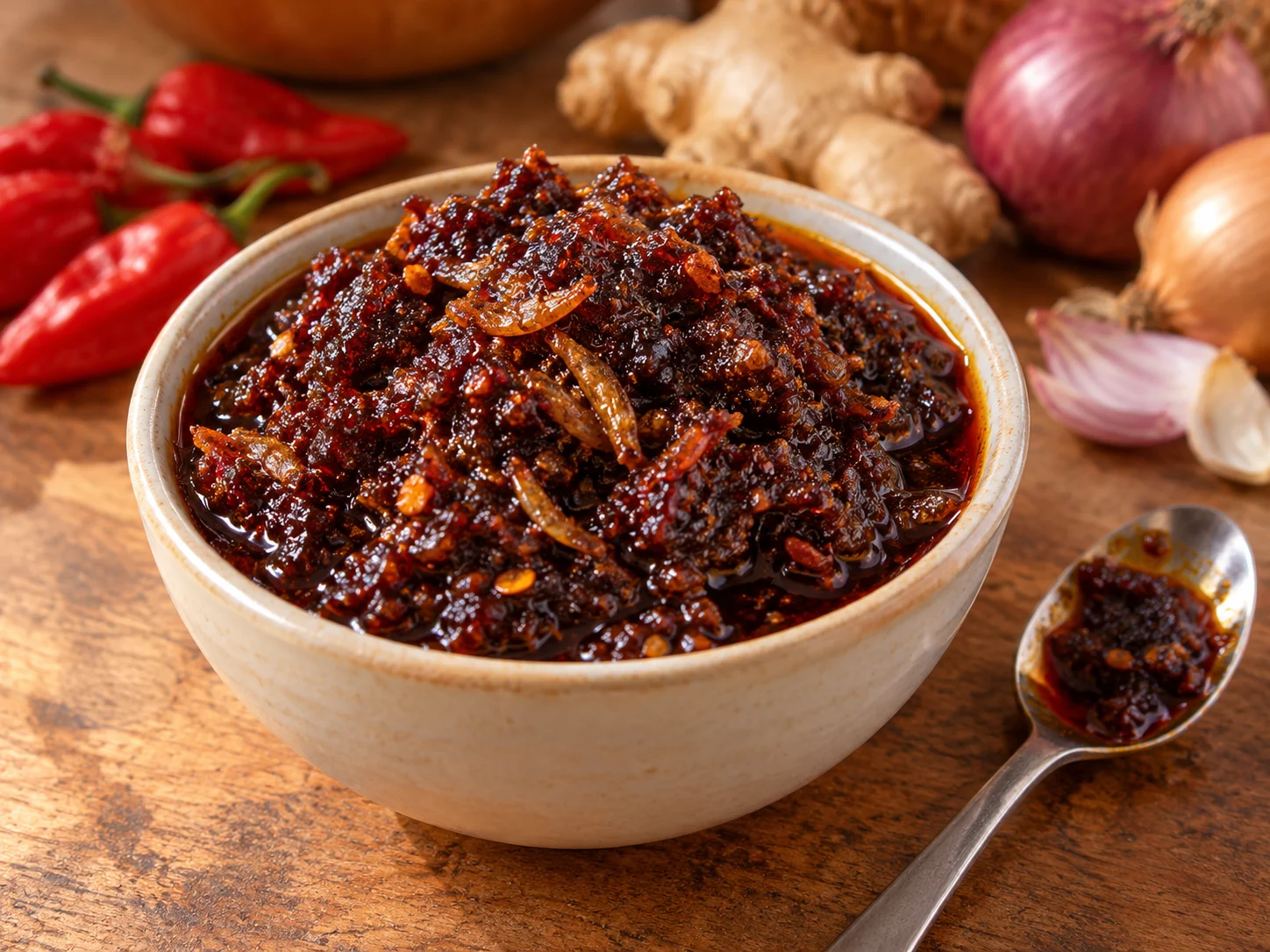
Ingredients
- 150 ml neutral oil
- 250 g peeled onions
- 30 g peeled fresh ginger
- 15 g peeled garlic
- 30 g tomato paste
- 15 g ground dried red chilli, reduced according to strength
- 50 g dried smoked fish, deboned and ground
- 25 g food-grade dried shrimp, ground
- 50 ml water for blending
- 0 to 2 g salt, only after tasting
Preparation
Debone the fish before grinding. Check the dried shrimp and reject damp, mouldy or rancid products. Weigh the powders and prepare a heavy pan, spatula and clean cooling containers.
Slice the onions. Blend garlic and ginger with the 50 ml water. Heat the 150 ml oil over medium-low heat, add onions carefully and cook 15 minutes, stirring, until very soft and lightly golden.
Add the garlic-ginger purée. Cook gently 10 minutes, stirring often. Keep your face and hands away from initial splashes. Do not seal the lid; water must evaporate.
Stir in tomato paste and cook 5 minutes. Add chilli, fish and shrimp powders, stirring immediately to coat the particles and prevent scorching.
Cook about 25 minutes over very low heat, stirring the bottom and corners frequently. The paste becomes deep reddish brown with oil visible around it. Stop if it blackens or smells burnt; do not carbonise it for colour.
Cool a small spoonful before tasting. Add up to 2 g salt only if needed, since dried seafood may already be salty. Remove from heat when thick, dark and still supple.
Transfer to small clean shallow containers. Cool about 20 minutes, then refrigerate promptly, within 2 hours of cooking. Yield varies with evaporation; divide into 20 small condiment portions.
Serve a little with waakye, kenkey, rice or yam, using a clean spoon. Refrigerate and use within 3 days as a cautious household limit, or freeze extra portions promptly.
Introduction
Shito is concentrated seasoning rather than a large serving of sauce. Slowly softened onions form the base, garlic and ginger provide aroma, and dried seafood adds smoky savouriness. Start with less chilli if its strength is unknown. Moisture must evaporate gradually before the final texture develops. Visible oil does not prove that the sauce is sterile or shelf-stable. This domestic method is for short refrigerated storage, not canning. Aim for deep reddish brown without burnt aromatics.
Cultural context
Ghanaian dark shito accompanies rice, waakye, kenkey and banku. It differs from fresh red tomato-pepper sauces and green chilli sauces. Household versions vary in oil, heat and seafood. This version explicitly contains fish and shrimp and is unsuitable for vegans or people allergic to either.
Tips
Grind only thoroughly deboned fish; check seafood powders for added salt and stock seasonings. Do not try to rescue spoiled ingredients by cooking longer.
Slice onions finely and soften gently. Pan width affects evaporation; observe tenderness, aroma and colour rather than increasing heat to force the timing.
After adding powders, stir the whole bottom and corners often. If a burnt layer develops, do not scrape it into the condiment.
Cool a spoonful before tasting: oily paste retains heat, and chilli intensity can emerge after a delay. Serve separately for individual dosing.
Cool in several small containers and date them. An oil layer does not permit long room-temperature storage. Freeze portions intended for later use.
Serving
Serve separately and clearly identify fish and shellfish allergens. The image is an internal generated illustration, not a photograph of a cooking test.
Storage
Refrigerate promptly at 4 °C or below and use within 3 days, or freeze extra portions. Use a clean spoon and do not return served condiment to the stored batch.
Variations
Reduce chilli at the start for a milder batch. The 25 g shrimp may be replaced by deboned dried fish; fish allergen and salt still require attention. A mushroom-based vegan version needs a separate formulation and nutrition estimate. Adding water is not a substitute for reducing chilli.
Accompaniments
Offer a small dish with waakye, kenkey, plain rice, yam fries or a sandwich. Adjust other oily or salty sauces accordingly. The 20 servings are condiment portions only; starch, extra protein and drinks are excluded.
Nutrition notes
The estimate divides all oil and ingredients between 20 portions. Evaporation changes final weight and seafood powders vary in salt. The condiment mainly provides fat and a little seafood protein. Chilli and ginger are flavourings without therapeutic claims; vitamins and minerals are not measured.