Tatale
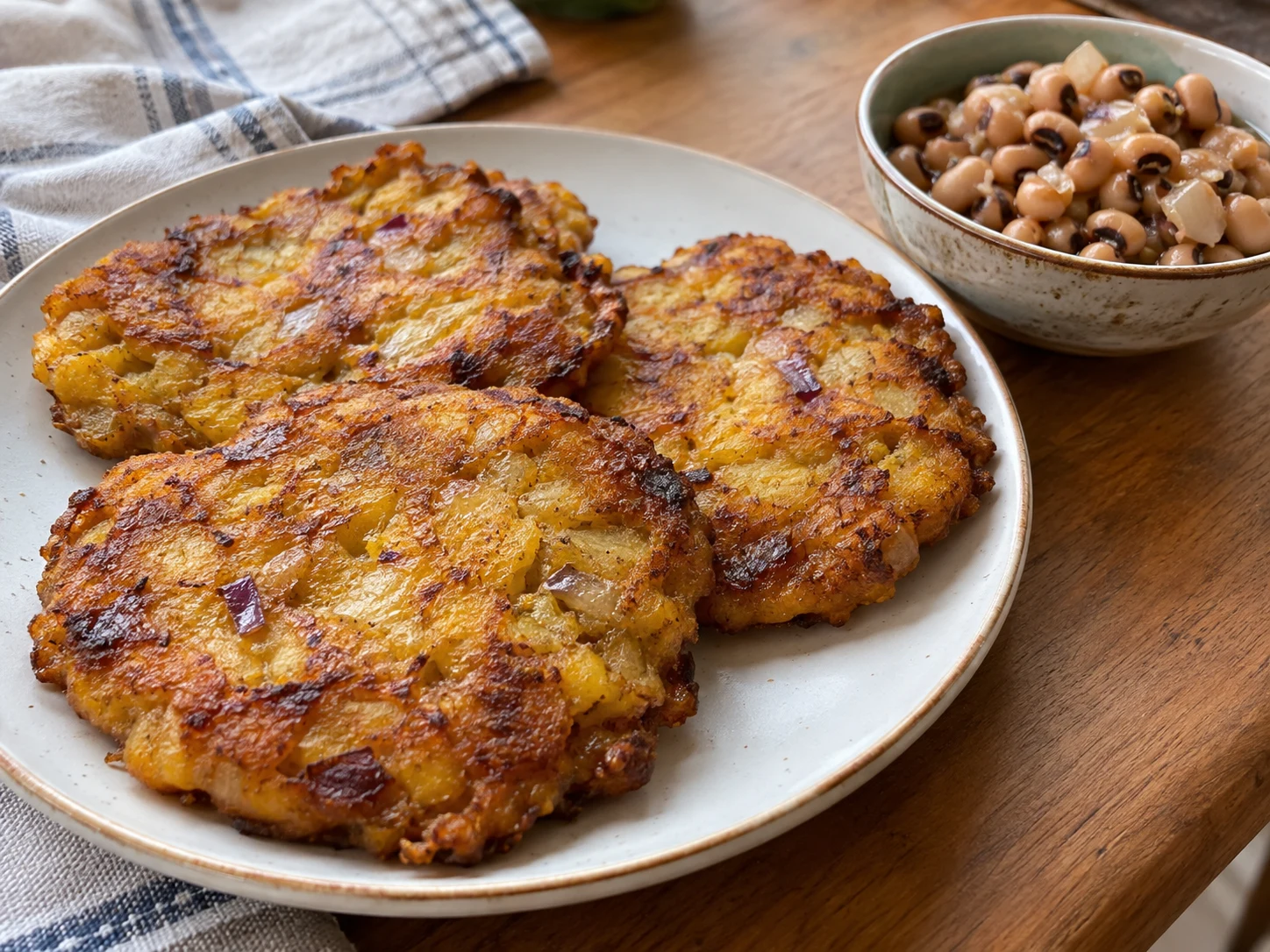
🍌 Ghanaian very ripe plantain pancakes with onion, ginger and chilli, cooked until golden in a frying pan.
Ingredients
- 600 g peeled very ripe plantain, approximately 3 large fruits depending on size
- 60 g fine maize flour, plus only 10–20 g extra if too runny
- 1 small onion, about 80 g
- 10 g peeled fresh ginger
- ½ small fresh chilli, to taste
- 3 g salt
- About 80 ml neutral oil, used gradually for cooking; not necessarily all absorbed
Preparation
1️⃣ Wash the outside of the plantains, peel and weigh 600 g flesh. Cut and mash with a fork in a large bowl. Keep some texture rather than blending to a liquid, which makes portioning harder.
2️⃣ Finely grate the ginger. Very finely chop onion and chilli, or pound without adding water. Large onion pieces can break away and burn. Drain any excess liquid from the aromatics.
3️⃣ Mix aromatics into the plantain, then add 60 g maize flour and 3 g salt. Rest for 5 minutes to hydrate. The batter should sit softly on a spoon and spread a little, not run in a stream.
4️⃣ If still very runny, add extra flour 5 g at a time. Too much makes the pancakes floury and masks the fruit. Do not add water automatically: plantain and onion already contain moisture.
5️⃣ Heat a heavy frying pan over medium heat with a thin layer of oil. Add a small test portion and flatten to about 8 mm thick. It should sizzle moderately. Reduce the heat if edges blacken within a minute.
6️⃣ Form pancakes about 7–8 cm across, leaving room to turn. Cook for about 3–4 minutes on the first side, until edges set and the underside is golden. Slide a thin spatula underneath and turn carefully.
7️⃣ Cook the second side for another 3–4 minutes. Cut the test pancake: the flour should be cooked without a raw batter band in the middle. Adjust thickness and heat, rather than using fierce heat. Add a little oil between batches if needed.
8️⃣ Drain on a rack or absorbent paper and serve hot. Do not stack immediately because trapped steam softens the edges. Divide twelve pancakes into four servings of three and offer sauces separately.
Introduction
Tatale turns very ripe plantain into a savoury pancake with natural sweetness. It is neither a fried plantain slice nor a round yeast doughnut. Mash the fruit with aromatics, bind with a little flour and shallow-fry flattened portions. The edges become golden while the centre remains soft. Onion and chilli balance the fruit without added sugar. Choose yellow plantains heavily spotted with black, with sound flesh and no mould or abnormal smell. Green plantain will not produce the same batter with these quantities. This version uses fine maize flour and a thin layer of oil. It makes about twelve small pancakes, or three per person.
Cultural context
Tatale is a Ghanaian plantain preparation often paired with bambara beans, aboboi. Tender golden pancakes contrast with the cooked legumes. This does not mean every family uses the same flour or seasoning. Kakro may be shaped into different plantain fritters, while kelewele consists of spiced fried plantain pieces. Keeping the names distinct avoids treating different techniques as interchangeable. This is an explicitly measured home adaptation. Culinary reference: https://www.timeout.com/accra/food-and-drink/traditional-ghanaian-recipes-tatale
Tips
Do not add sugar to compensate for unripe plantain; it will not fix the texture.
Small pancakes turn more easily than one large fragile pancake.
Chop aromatics finely instead of adding blender water.
Aim for golden brown, not a black surface.
Record any extra flour used to guide the next batch with similarly ripe fruit.
Planning
Weigh the peeled fruit; the number of plantains is only a shopping guide. Fine maize flour is not coarse maize meal, which needs different hydration, nor pure corn starch, which behaves differently. A heavy pan spreads heat evenly. Let the first side set before moving it: turning too early tears even correctly formulated pancakes. Ripe plantain browns quickly, so inspect the first underside rather than simply raising the heat.
Serving
Arrange in one layer and serve beans or sauce in a separate bowl. The internally generated illustration is not a photograph of a tested batch.
Storage
Refrigerate leftovers in a shallow container within two hours and use within two days. Separate layers with baking paper after cooling. Reheat in a pan or oven until hot through; the texture will soften. Refrigerate uncooked batter during a short wait instead of leaving it on the counter.
Variations
Omit chilli and serve it separately, keeping onion and ginger. Wheat flour or mixed-flour versions must be labelled and disclose gluten; amounts are not necessarily interchangeable. Keep any extra spice modest so plantain remains recognisable. Oven or air-fryer cooking is a technical adaptation with a different result, and these pan-frying times do not apply.
Accompaniments
Serve with cooked bambara beans, a little Ghanaian tomato sauce, greens or cucumber and tomato salad. Keep accompaniments separate to preserve the golden edges. Beans shown in the generated illustration are a serving suggestion and are excluded from this recipe's quantities. Water or lightly sweetened sobolo accompanies the fruit's natural sweetness.
Nutrition notes
Plantain mainly provides carbohydrate and potassium; maize flour adds structure and carbohydrate energy. Retained cooking oil varies, so oil poured into the pan is not automatically the amount eaten. Figures estimate three small pancakes without beans or sauce. Legumes add plant protein and fibre. Heat-sensitive vitamins vary after cooking; no precise vitamin content is guaranteed.