Tubaani
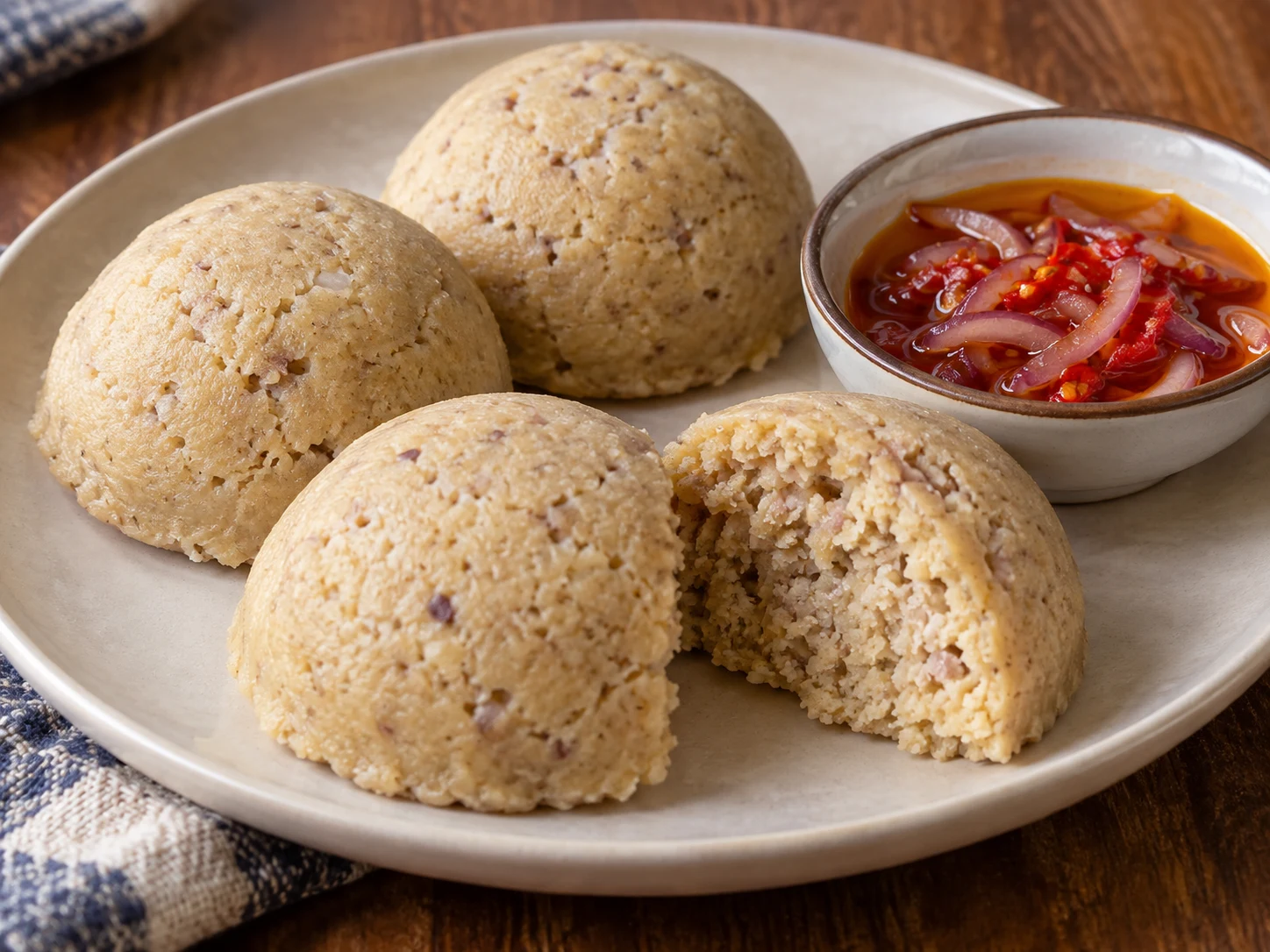
🫘 Tender steamed cowpea puddings with an onion and chilli oil topping.
Ingredients
- 300 g dried cowpeas or black-eyed peas
- 150–220 ml blending water, plus soaking and steaming water
- 4 g salt for the batter
- 1 tsp neutral oil to grease the ramekins
- 1 medium red onion, about 120 g
- ½–1 small fresh chilli, to taste
- 2 tbsp neutral oil for the topping
- 1 small pinch of salt for the topping
Preparation
1️⃣ Sort and rinse the beans. Cover generously with water and soak in the refrigerator for 8–12 hours. Drain and discard the soaking water.
2️⃣ Rub the beans in clean water to loosen the skins. Skim off the floating skins and repeat with fresh water. Drain thoroughly. A few remaining skins affect texture rather than determining whether the beans are cooked.
3️⃣ Blend with 150 ml water and 4 g salt. Stop the motor before scraping the sides. Add water a spoonful at a time only as needed to obtain a thick, smooth paste that falls heavily from a spoon.
4️⃣ Beat the paste vigorously for 4–5 minutes. Lightly oil eight heatproof ramekins of about 100 ml and fill them two-thirds full without packing down the batter.
5️⃣ Bring water to a simmer in a steamer. Keep the ramekins above the water on a stable rack, leaving space for steam. Cover each loosely with secured baking paper and close the pot.
6️⃣ Steam steadily for 30–35 minutes. Check the water level and replenish with boiling water if necessary. A blade inserted in the centre should come out without raw batter. If still sticky, cook for another 5 minutes and check again.
7️⃣ Meanwhile, thinly slice the onion and chop the chilli. Cook the onion in 2 tbsp oil over medium heat for 5–7 minutes, then add chilli and a pinch of salt and cook for 2 minutes more.
8️⃣ Remove the hot ramekins carefully and rest for 5 minutes. Loosen the edges, unmould and serve warm with the onion topping. Two puddings make one of the four servings.
Introduction
Tubaani turns soaked cowpeas into small savoury puddings rather than a stew. The beans are peeled, blended with a limited amount of water and beaten before steaming. The cooked mixture should hold its shape but remain tender enough to cut with a spoon. Onion and chilli oil provide the finishing flavour. This home version uses lightly oiled ramekins instead of traditional leaf wrappers. It makes eight small puddings, or four servings of two. The beans are not boiled beforehand and are not fried: steam cooks the batter all the way through. Add blending water gradually because soaked beans retain different amounts of moisture.
Cultural context
Tubaani is associated with northern Ghana and is also sold in other parts of the country. A Ghana News Agency report describes sellers in Sunyani, leaf-wrapped steaming and spicy accompaniments. These observations provide context rather than a single universal formula. Ramekins are a domestic adaptation. Unlike koose, tubaani is steamed, so the techniques and textures are distinct. Cultural source: https://gna.org.gh/2026/03/heritage-month-tubaani-isnt-only-nutritious-but-a-symbol-of-culture-and-tradition/
Tips
Use similar-sized ramekins for even cooking.
Maintain steady steam and never let the pan boil dry.
Keep chunky onion in the topping rather than in the batter.
Pre-peeled beans still need soaking.
Judge the centre rather than relying only on the timer.
Planning
Check that the ramekins fit and that the steamer rack is stable before blending. Cook in batches if needed, refrigerating the waiting batter. Too much water produces fragile puddings; too little makes blending difficult and the crumb dense. Use smaller blender batches instead of excessive dilution. Never insert utensils while the blades are running.
Serving
Unmould after a short rest and add topping just before serving. The internally generated illustration shows the intended texture and is not a photograph of a tested batch.
Storage
Refrigerate leftovers promptly in shallow containers, within two hours, at 4°C or below. Use within two days as a precaution. Reheat with steam until hot throughout, keeping the topping separate and reheating only what is needed.
Variations
Omit chilli for a milder topping. A little food-grade red palm oil can replace some topping oil for a stronger flavour. Serve tomato sauce separately rather than adding it to the batter. Food-safe leaf wrappers are another option, but parcel size and wrapping affect steaming time.
Accompaniments
Serve two puddings with cooked vegetables or tomato and cucumber salad. Offer hot sauce separately. Shito often contains fish and shellfish and changes the allergens and the plant-based character of the meal. One pudding per guest can be served as a starter, but that changes the portion basis.
Nutrition notes
Cowpeas supply plant protein, fibre and carbohydrates. Most added fat comes from the topping. Nutrition figures are estimates for two puddings and a quarter of the topping, excluding other sauces; they are not laboratory measurements. Adjust the portion to individual tolerance of legumes and account separately for salty condiments.