Rice with squash and peanuts
Rice with squash and peanuts — a home formulation for four servings.
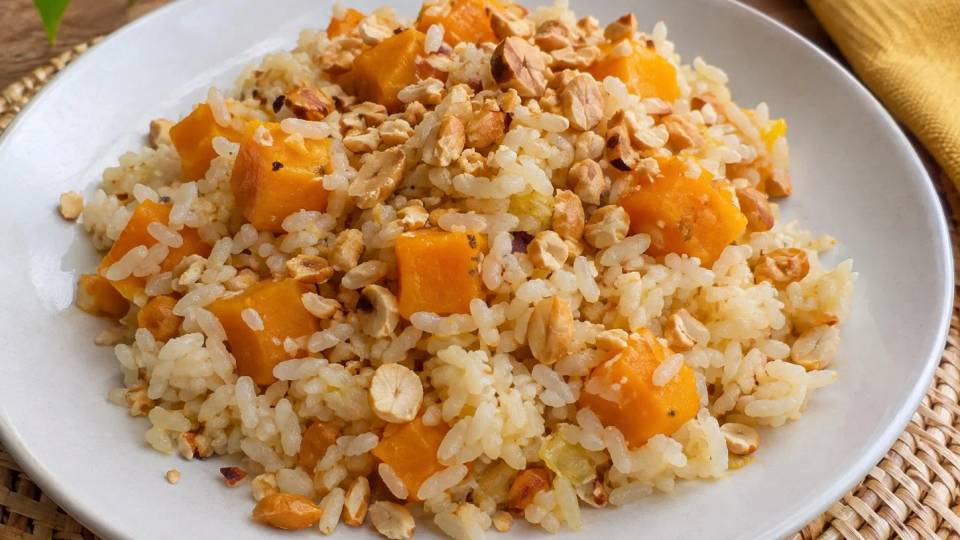
Ingredients
- 280 g uncooked white rice
- 400 g peeled deseeded squash flesh
- 60 g unsalted roasted peanuts
- 100 g peeled onion
- 550 ml drinking water
- 15 ml vegetable oil
- 3 g salt
Preparation
Rinse rice and drain; cut squash into 1.5 cm cubes and chop onion.
Soften onion in oil 5 minutes; add rice, squash, water and salt.
Cover and simmer 18–22 minutes depending on rice; check and adjust water as needed.
Rest covered off heat 10 minutes; fluff and add chopped roasted peanuts.
Introduction
The peanuts remain coarsely chopped here and are added after the rice cooks. This is therefore not a mbahal thickened with peanut powder. Cut the squash into small cubes that cook in the rice's steam without breaking down completely. Choose firm-fleshed squash and drain the rice well after rinsing. If the dice are very large, precook them for a few minutes before adding the cereal. Use roasted, non-rancid, food-grade peanuts; check their freshness before mixing them into the whole pot. The crunch is best just before serving. This home adaptation can accompany a portion of fish or be shared with another plant-based preparation.
Cultural context
The Gambia collection brings together traditional preparations and home adaptations. This formulation describes one home-cooking choice without claiming to represent every household in the country.
Tips
Weigh ingredients in the state specified, particularly legumes and cereals that are already cooked. Do not replace a cooked weight with the same weight of dry food.
Raw white rice: Weigh rice dry when the list specifies raw. The same weight of already cooked rice would supply much more water and a different amount of cereal. Choose a variety whose behaviour you know and read the packet instructions, especially for parboiled rice. Rinsing removes some surface starch; draining afterwards prevents an unknown amount of water from entering the saucepan. Absorption cooking depends on the lid, diameter and heat: the suggested volumes should not be applied to an uncovered saucepan in the same way as to a closed casserole. Check a few grains before finishing. After cooking, allow the stated rest, then fluff without crushing. To delay serving, cool rapidly in a shallow layer and refrigerate; avoid keeping a pot merely lukewarm for hours.
Squash flesh without skin or seeds: Weigh squash after removing skin and seeds. A firm-fleshed variety retains its cubes better in rice or a stew, whereas very tender flesh readily suits a blended soup. Cutting even pieces is more useful than excessive precision about the number of purchased slices. Small dice finish sooner than large wedges: retain the specified size so the other ingredients follow the same pace. Watery squash can loosen a sauce; allow the base to reduce before adding a delicate garnish. For blending, check tenderness with the tip of a knife and remove from the heat. To retain cubes, finish before they break down at the first stirring. Colour and sweetness vary naturally with the variety, without needing colouring or extra sugar.
Unsalted roasted peanuts: Use roasted, unsalted peanuts. Check their freshness before mixing them into the dish: a rancid smell or abnormal flavour cannot be disguised with spices. The weight is without shells or inedible fragments. A coarse chop provides crunch; fine powder thickens and combines differently. Respect this choice, which can distinguish a garnish added at serving from a cooked peanut sauce. Chop in short pulses in a food processor, stopping before the nuts turn into an oily paste. Add late to rice or a salad if you wish to preserve texture. For date-bound bites, a finer grind instead makes assembly easier. Tell diners about the peanuts and use clean equipment if other preparations must remain free from this allergen.
Peeled onion: Weigh onion after peeling and removing the ends. The cut should suit the preparation: finely chopped onion distributes through a sauce or patty, whereas slices retain a more noticeable presence. A sharp knife makes even cutting easier and avoids crushing the bulb. In a hot base, allow the pieces to soften before adding the next ingredients. Browning is not essential when the aim is a pale sauce or a mild flavour. If the bottom dries out, add a spoonful of the liquid specified and stir rather than repeatedly pouring in oil. For a cold preparation, cut more finely and drain well after any rinsing. This attention to piece size makes the measured amount more significant than the colour of the onion alone.
Squash cubes must be small enough to cook at the same pace as the rice. Very firm squash can have a few minutes' precooking in the base before the grains are added. Keep the peanuts coarsely chopped and add them after the final rest: this preserves crunch rather than producing a powder that thickens the whole pot. Taste the peanuts separately before adding, because a small rancid quantity would spoil the entire dish. Fluff the rice gently around the cubes rather than turning them into purée. When serving, divide the garnish between portions instead of leaving every squash piece on top of the dish. Reheated leftovers will be less crunchy; reserve some peanuts to add at the last moment if you anticipate this second serving.
Serve with clean utensils. Refrigerate perishable preparations promptly in shallow containers; do not leave them at room temperature for more than two hours. For cooked preparations, reheat only the portion required to 74 °C. Any shorter recipe-specific instructions take precedence.
Storage
Use clean utensils. Refrigerate perishable preparations promptly in shallow containers; do not leave at room temperature for more than two hours. Reheat only the needed portion of cooked food to 74 °C. Any shorter recipe-specific limit takes precedence.
Accompaniments
Allow the preparation to rest for the stated time before dividing into portions. Very hot cereal sometimes seems wetter than it will a few minutes later; this short rest allows its actual consistency to be judged. Use a wide spoon or fork according to the desired result, without packing the grains into the serving dish. Distribute vegetables and garnishes as you go, rather than giving all the pieces to the first plate. When this preparation accompanies a sauce, serve the sauce separately to preserve the textural contrast. Portion volume depends on the cereal's role in the meal: dividing the yield into four is this recipe's guide, not an obligation to finish every plate. To prepare ahead, spread leftovers in a shallow container and refrigerate promptly; a large mass left in a pot cools too slowly at the centre.
Nutrition notes
Estimated per serving, four servings, recipe ingredients only. USDA FoodData Central SR Legacy 2018 reference foods; fish modelled as tilapia, crab as cooked Dungeness crab, oil as peanut oil. USDA total carbohydrate includes fibre. Milk 1.03 g/ml, oil 0.92 g/ml, other liquids 1 g/ml, egg 50 g edible portion. Actual products and portion sizes vary; not a laboratory analysis. Accompaniments excluded.