Grilled cassava with chilli
Grilled cassava with chilli.
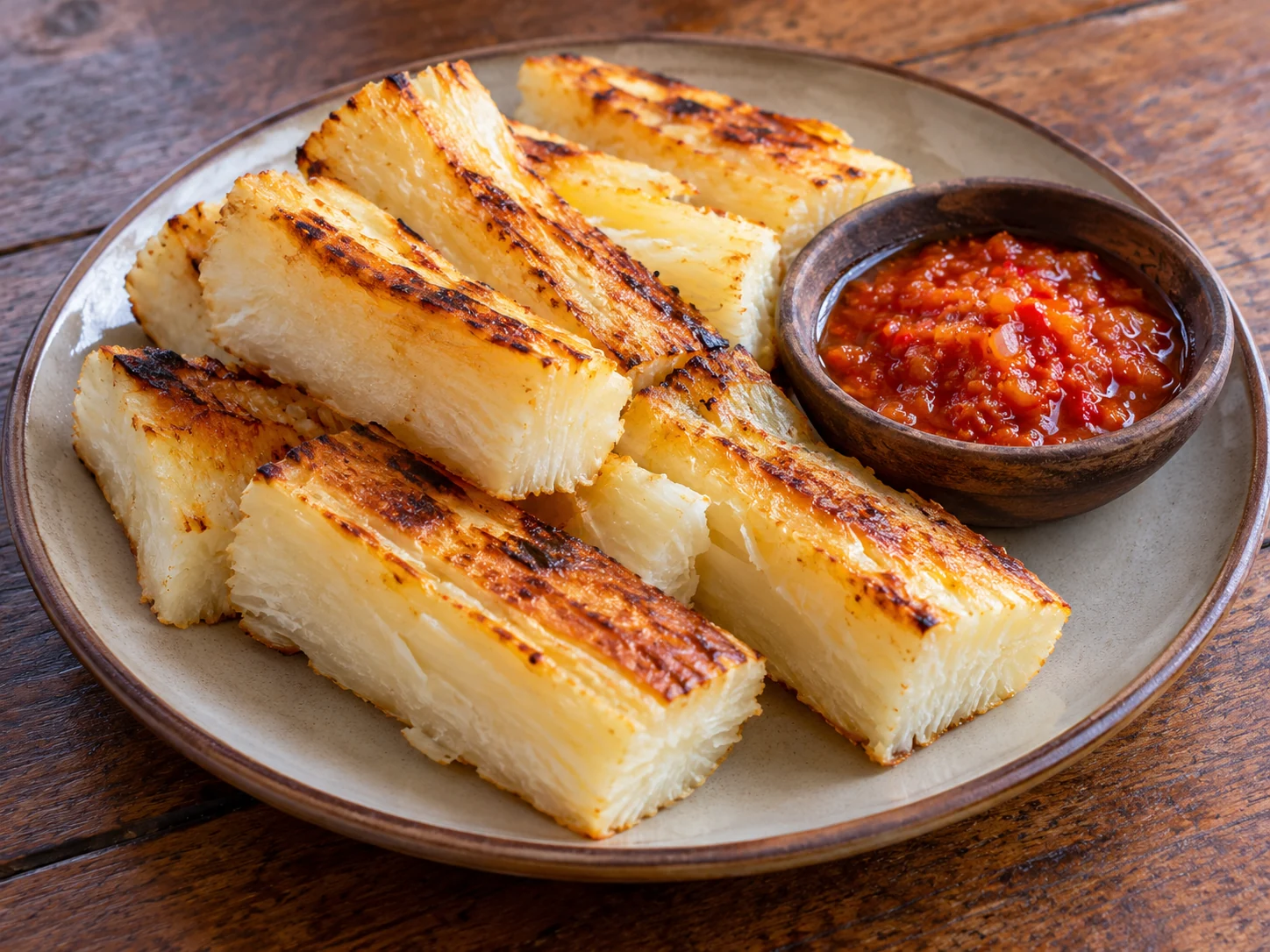
Ingredients
- 1000 g peeled edible sweet cassava, fresh or frozen, from an identified source
- 80 g onion
- 10 g fresh chilli
- 20 g vegetable oil
- 30 g lemon juice
- 3 g salt
- 2000 ml drinking water
Preparation
Choose identified edible sweet cassava, already peeled; remove central fibres and cut into batons.
Boil in 1,950 ml water for 30–40 min until tender; discard this water and drain thoroughly.
Soften chopped onion and chilli in half the oil; add the remaining 50 ml water, lemon and 2 g salt and cook 8–10 min.
Brush batons with remaining oil and the remaining gram of salt.
Brown on a moderate grill for about 10 min, turning without burning.
Serve hot with sauce; do not grill raw cassava pieces directly.
Introduction
Use identified sweet food cassava and follow its label; the stated boiling duration is only a guide. Discard its water before grilling. Separate sauce water, half the oil and the stated salt shares.
Cultural context
A descriptive home formula for the Gabon catalogue, not an exclusive national standard. The institutional reference gives culinary context, not validation of the quantities or cooking times. https://presidence.ga/la-culture-du-gabon/
Tips
Cut even sticks and remove central fibres.
Drain well before brushing with reserved oil.
Cook onion-chilli sauce gently without drying its small liquid volume.
Turn prepared sticks without blackening them.
Planning
Prepare colander, moderate grill and broad tongs. Never grill raw or unknown cassava directly.
Storage
Cool leftovers promptly in small shallow containers and refrigerate at 4 °C or below. Use within 48 h, reheating only the required portion thoroughly. Never return a served portion to the reserve.
Variations
Pan-grilling differs from deep frying; another root needs its own initial preparation.
Accompaniments
Serve hot with visible sauce and declare chilli. Other main dishes are separate.
Nutrition notes
⚖️ This formula mainly provides carbohydrate and fibre, with plant protein depending on ingredients; peanuts or seeds increase fat where present. The figures are estimates per portion of the baseline formula without accompaniments, not laboratory analyses of this preparation. Product variety, water content, the amount actually eaten and cooking losses all contribute to variation. Meal balance depends on the whole plate rather than one supposedly exceptional ingredient. Check allergens in purchased products, particularly spice blends and processed foods.
Vitamins and minerals vary with ingredients; qualitative information, not amounts measured after cooking. B vitamins depending on ingredients, carotenoids in coloured vegetables. Potassium, phosphorus and magnesium depending on products; sodium depends on salt and smoked ingredients.