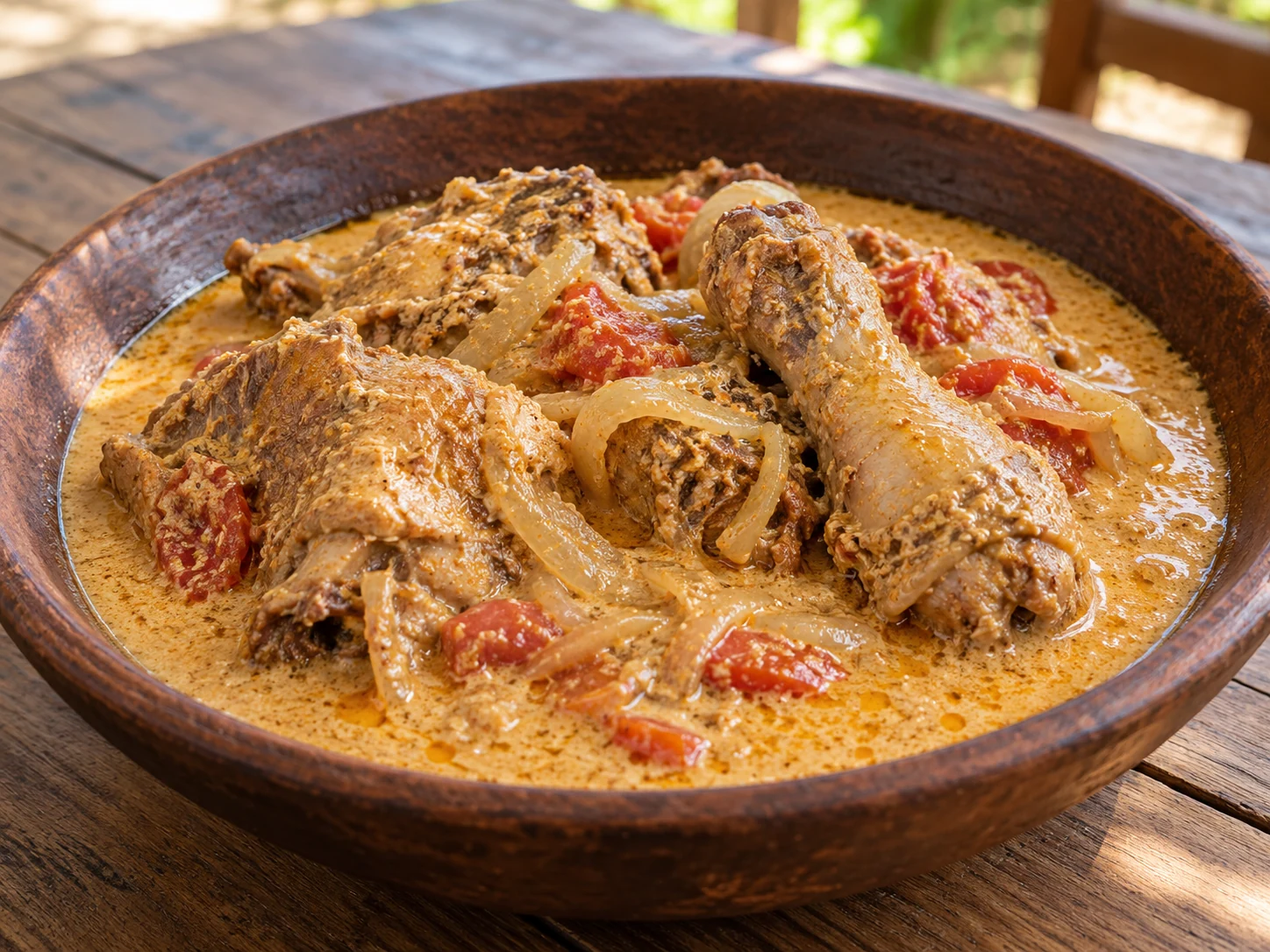
Cock in squash-seed sauce
This preparation highlights cock cut into pieces by the poultry seller; check texture and doneness before serving.
Ingredients
- 1200 g cock cut into pieces by the poultry seller
- 120 g finely ground shelled squash seeds
- 100 g onion
- 240 g tomatoes
- 6 g garlic
- 13.5 g vegetable oil
- 3 g salt
- 1000 ml drinking water
Preparation
Prepare cock cut into pieces by the poultry seller in even pieces on a board reserved for raw food.
Soften onion in oil for 5 min, add garlic, tomatoes and other listed vegetables and cook for 5 min.
Add cock cut into pieces by the poultry seller and 1000 ml water; cover and simmer for 120 min until tender.
Mix 120 g finely ground shelled squash seeds with a little cooking liquid, stir in and simmer for 15 min, stirring to the bottom.
Check at least 74 °C in the centre and tender meat; extend cooking if necessary.
Gently reduce uncovered to a coating sauce and serve hot.
Introduction
Rooster pieces simmers before finely ground shelled squash seeds is diluted in broth and added. Keep the first meat stage separate from the final binder cooking and check tenderness.
Cultural context
Rooster pieces need a long moist simmer before ground squash seeds bind the sauce. This is not quick-cooking diced chicken. Tenderness and a 74 °C centre are separate checks: a hot piece may still resist the fork. Seeds must be culinary food products, not planting seed.
Tips
Inspect prepared pieces for obvious bone fragments and separate raw tools from service tools.
Simmer after the aromatic base about 120 minutes, monitoring liquid and adding small hot-water corrections.
Dilute 120 g finely ground hulled seeds in pan stock before adding for 15 minutes.
Check thick pieces at least 74 °C away from bone and genuinely tender before reducing uncovered.
Planning
Use a raw-only board, covered casserole, strong spoon and dilution bowl. The 1000 ml is the initial cooking water; seed dilution uses liquid taken from it.
Serving
Portion the rooster pieces first, then coating sauce with a separate accompaniment; disclose bones.
Storage
Divide kept portions promptly into shallow containers and refrigerate after rapid cooling. Reheat evenly; long cooking does not justify room-temperature storage.
Variations
A younger chicken changes timing; peanut paste changes the sauce and allergen profile. Boneless meat also needs rebalanced yield.
Nutrition notes
Inherited nutritional figures are not a laboratory analysis. Actual products, draining, reduction and serving size affect the result.