Amaranth with prawns
This preparation highlights edible amaranth leaves; check texture and doneness before serving.
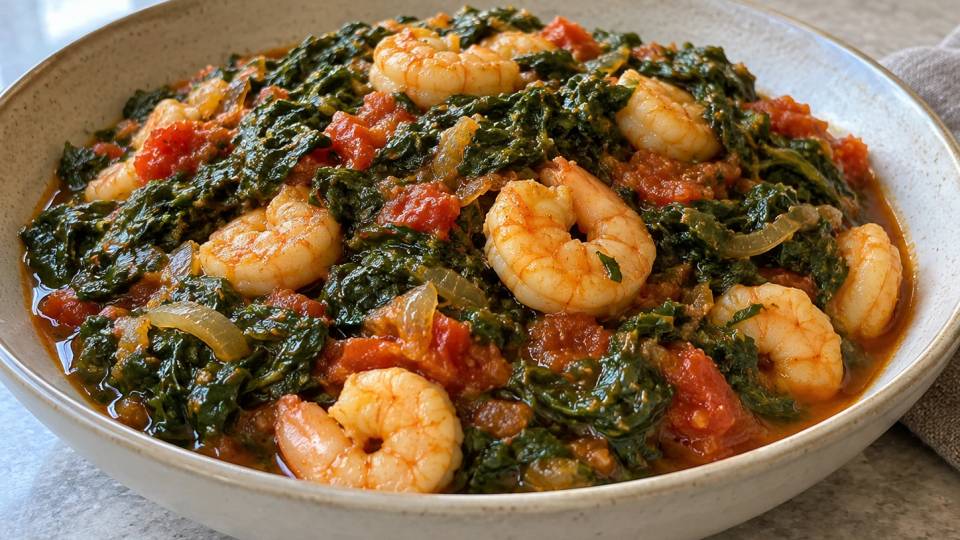
Ingredients
- 600 g edible amaranth leaves
- 400 g raw peeled prawns
- 100 g onion
- 240 g tomatoes
- 6 g garlic
- 13.5 g vegetable oil
- 3 g salt
- 300 ml drinking water
Preparation
Sort and wash edible leaves; remove tough stems and chop.
Soften onion in oil for 5 min, add garlic, tomatoes and other listed vegetables and cook for 5 min.
Add leaves and 300 ml water; cover and simmer for 15 min.
Add prawns and cook 5–8 min until fully cooked.
Check 63°C at the centre of prawns and opaque flesh; extend gentle cooking if needed.
Adjust salt and liquid and serve hot without tough stems.
Introduction
Amaranth leaves start cooking before peeled raw prawns join for their shorter stage. Check prawns before serving; no peanut paste is listed.
Cultural context
Fresh edible amaranth leaves cook before raw peeled shrimp enter. This formula contains no peanut, coconut milk or nyembwe. The sequence protects the shrimp from a long simmer while tougher leaf parts soften; it is not one timing for both ingredients.
Tips
Trim hard stems, wash leaves and weigh 600 g usable material.
Keep raw-shrimp equipment separate from ready-to-eat service tools.
Cook leaves with 300 ml water 15 minutes after the aromatic base; test a cooled stem before adding shrimp.
Cook 400 g shrimp 5–8 minutes, check opaque flesh and 63 °C centres; continue gently if needed.
Planning
Prepare identified food leaves first and keep raw shrimp chilled separately. Thaw frozen shrimp as labelled in the refrigerator before active preparation.
Serving
Divide shrimp first, then leaves and juices with a separate base; disclose crustaceans.
Storage
Prefer prompt service. Cool kept portions quickly and refrigerate; reheat only what is needed as shrimp may become firmer.
Variations
Cooked shrimp require a different reheating sequence. Other leaves need their own preparation; peanuts are not an omitted ingredient.
Nutrition notes
Inherited nutritional figures are not a laboratory analysis. Actual products, draining, reduction and serving size affect the result.