Stewed meaty beef bones
The gross weight includes bones; it is not an equivalent weight of edible meat.
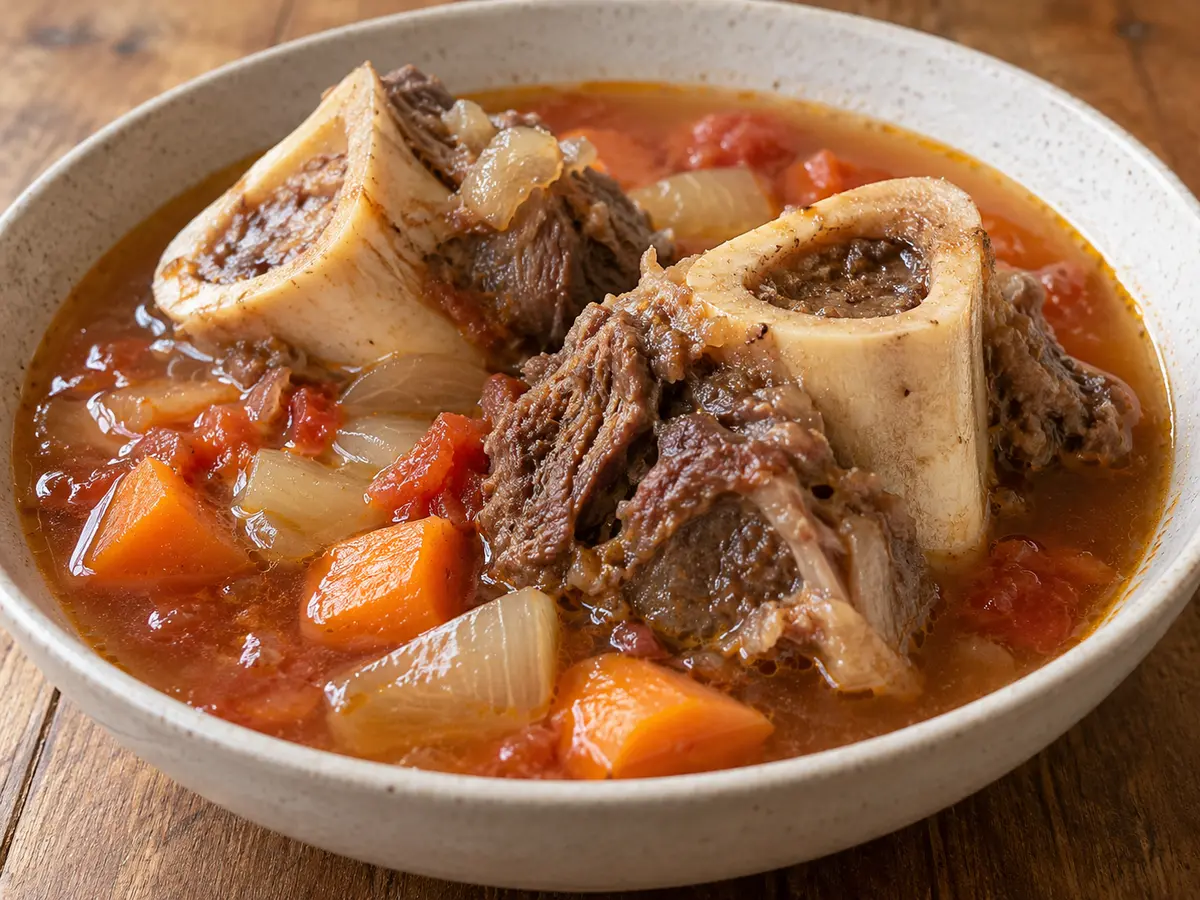
Ingredients
- 1200 g meaty beef bones cut by the butcher
- 1 onion
- 2 tomatoes
- 2 carrots
- 4 g salt
- 1800 ml water
Preparation
Prepare meaty beef bones cut by the butcher: cut into even pieces where necessary and pat dry.
Place the meaty bones in the pot with 1,800 ml cold water; heat gradually.
Skim, then add onion, tomatoes and salt; do not add the initial water quantity a second time.
Partly cover and cook gently for about 140 min; add carrots during the final 35 min.
Test tenderness with a fork and continue with a little hot water if the fibres still resist.
Reduce the juices uncovered. Remove any loose bone fragments and serve hot, identifying bone-in pieces.
Introduction
The starting weight includes meaty bones. Begin in measured cold water, add vegetables as directed and check tenderness. Remove loose bone fragments before serving the meat and broth.
The gross weight includes bones; it is not an equivalent weight of edible meat.
Cultural context
🌍 This preparation belongs to the foods and dishes consumed in Eswatini documented by the Ministry of Agriculture and IITA. The collection is a reference for the preparation type, not proof that every proportion, seasoning or technique in this version is shared by all families. The formula here is an original editorial home-kitchen adaptation, not a transcription of one definitive heritage recipe.
Some ingredients and techniques also occur in neighbouring southern African cuisines. Associating them with an Eswatini table does not imply an exclusively national origin. The descriptive title explains the dish without inventing a local name or ceremonial history. Documentary reference, preparation number 58: https://cgspace.cgiar.org/server/api/core/bitstreams/92f010f4-e663-4a00-b6d9-545483f08268/content
Tips
Watch the bottom and edges during cooking. A wet surface can hide scorching underneath; stir or adjust heat as the method requires.
Add corrective liquid gradually. Excess liquid then requires reduction, which may overcook the main ingredient.
Taste seasoning near the end with a clean spoon. Reduction concentrates salt; account for already-salted products before adding more.
Do not treat an estimated cooking time as a blind timer: also check texture, thickness and, where needed, centre temperature.
Separate raw products from ready-to-eat foods. Wash hands and clean utensils after handling raw meat, fish, poultry or eggs.
Offer optional garnishes separately on the first attempt, so you can taste the base before changing its acidity, heat or richness.
❄️ Eat refrigerated leftovers within 48 h and reheat only once, until thoroughly hot. Use clean utensils for serving. Food intended for later should not remain on the table for hours before storage. For moist cooked food, divide leftovers into shallow containers, cool promptly and refrigerate at 4 °C or below. Colour, smell and spice level alone cannot guarantee food safety. Do not mix reheated leftovers into a fresh preparation.
Have meaty bones cut by the butcher rather than breaking them at home. The 1,800 ml cold water is added once at the start, not again after skimming. Bring up heat gradually, skim carefully, then maintain a gentle partially covered simmer. Add hot water if the level falls before meat is tender. Put carrots in during the final 35 minutes only once the meat is approaching tenderness. Check for loose bone fragments and share meat, vegetables and broth appropriately at serving.
Nutrition notes
⚖️ The animal ingredient provides protein; fat and salt vary with the cut, skin, bones and processed products used. The figures are estimates per portion of the baseline formula without accompaniments, not laboratory analyses of this preparation. Product variety, water content, the amount actually eaten and cooking losses all contribute to variation. Meal balance depends on the whole plate rather than one supposedly exceptional ingredient. Check allergens in purchased products, particularly spice blends and processed foods.
Vitamins present according to the ingredients: B vitamins, including B12. Minerals: Iron, zinc and phosphorus. These are qualitative pointers; amounts after cooking are not quantified.