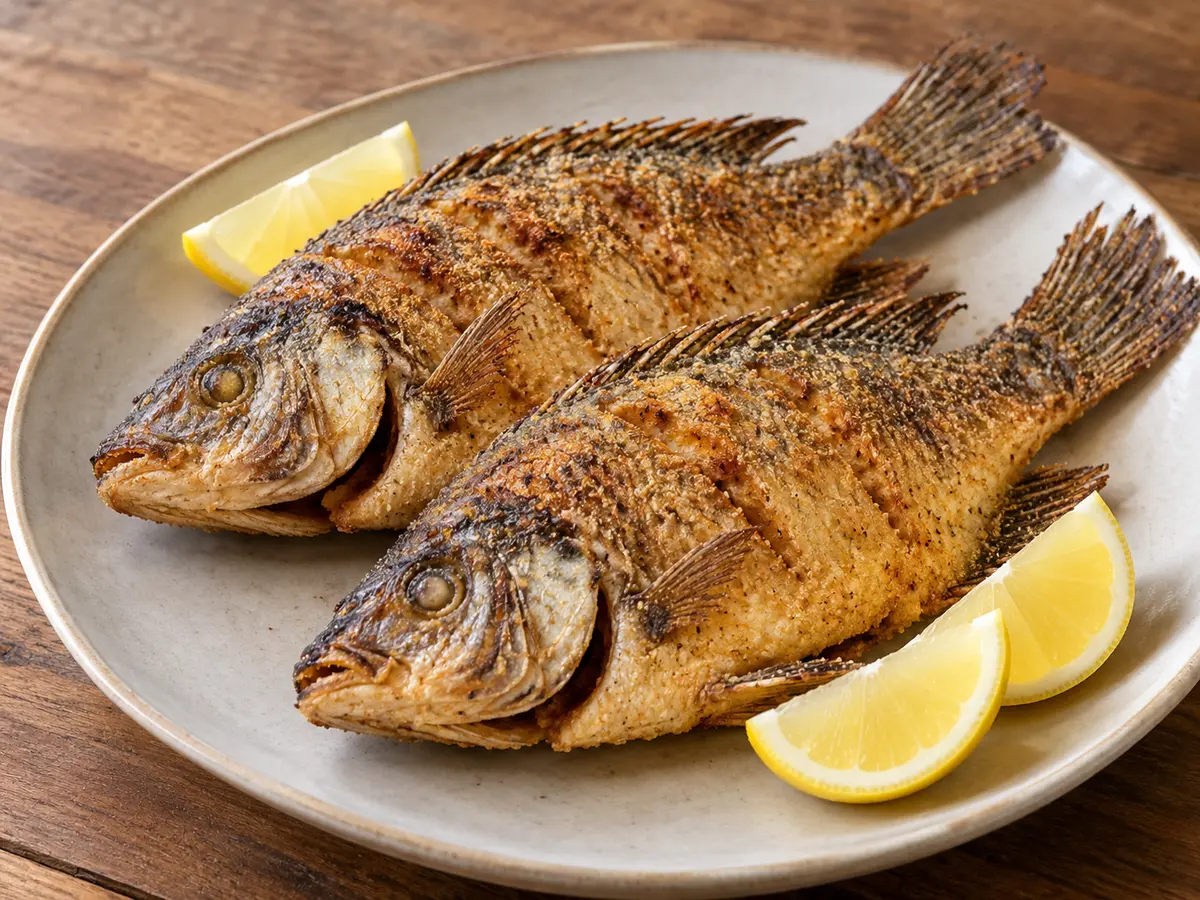
Fried tilapia
Drying skin before frying aids crispness; check the flesh at the centre and remove bones when serving.
Ingredients
- 1000 g whole scaled and gutted tilapia
- 40 g fine maize meal
- 1 lemon
- 3 g salt
- 600 ml frying oil
Preparation
Pat dry the tilapia scaled and gutted by the fishmonger; make two slashes in the thick parts.
Season with salt, dust with maize flour and shake off the excess.
Heat the oil to 170–175 °C in a deep pan no more than half full.
Fry in small batches for about 7–10 min per side depending on size, turning carefully.
Check for 63 °C in the centre of the flesh; continue if necessary rather than relying on colour.
Drain on a rack and serve with lemon. Remove the bones carefully.
Introduction
Whole prepared tilapia is dried and lightly dusted with maize flour before frying in batches. Check the thick flesh, drain and serve with lemon, noting the bones.
Drying skin before frying aids crispness; check the flesh at the centre and remove bones when serving.
Cultural context
🌍 This preparation belongs to the foods and dishes consumed in Eswatini documented by the Ministry of Agriculture and IITA. The collection is a reference for the preparation type, not proof that every proportion, seasoning or technique in this version is shared by all families. The formula here is an original editorial home-kitchen adaptation, not a transcription of one definitive heritage recipe.
Some ingredients and techniques also occur in neighbouring southern African cuisines. Associating them with an Eswatini table does not imply an exclusively national origin. The descriptive title explains the dish without inventing a local name or ceremonial history. Documentary reference, preparation number 39: https://cgspace.cgiar.org/server/api/core/bitstreams/92f010f4-e663-4a00-b6d9-545483f08268/content
Tips
Do not treat an estimated cooking time as a blind timer: also check texture, thickness and, where needed, centre temperature.
Separate raw products from ready-to-eat foods. Wash hands and clean utensils after handling raw meat, fish, poultry or eggs.
Offer optional garnishes separately on the first attempt, so you can taste the base before changing its acidity, heat or richness.
❄️ Eat refrigerated leftovers within 48 h and reheat only once, until thoroughly hot. Use clean utensils for serving. Food intended for later should not remain on the table for hours before storage. For moist cooked food, divide leftovers into shallow containers, cool promptly and refrigerate at 4 °C or below. Colour, smell and spice level alone cannot guarantee food safety. Do not mix reheated leftovers into a fresh preparation.
Have whole tilapia scaled and gutted, then dry the outside and cavities thoroughly to limit oil splashes. Apply only a light maize-flour coating and shake off excess. Fry in small batches at the stated temperature, allowing the oil to recover between additions. Browning does not replace the core-temperature check: measure thick flesh without touching bone. Drain on a rack, serve lemon separately and remove bones as appropriate. Lemon seasons the fish; it does not cook it or replace cooking checks.
Adjust frying through oil temperature and batch size. No water is added to the hot bath. If fish browns too quickly, control the heat and check cooking; do not cool oil with liquid. Keep serving utensils dry near the pan and drain fish before plating.
Variations
🔄 Add lemon or suitable condiments when serving; seasoning cannot hide a burnt surface. Change one element at a time while keeping the same texture goal. A substituted ingredient may need a different liquid quantity or cooking time; this deserves more care than simply adding a condiment. Follow the baseline formula on the first attempt before adapting it. Describe variations as household choices without assigning an undocumented regional origin. Composition changes also affect allergens and nutritional values.
Nutrition notes
⚖️ The animal ingredient provides protein; fat and salt vary with the cut, skin, bones and processed products used. The figures are estimates per portion of the baseline formula without accompaniments, not laboratory analyses of this preparation. Product variety, water content, the amount actually eaten and cooking losses all contribute to variation. Meal balance depends on the whole plate rather than one supposedly exceptional ingredient. Check allergens in purchased products, particularly spice blends and processed foods.
Vitamins present according to the ingredients: B vitamins, including B12. Minerals: Iron, zinc and phosphorus. These are qualitative pointers; amounts after cooking are not quantified.