Homemade muffins
Mix batter briefly: prolonged beating makes muffins more elastic and less tender.
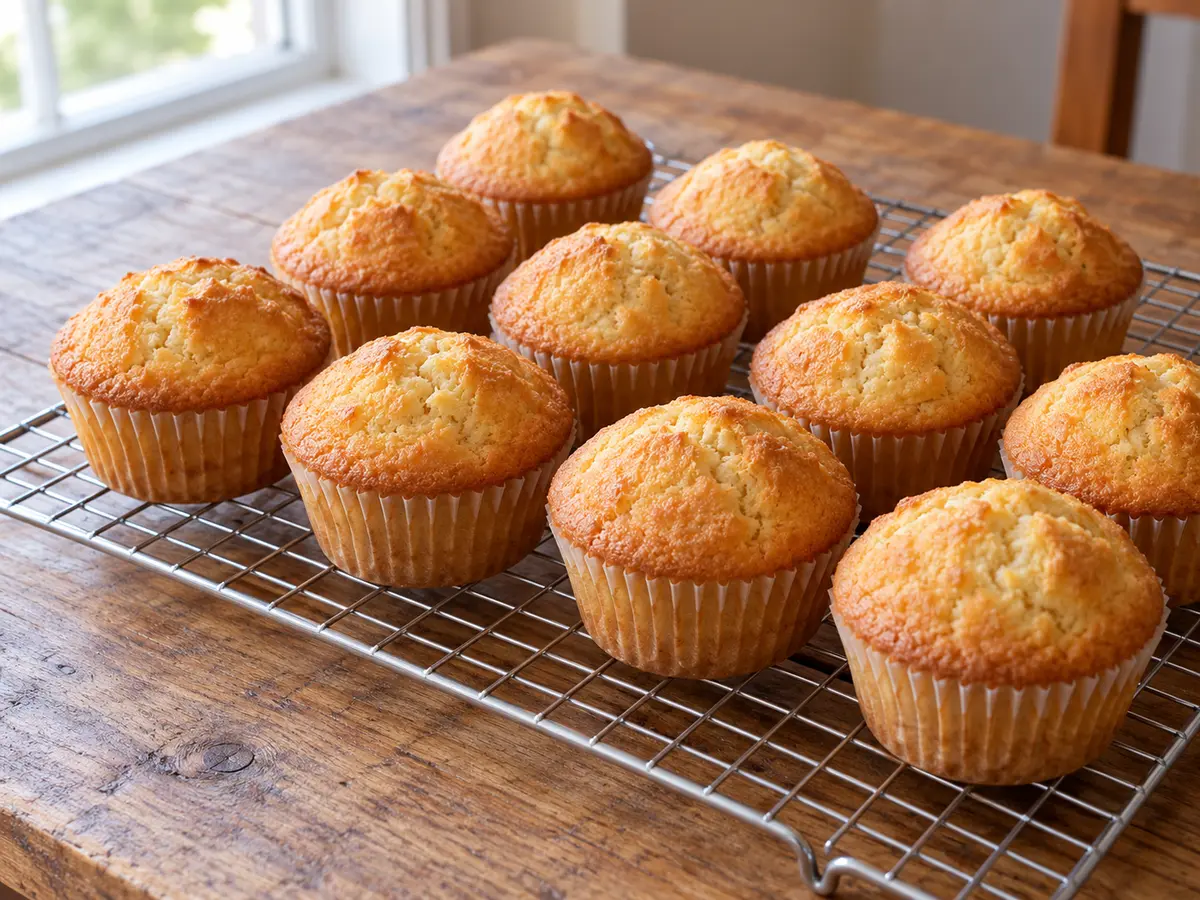
Ingredients
- 250 g wheat flour
- 2 eggs
- 150 ml pasteurised milk
- 70 g sugar
- 60 ml oil
- 8 g baking powder
- 1 g salt
Preparation
Preheat the oven to 180 °C and prepare twelve muffin cups.
Mix flour, baking powder, sugar and salt in a bowl.
Beat eggs with milk and oil in another bowl.
Briefly combine the mixtures, just until no dry flour remains.
Fill cups two-thirds full and bake for about 25 min; a skewer should emerge without raw batter.
Wait 5 min, then cool on a rack. Twelve muffins make four portions of three.
Introduction
Twelve muffins use baking powder, not a yeast rise. Combine wet and dry mixtures briefly, bake at 180°C and cool on a rack. Three muffins form one portion.
Mix batter briefly: prolonged beating makes muffins more elastic and less tender.
Cultural context
🌍 This preparation belongs to the foods and dishes consumed in Eswatini documented by the Ministry of Agriculture and IITA. The collection is a reference for the preparation type, not proof that every proportion, seasoning or technique in this version is shared by all families. The formula here is an original editorial home-kitchen adaptation, not a transcription of one definitive heritage recipe.
Some ingredients and techniques also occur in neighbouring southern African cuisines. Associating them with an Eswatini table does not imply an exclusively national origin. The descriptive title explains the dish without inventing a local name or ceremonial history. Documentary reference, preparation number 29: https://cgspace.cgiar.org/server/api/core/bitstreams/92f010f4-e663-4a00-b6d9-545483f08268/content
Tips
Watch the bottom and edges during cooking. A wet surface can hide scorching underneath; stir or adjust heat as the method requires.
Add corrective liquid gradually. Excess liquid then requires reduction, which may overcook the main ingredient.
Taste seasoning near the end with a clean spoon. Reduction concentrates salt; account for already-salted products before adding more.
Do not treat an estimated cooking time as a blind timer: also check texture, thickness and, where needed, centre temperature.
Separate raw products from ready-to-eat foods. Wash hands and clean utensils after handling raw meat, fish, poultry or eggs.
Offer optional garnishes separately on the first attempt, so you can taste the base before changing its acidity, heat or richness.
❄️ Cool completely, then keep dry in a clean container; preferably eat within 48 h or freeze bread for longer storage. Use clean utensils for serving. Food intended for later should not remain on the table for hours before storage. For moist cooked food, divide leftovers into shallow containers, cool promptly and refrigerate at 4 °C or below. Colour, smell and spice level alone cannot guarantee food safety. Do not mix reheated leftovers into a fresh preparation.
Serving
🍽️ Serve as a modest snack and offer sweet toppings separately. Divide the main components among four portions before adding the listed juices or garnish. This avoids one portion being mostly liquid and another nearly dry. Clearly identify any bones or inedible parts and adapt serving to the diners. For a family-style meal, offer extra condiments separately instead of changing the whole preparation at the last moment.
Variations
🔄 Make smaller pieces if desired and watch for shorter cooking; do not change yeast or raising-agent proportions at random. Change one element at a time while keeping the same texture goal. A substituted ingredient may need a different liquid quantity or cooking time; this deserves more care than simply adding a condiment. Follow the baseline formula on the first attempt before adapting it. Describe variations as household choices without assigning an undocumented regional origin. Composition changes also affect allergens and nutritional values.
Accompaniments
🥣 An unsweetened drink and, according to appetite, fruit offered separately are enough. Accompaniments can contrast in texture or temperature but should not obscure the main flavour. Adjust quantities to the preparation’s place in the meal: a side, snack and main dish require different portions. A simple, lightly sweetened or unsweetened drink suits an already rich preparation. Optional foods served alongside should not become unspoken ingredients of the recipe.
Nutrition notes
⚖️ Flour mainly provides carbohydrate; eggs, milk and butter, where listed, alter nutrient and allergen content. The figures are estimates per portion of the baseline formula without accompaniments, not laboratory analyses of this preparation. Product variety, water content, the amount actually eaten and cooking losses all contribute to variation. Meal balance depends on the whole plate rather than one supposedly exceptional ingredient. Check allergens in purchased products, particularly spice blends and processed foods.
Vitamins present according to the ingredients: B vitamins depending on flour and fortification. Minerals: Phosphorus and magnesium. These are qualitative pointers; amounts after cooking are not quantified.