Stewed chicken feet
The skin and joints of the feet should be tender; the many small bones require careful removal.
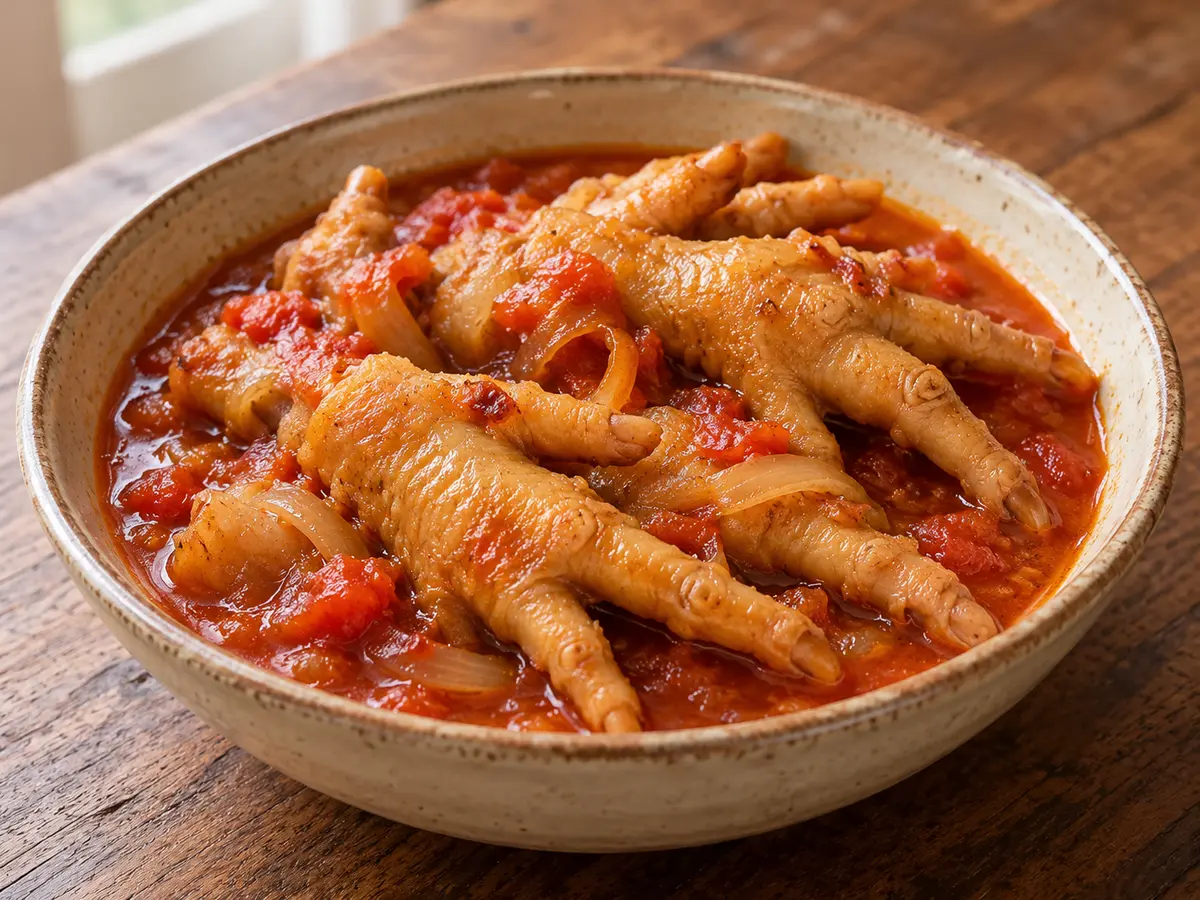
Ingredients
- 800 g chicken feet professionally prepared for cooking
- 1 onion
- 2 tomatoes
- 1 tablespoon oil
- 4 g salt
- 1500 ml water
Preparation
Buy chicken feet professionally prepared for cooking already prepared for food use by a professional; keep chilled until cooking starts.
Blanch for 10 min in boiling water, drain, then clean equipment and the work surface before continuing.
Place in a clean pot with onion, tomatoes if listed and 1500 ml fresh water. Add salt.
Bring to a simmer, cover and cook for about 110 min. Add hot water if the pieces are no longer sufficiently submerged.
Check complete cooking and tenderness; for poultry offal, check 74 °C in the centre where measurement is possible.
Stir in the listed oil at the end of cooking. Reduce the juices uncovered and serve immediately. Identify bones and remove them carefully. This method is not for liver or kidneys.
Introduction
Use professionally prepared chicken feet. Blanch and drain before the separate simmer with onion, tomato and fresh measured water. Check cooking and tenderness before finishing with oil.
The skin and joints of the feet should be tender; the many small bones require careful removal.
Cultural context
🌍 This preparation belongs to the foods and dishes consumed in Eswatini documented by the Ministry of Agriculture and IITA. The collection is a reference for the preparation type, not proof that every proportion, seasoning or technique in this version is shared by all families. The formula here is an original editorial home-kitchen adaptation, not a transcription of one definitive heritage recipe.
Some ingredients and techniques also occur in neighbouring southern African cuisines. Associating them with an Eswatini table does not imply an exclusively national origin. The descriptive title explains the dish without inventing a local name or ceremonial history. Documentary reference, preparation number 80: https://cgspace.cgiar.org/server/api/core/bitstreams/92f010f4-e663-4a00-b6d9-545483f08268/content
Tips
Watch the bottom and edges during cooking. A wet surface can hide scorching underneath; stir or adjust heat as the method requires.
Add corrective liquid gradually. Excess liquid then requires reduction, which may overcook the main ingredient.
Taste seasoning near the end with a clean spoon. Reduction concentrates salt; account for already-salted products before adding more.
Do not treat an estimated cooking time as a blind timer: also check texture, thickness and, where needed, centre temperature.
Separate raw products from ready-to-eat foods. Wash hands and clean utensils after handling raw meat, fish, poultry or eggs.
Offer optional garnishes separately on the first attempt, so you can taste the base before changing its acidity, heat or richness.
❄️ Eat refrigerated leftovers within 48 h and reheat only once, until thoroughly hot. Use clean utensils for serving. Food intended for later should not remain on the table for hours before storage. For moist cooked food, divide leftovers into shallow containers, cool promptly and refrigerate at 4 °C or below. Colour, smell and spice level alone cannot guarantee food safety. Do not mix reheated leftovers into a fresh preparation.
Buy chicken feet professionally trimmed for food use. This recipe is not a guide for cleaning unprepared pieces of uncertain origin. Keep chilled and prepare clean second-stage equipment before blanching. Discard that first water; it is separate from the measured simmering liquid. Clean used utensils and surfaces before continuing.
Tenderness can require time beyond reaching a cooking temperature. Maintain a regular sauce and sufficient liquid; the starting 1,500 ml does not remove the need to monitor evaporation. Add hot water if needed rather than boiling fiercely and concentrating the bottom.
Announce bones and hard-to-pick parts clearly. Avoid forceful stirring that breaks pieces into hidden fragments. Lift with a suitable utensil, inspect portions and offer liquid alongside. Cool leftovers promptly instead of leaving them for a long time in the warm pot.
Nutrition notes
⚖️ The animal ingredient provides protein; fat and salt vary with the cut, skin, bones and processed products used. The figures are estimates per portion of the baseline formula without accompaniments, not laboratory analyses of this preparation. Product variety, water content, the amount actually eaten and cooking losses all contribute to variation. Meal balance depends on the whole plate rather than one supposedly exceptional ingredient. Check allergens in purchased products, particularly spice blends and processed foods.
Vitamins present according to the ingredients: B vitamins, including B12. Minerals: Iron, zinc and phosphorus. These are qualitative pointers; amounts after cooking are not quantified.