Mekelesha
Aromatic chili-free spice blend added at the end of cooking.
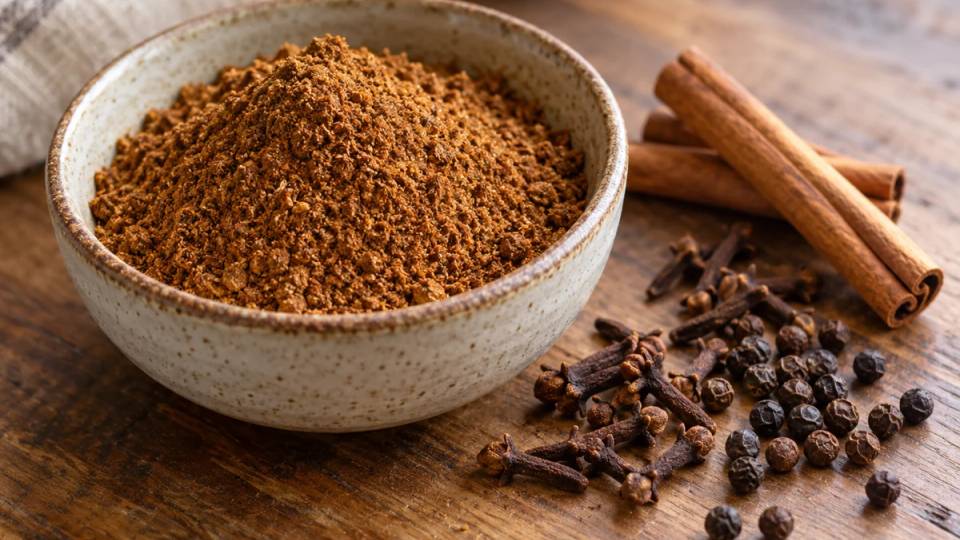
Ingredients
- 10 g black pepper
- 8 g korerima or cardamom seeds
- 5 g cinnamon
- 2 g cloves
Preparation
Weigh dry ingredients separately. Sort the seeds and discard impurities.
Toast whole seeds for 1–2 minutes over low heat, stirring without smoke or excessive browning. Cool completely.
Grind finely, mix in the powdered spices and sift. Let dust settle before opening the grinder.
Transfer to a completely dry sealed jar. Keep cool and away from light; use a dry spoon.
Introduction
This mekelesha uses 10 g black pepper, 8 g korerima or cardamom seeds, 5 g cinnamon and 2 g cloves. It contains no red chilli, but pepper still supplies pungency and excess clove can dominate. Weigh each ingredient separately.
Warm the whole aromatics gently in a dry pan for one to two minutes, without smoke, then cool fully. If the cinnamon is already ground, reserve it for mixing. Grind finely and sieve for an even powder. Use a small amount as an aromatic finishing seasoning and taste before adding more. Keep the cooled blend in a dry closed jar and note which of the two seed options you used.
Cultural context
Mekelesha here is an aromatic finishing mixture, not primarily a hot chilli seasoning. A little can finish an already cooked Ethiopian stew. Pepper, korerima or cardamom, cinnamon and clove define this short version, while other formulas differ. It is not interchangeable by equal weight with berbere or mitmita. Late addition means mixing into the hot dish and allowing integration, not necessarily serving dry raw powder on top.
Tips
Weigh spices and taste gradually.
Keep a clean serving spoon.
Follow texture signs as well as cooking times.
Planning
Weigh the four components separately; this formula contains neither red chilli nor salt. Identify any cardamom substitution. Small clove errors matter. Toast whole spices briefly over gentle heat without darkening; keep already ground cinnamon or other powders aside for later mixing. Break bark only into pieces your grinder can handle, following its instructions. Cool completely on a plate. Use a clean dry grinder without residues of hot mixtures and short pulses rather than one long hot run. Sift, then regrind coarse fragments or cinnamon fibres with a mortar if needed. Mix the entire batch before sampling. Test a tiny pinch in a separate spoonful of cooked sauce, comparing with an unseasoned spoonful before changing the whole pan. Let it disperse before adding more. Begin even more cautiously if niter kibbeh already supplies similar spices. Adjust the dish’s salt separately. Keep the dated labelled jar dry and away from steam; do not confuse it with much hotter mitmita.
Storage
Store completely cooled powder or grains in a dry airtight container away from light. Make small batches and use within 1–2 months for best aroma. Discard if mold or unusual moisture appears.
Variations
Korerima and other cardamoms differ; declare the substitution.
Accompaniments
A pinch in an already cooked hot sauce provides a finishing test.
Nutrition notes
💪 Values are estimates per serving of the base preparation, excluding accompaniments, not a laboratory analysis. Spice powders are used in small amounts; their main role here is flavor, not a therapeutic nutrient claim. In strained drinks, material retained by the filter strongly changes the fiber, fat and energy actually consumed. Added sugar or honey, absorbed fat and portion size also affect the result. Vitamins and minerals are mentioned as ingredient-based guides without claiming measured amounts or a precise share of dietary requirements.