Turmeric Cabbage and Carrots
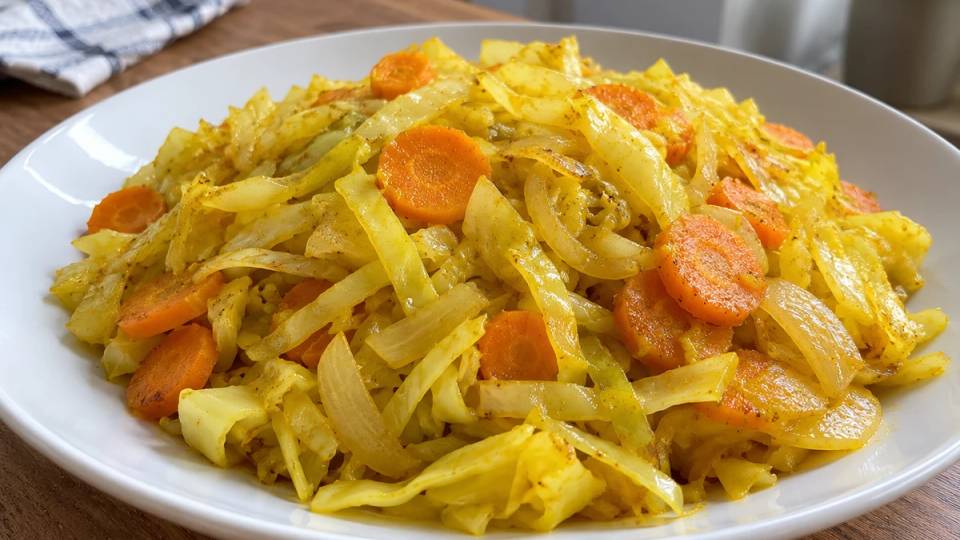
A mild and fragrant vegetable side dish, highlighting the simplicity of Eritrean vegetables. This dish is a home-style version of sautéed vegetables, distinct from more complex alichas, offering a subtle touch of turmeric.
Ingredients
- 500 g white cabbage, cut into fine strips
- 250 g carrots, peeled and cut into julienne
- 150 g yellow onion, finely sliced
- 2 tablespoons vegetable oil (sunflower or rapeseed)
- 2 cloves garlic, finely minced
- 1 teaspoon ground turmeric
- 100 ml water
- Salt, to taste
- Freshly ground black pepper, to taste
Preparation
Prepare all vegetables: wash the cabbage and cut it into fine strips. Peel the carrots and cut them into julienne. Finely slice the onion and mince the garlic.
In a large pan or heavy-bottomed pot, heat the vegetable oil over medium heat. Add the sliced onion and sauté for about 5 to 7 minutes, until translucent and lightly golden. Stir regularly to prevent burning. 🧅
Add the minced garlic to the onion and sauté for 1 additional minute, until fragrant. Be careful not to let it brown, as it could become bitter.
Stir in the ground turmeric and mix well with the onions and garlic. Cook for about 30 seconds to release the aromas of the spice.
Add the julienned carrots to the pan. Mix them with the onions and spices. Cook for 5 minutes, stirring occasionally, so they begin to soften slightly. 🥕
Then add the shredded white cabbage. Carefully mix all the vegetables so that the cabbage is well coated with the spices and oil. The volume may seem large at first, but the cabbage will reduce during cooking. 🥬
Pour the 100 ml of water into the pan. Season with salt and pepper to taste. Cover the pan and simmer over low heat for 15 to 20 minutes, or until the vegetables are tender but retain a slight firmness (al dente).
During cooking, stir occasionally to ensure even cooking and prevent the vegetables from sticking to the bottom of the pan. If necessary, add a small amount of extra water to maintain moisture.
Taste and adjust seasoning if needed. The vegetables should be mild and fragrant, with a slight earthy note from the turmeric.
Serve hot as a side dish. This dish is ideal for complementing wats or other Eritrean sauced dishes. It can also be served with freshly prepared injera. 🍽️
Introduction
Eritrea, a country in the Horn of Africa, boasts a rich and varied cuisine, often characterized by the use of aromatic spices and fresh vegetables. This turmeric cabbage and carrots dish is a perfect example of the simplicity and flavor that can be found in Eritrean homes. It is a humble yet delicious preparation, designed to accompany richer sauced dishes, bringing a note of freshness and lightness. Unlike alicha, which is often a mixed vegetable stew including potatoes, green beans, and sometimes other root vegetables, this recipe focuses specifically on cabbage and carrots, with a prominent presence of turmeric that gives it its golden color and characteristic earthy aroma. It is a domestic adaptation, a common way to prepare vegetables for the daily table, far from the more elaborate versions one might find during celebrations. Eritrean cuisine is deeply rooted in family traditions, where recipes are passed down from generation to generation, often with subtle adjustments based on regional preferences or available ingredients. This dish embodies this flexibility and ingenuity, transforming basic vegetables into a comforting and nutritious accompaniment. It is particularly appreciated for its mildness, which contrasts pleasantly with the sometimes more intense flavors of spicy wats (stews). The preparation is straightforward, highlighting the crisp texture of the cabbage and the natural sweetness of the carrots, enhanced by onion and garlic, staples of Eritrean cuisine. The added water allows for gentle braising, preserving nutrients and intensifying flavors. This dish is a testament to the Eritrean cuisine's ability to create flavorful and balanced meals from simple and accessible ingredients.
Cultural context
This turmeric cabbage and carrots dish illustrates domestic culinary practices in Eritrea. It is a common adaptation to accompany sauces and wats, offering a simple and mild vegetable option. It is important to note that it differs from traditional alicha, which is a more elaborate mixed vegetable stew, often including potatoes and green beans. This version focuses on cabbage and carrots, with turmeric as the dominant spice, giving it its own identity. The use of turmeric is widespread in Eritrean cuisine, not only for its color but also for its earthy flavor. Vegetables are often braised to preserve their texture and nutrients. This type of dish is particularly appreciated during fasting periods, where vegan diets are observed, highlighting the richness of Eritrean cuisine in tasty vegetable options. It is not linked to a specific ceremony but is part of the daily culinary repertoire, reflecting the ingenuity of Eritrean cooks in transforming simple ingredients into comforting dishes.
Tips
For a deeper flavor, you can sauté the onions a little longer until they are well caramelized before adding the garlic and spices.
If you prefer crunchier vegetables, reduce the covered cooking time by a few minutes and check the texture regularly.
Adding a pinch of red chili powder (berbere, if available and if you like spice) can enhance the flavor profile without dominating.
Use a large pan or pot to allow the vegetables to cook evenly without being too crowded, which could cause them to boil instead of sauté.
For a final touch of freshness, sprinkle with fresh chopped cilantro just before serving, although this is not traditional for this specific dish.
Ensure the turmeric is fresh for optimal color and flavor. Stale turmeric will have less impact.
If you don't have white cabbage, green cabbage can be used as a substitute, although the flavor and texture may vary slightly.
Salt and pepper are basic seasonings; feel free to adjust them according to your personal preferences.
Variations
While this recipe is a specific version of cabbage and carrots, variations are possible to adapt to tastes or availability. For a slightly richer version, a small amount of clarified butter (niter kibbeh) could be added instead of vegetable oil, which would bring a distinct aromatic depth. If you wish to incorporate other vegetables, colorful bell peppers cut into julienne or fresh spinach added at the end of cooking can bring different colors and textures, while maintaining the overall mildness of the dish. For those who appreciate a touch of acidity, a squeeze of fresh lemon juice just before serving can brighten the flavors. Another variation could include a small amount of fresh grated ginger with the garlic, for a more pungent and aromatic note. For a more substantial version, cooked red lentils could be added at the end of cooking, transforming the side dish into a more substantial meal, while respecting the vegetable spirit. However, it is important to remember that these additions deviate from the simplicity of the original recipe, which is appreciated for its purity and its ability to complement other dishes without overshadowing them.
Accompaniments
This turmeric cabbage and carrots dish is a versatile accompaniment that pairs harmoniously with many Eritrean dishes. It is traditionally served with injera, the spongy Eritrean flatbread, which allows you to scoop up the vegetables and sauces. It ideally accompanies meat or vegetable wats (stews), such as Zigni (spicy beef stew) or Shiro Wat (chickpea stew), bringing a note of freshness and mildness that balances the more intense flavors. For drinks, an Eritrean black tea (chai) or a refreshing drink made from fresh fruit juice like mango or papaya would be appropriate choices. Fresh water is always an excellent option to accompany this simple and tasty dish. Avoid overly sweet drinks that could mask the delicate flavors of the vegetables.
Nutrition notes
This turmeric cabbage and carrots dish offers a combination of nutritional benefits thanks to its simple and natural ingredients. Cabbage is an excellent source of vitamins C and K, as well as dietary fiber, which contribute to good digestion. Carrots are rich in beta-carotene, a precursor to vitamin A, essential for vision and skin health. They also provide antioxidants. Turmeric, the key spice in this dish, is known for its properties. Onion and garlic, fundamental aromatics, contain sulfur compounds and antioxidants. Gentle braising preserves many heat-sensitive nutrients. This dish is naturally low in calories and fat, making it a healthy addition to any meal. Its richness in fiber contributes to a feeling of satiety. It is an excellent way to incorporate more vegetables into the daily diet, promoting a varied intake of essential micronutrients.