Eggplant Silsi
A homemade plant-based adaptation inspired by Eritrean silsi, this dish features roasted eggplants coated in a spicy tomato sauce with berbere. A flavorful and comforting meal, ideal for discovering Eritrean flavors.
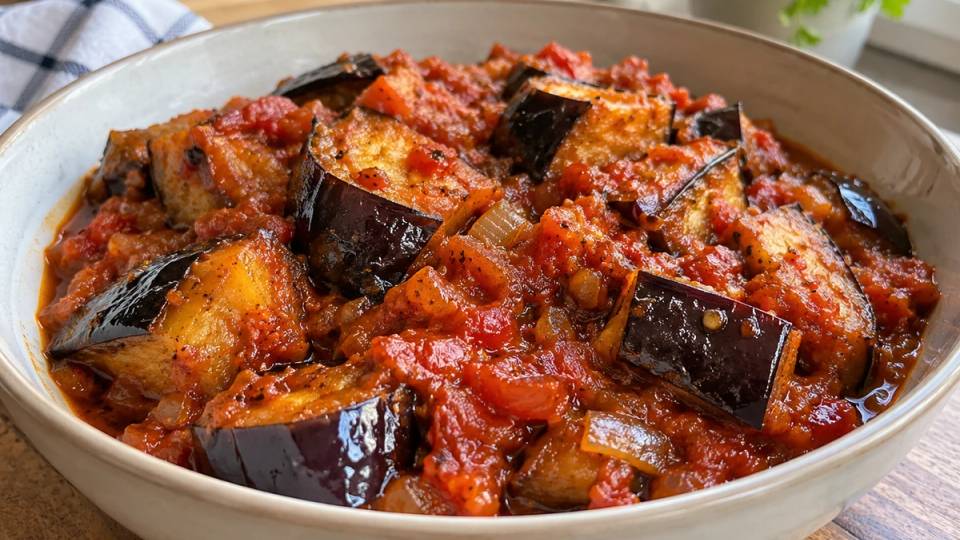
Ingredients
- 700 g eggplants
- 400 g crushed tomatoes (canned or fresh)
- 1 large onion
- 3 cloves garlic
- 3 tablespoons vegetable oil (sunflower or rapeseed)
- 2 tablespoons berbere (adjust to taste)
- 1/2 teaspoon salt (or more, to taste)
- 1/4 teaspoon ground black pepper
- 100 ml water (approx.)
- A few fresh cilantro leaves for garnish (optional)
Preparation
1. 🍆 Preheat your oven to 180-200°C (Thermostat 6-7). Wash the eggplants, cut off the ends, and dice them into pieces of about 2-3 cm. It is not necessary to peel them.
2. 💧 In a large bowl, mix the diced eggplants with 1 tablespoon of vegetable oil, salt, and pepper. Make sure the eggplants are well coated.
3. ♨️ Spread the eggplants in a single layer on a baking sheet lined with parchment paper. Bake for 30 minutes, stirring halfway through, until tender and slightly golden.
4. 🧅 While the eggplants are roasting, prepare the sauce. Peel and finely chop the onion and garlic cloves.
5. 🍳 In a large pan or Dutch oven, heat the remaining 2 tablespoons of vegetable oil over medium heat. Add the chopped onion and sauté for 5-7 minutes, until translucent and slightly caramelized.
6. 🌶️ Stir in the chopped garlic and berbere. Sauté for 1 to 2 more minutes, stirring constantly, until the spices release their aromas. Be careful not to burn the garlic.
7. 🍅 Add the crushed tomatoes and water. Mix well, bring to a boil, then reduce the heat and let the sauce simmer for about 10 minutes, stirring occasionally, for the flavors to develop.
8. ✨ Once the eggplants are roasted, gently incorporate them into the sauce. Mix to coat them well. Let simmer for another 5 minutes so that the eggplants absorb the flavors of the sauce.
9. 🌿 Taste and adjust seasoning if necessary. If the sauce is too thick, add a little water. Serve hot, optionally garnished with fresh chopped cilantro.
Introduction
Eritrea, a country in the Horn of Africa, is renowned for its rich and varied cuisine, often characterized by the use of aromatic spices and fresh vegetables. The term “silsi” in Eritrean cuisine generally refers to a sauce made from tomatoes, onions, and berbere, often served with meat, particularly chicken or beef. This Eggplant Silsi recipe is a homemade plant-based adaptation, designed to explore the flavors of silsi with eggplants, offering a delicious and accessible alternative. It is not an attested local specialty in this exact form but is inspired by Eritrean taste profiles. The goal is to offer a plant-based dish that captures the essence of the spicy and umami flavors found in many Eritrean dishes, while highlighting the melting texture of eggplants. Berbere, an emblematic spice blend of the region, is at the heart of this preparation, bringing warmth and depth. Roasting the eggplants concentrates their flavors and results in a tender texture, which pairs perfectly with the richness of the sauce. This dish can be served as a side or a light main course, and it is particularly enjoyed with injera, the traditional Eritrean flatbread, which allows one to scoop up the sauce. The preparation is relatively simple but requires careful attention to the balance of spices to reveal the full complexity of the aromas. It is an invitation to a culinary journey, an exploration of Eritrean tastes through an original creation respectful of culinary traditions.
Cultural context
Eritrean cuisine is deeply rooted in the country's history and traditions. Berbere, a complex and essential spice blend, is a pillar of this gastronomy, present in many dishes like zigni or tsebhi. Vegetables, legumes, and cereals, especially teff for injera, form the basis of the diet. Fasting periods, observed by a part of the population, have also influenced the development of many vegetarian and vegan dishes. This Eggplant Silsi recipe is a contemporary and plant-based adaptation. It is important to note that it is not a traditional Eritrean dish as such, but a creation inspired by local techniques and flavors, particularly the use of silsi as a sauce base. Traditional silsi is often associated with meat preparations. This vegan version is a homemade interpretation, designed to offer a similar taste experience while adhering to a meat-free diet. It reflects a modern trend to adapt traditional cuisines to meet diverse dietary preferences, while preserving the spirit of authentic flavors.
Tips
For a more intense flavor, let the eggplants marinate with oil and spices for 15-20 minutes before roasting. ⏳
If you don't have berbere, you can substitute it with a blend of paprika, cayenne pepper, cumin, coriander, and ground ginger, but the flavor profile will be different. 🌶️
For a creamier texture, lightly mash a few eggplant pieces into the sauce before serving. 🥣
Feel free to prepare the sauce in advance; its flavors develop more after resting. Reheat gently before adding the eggplants. 🗓️
Use fresh, ripe, crushed tomatoes for a brighter, more natural flavor, if the season allows. 🍅
To prevent eggplants from becoming bitter, you can salt them for 30 minutes before rinsing and roasting, although this is not always necessary with modern varieties.🧂
Adjust the amount of berbere according to your spice tolerance. Start with a small amount and add gradually. 🔥
Serve this dish with a drizzle of extra virgin olive oil just before tasting to enhance the aromas. 🌿
Variations
This Eggplant Silsi recipe offers many adaptation possibilities. For a richer protein version, you can add cooked red lentils or chickpeas to the sauce during the last minutes of cooking, making it an even more nutritious dish. If you wish to vary the vegetables, zucchini or bell peppers can be roasted with the eggplants, or even added directly to the sauce for a different texture. For those who appreciate a touch of acidity, a squeeze of fresh lemon juice or a teaspoon of tamarind paste can be incorporated into the sauce at the end of cooking. If you prefer a milder sauce, reduce the amount of berbere and add a pinch of sugar or a teaspoon of tomato paste to balance the flavors. For a different garnish, chopped fresh mint leaves or parsley can replace cilantro, offering a distinct herbaceous note. Finally, for a quicker version, eggplants can be pan-fried instead of roasted, although roasting brings a unique depth of flavor.
Accompaniments
Eggplant Silsi pairs ideally with injera, the traditional Eritrean flatbread, which allows one to fully enjoy the spicy sauce. If injera is not available, steamed basmati rice or warm pita bread are excellent substitutes. For a complete meal, this dish can be accompanied by a fresh green salad, dressed with a light vinaigrette to provide a refreshing contrast. In terms of beverages, Eritrean black tea, often served with sugar and spices like ginger or cardamom, perfectly complements the flavors of the dish. For those who prefer a cold drink, mint and lemon infused water, or a light and refreshing beer, can also accompany this spicy dish without masking its aromas.
Nutrition notes
Eggplants, the main ingredient of this dish, are an excellent source of dietary fiber, contributing to good digestion and a feeling of fullness. They also contain antioxidants, including anthocyanins, which give them their characteristic purple color. Tomatoes provide vitamin C and lycopene, another antioxidant. Garlic and onion, often used in Eritrean cuisine, are known for their beneficial sulfur compounds. Berbere, a spice blend, contains ingredients like chili, ginger, and turmeric, which are associated with various properties. This dish, being plant-based, is naturally low in saturated fat and cholesterol. It constitutes a nutritious and balanced option, rich in flavors and essential nutrients, contributing to a varied and healthy diet. It is important to note that the benefits are qualitative and do not replace medical advice.