Turmeric Vegetable Rice
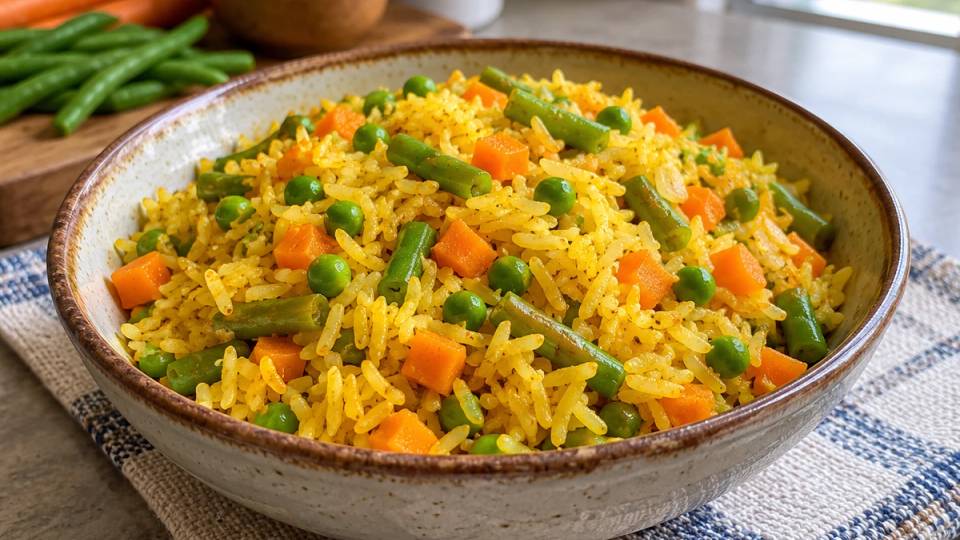
A family-friendly vegan adaptation inspired by Eritrean cuisine, this turmeric vegetable rice dish offers a flavorful and colorful combination. It is prepared by absorption, ensuring fragrant rice and tender vegetables, ideal for a balanced meal.
Ingredients
- 280 g basmati rice
- 150 g carrots, diced small
- 150 g fresh or frozen green beans, cut into pieces
- 100 g fresh or frozen peas
- 1 large onion, finely chopped
- 2 tablespoons vegetable oil (sunflower or rapeseed)
- 1 teaspoon ground turmeric
- 500 ml hot water
- 1/2 teaspoon salt (adjust to taste)
- Freshly ground black pepper (to taste)
Preparation
1. 🍚 Rinse the basmati rice in cold water several times until the water runs clear. Drain and set aside. This rinsing helps remove excess starch, ensuring lighter, less sticky rice.
2. 🧅 In a heavy-bottomed pot or Dutch oven, heat the vegetable oil over medium heat. Add the chopped onion and sauté for 5 to 7 minutes, until translucent and lightly golden. Stir regularly to prevent burning.
3. 🥕 Add the diced carrots and green bean pieces to the pot. Sauté the vegetables with the onion for about 5 minutes, stirring occasionally, until they begin to soften slightly.
4. ✨ Stir in the ground turmeric and salt. Mix well to coat all the vegetables and onion with the spice. Cook for 1 minute, stirring, to develop the turmeric's aromas.
5. 🍚 Add the rinsed and drained rice to the pot. Gently mix with the vegetables and spices for 1 to 2 minutes. This step allows the rice to absorb the flavors before adding water.
6. 💧 Pour the hot water over the rice and vegetables. Bring the mixture to a boil over high heat. Ensure all ingredients are well submerged.
7. 🌿 Once boiling, immediately reduce the heat to minimum, cover the pot tightly with a lid. Let cook without lifting the lid for 15 minutes. Absorption cooking is crucial here.
8. 🟢 After 15 minutes, add the peas to the pot. Do not stir. Replace the lid and cook for another 5 minutes. The peas will steam and retain their vibrant color.
9. 🔥 Turn off the heat and let the rice rest, still covered, for an additional 10 minutes. This resting period allows the rice to finish absorbing the remaining liquid and become fluffier.
10. 🍴 Remove the lid and gently fluff the rice with a fork to separate the grains. Taste and adjust seasoning with salt and pepper if necessary. Serve hot.
11. 🍽️ For a neat presentation, you can press the rice into a small bowl then unmold it onto a plate. Garnish with fresh herbs if desired.
Introduction
Eritrea, a country in the Horn of Africa, boasts a rich and diverse culinary culture, often influenced by its historical exchanges and geography. Rice, though less central than injera in daily Eritrean diet, is nonetheless present in many preparations, often as an accompaniment or integrated into unique dishes. This turmeric vegetable rice recipe is part of this tradition of using rice, while being a family-friendly vegan adaptation. It draws its inspiration from local flavors and cooking methods, where spices play a predominant role in enhancing the taste of simple ingredients.
Turmeric, an emblematic golden spice, is widely used in Eritrea, not only for its vibrant color but also for its earthy and slightly peppery aroma. It is often associated with other spices such as cumin, coriander, or berbere, the quintessential Eritrean spice blend. In this adaptation, turmeric is highlighted for its ability to delicately flavor the rice and give it a sunny hue, making the dish visually appealing.
The absorption method is a common technique in Eritrea for rice, allowing the grains to slowly absorb the liquid and the flavors of the spices and vegetables. This method ensures soft and non-sticky rice, where each grain is infused with the aromas of the dish. Fresh vegetables, such as carrots, green beans, and peas, are chosen for their texture and sweetness, perfectly complementing the spicy rice base. The onion, meanwhile, forms the aromatic base, gently sautéed to release its flavors before the addition of other ingredients.
This recipe is designed to be accessible and easy to make, even for beginner cooks. It does not require exotic ingredients that are difficult to find and can be prepared with basic kitchen utensils. The goal is to offer a tasty and nutritious dish that can be enjoyed with family or friends, while providing a glimpse into the flavors inspired by Eritrean cuisine. It is an invitation to explore the richness of vegetables and spices, transforming simple ingredients into a comforting and characterful meal.
Cultural context
Eritrean cuisine is deeply rooted in traditions and social practices, with a strong prevalence of grain-based dishes like injera, often accompanied by spicy stews (wot). Rice, although consumed, is not the staple food like injera. It is often prepared simply, sometimes with vegetables or spices, and can be served as a side dish or a light main course. This turmeric vegetable rice recipe is a family-friendly vegan adaptation. It is not a traditional Eritrean dish specifically named 'pilaf' or 'turmeric rice' in the sense of a historical appellation. It draws inspiration from Eritrean flavors and cooking techniques, notably the generous use of spices like turmeric and absorption cooking, which are characteristic elements of the region. The emphasis is on vegetables and spices to create a complete and flavorful dish, reflecting a contemporary trend towards integrating plant-based dishes into diets.
Tips
Use good quality basmati rice for long, fragrant grains that don't stick. Rinsing is essential.
Do not lift the lid during rice cooking to maintain steam and ensure even absorption cooking.
For crunchier vegetables, you can add them a little later in the cooking process, after the rice.
If you don't have fresh peas, frozen ones work very well and do not need to be thawed before adding.
Adjust the amount of turmeric according to the desired color and flavor intensity. A pinch of black pepper can enhance its absorption.
For a richer dish, you can add a teaspoon of vegan butter or ghee (if not vegan) at the end, before serving.
If the rice seems too dry at the end, add one or two tablespoons of hot water and let it rest covered for a few more minutes.
Letting the rice rest after cooking is a key step to obtain well-separated and fluffy grains.
Variations
This turmeric vegetable rice recipe is very adaptable. For a spicier version, incorporate a pinch of cayenne pepper or red pepper flakes with the turmeric. You can also add other spices like ground cumin or ground coriander to complexify the flavors. Regarding vegetables, feel free to vary according to seasons and your preferences: diced zucchini, colorful bell peppers cut into strips, fresh spinach added at the end of cooking to wilt, or even sliced mushrooms can enrich the dish. For a touch of plant-based protein, red lentils (cooked separately and added at the end of cooking) or chickpeas (canned, rinsed and drained, added with the peas) can be incorporated. A garnish of toasted cashews or slivered almonds can bring a crunchy texture and extra flavor. For a richer version, vegetable broth can replace water for a more flavorful base.
Accompaniments
This turmeric vegetable rice pairs harmoniously with a variety of dishes. It can be served as a light main course, accompanied by a fresh green salad dressed with a lemon vinaigrette to add a note of acidity. As a side dish, it is excellent with Eritrean vegetable stews like Shiro Wot (a chickpea stew) or other vegan wots, where it absorbs rich and spicy sauces. It also pairs well with grilled vegetables or marinated tofu skewers. For drinks, a lightly sweetened Eritrean black tea (chai) or a fresh ginger infusion would be an excellent choice to complement the spicy flavors. A glass of fresh water with a lemon slice or a light, refreshing beer can also balance the palate.
Nutrition notes
This turmeric vegetable rice dish offers several nutritional benefits thanks to its simple and whole ingredients. Basmati rice provides an energy source in the form of complex carbohydrates, essential for body function. Vegetables like carrots, green beans, and peas are rich in dietary fiber, which contributes to good digestion and a feeling of fullness. They also provide a variety of vitamins and minerals, including vitamin A (carrots), vitamin K (green beans), and vitamin C (peas), as well as folate and potassium. Turmeric, the key spice in this dish, is recognized for its bioactive compounds, notably curcumin, which is an antioxidant. Antioxidants help protect body cells from damage. The vegetable oil used provides essential fatty acids. The entire dish, being plant-based, is naturally cholesterol-free and low in saturated fats, making it a heart-healthy choice. It is a balanced meal that supports overall well-being.