Cardamom Biscuits
These shortbread biscuits, delicately flavored with cardamom, offer a crumbly texture and a subtle taste. A homemade adaptation inspired by Eritrean flavors, ideal to accompany tea or coffee, or to enjoy on their own.
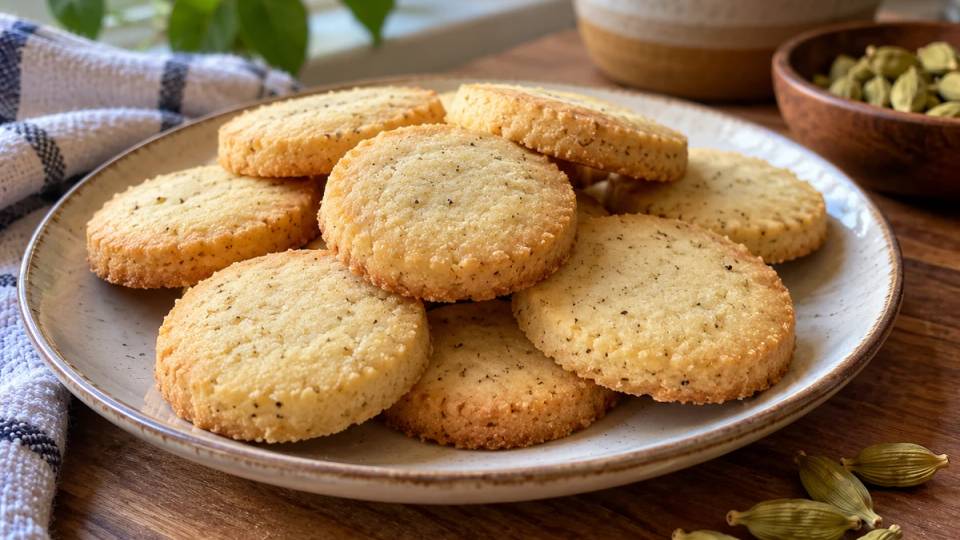
Ingredients
- 220 g all-purpose wheat flour
- 100 g unsalted butter, softened
- 70 g powdered sugar
- 1 medium-sized egg
- 1/2 teaspoon ground cardamom
- 1 pinch of salt
Preparation
In a large bowl, cream the softened butter with the powdered sugar using a whisk or an electric mixer until the mixture is pale and fluffy. This step is crucial for the crumbly texture of the biscuits. 🧈
Incorporate the whole egg into the butter-sugar mixture. Mix well until the egg is completely integrated and the preparation is homogeneous. 🥚
In another bowl, mix the flour, ground cardamom, and a pinch of salt. Ensure the cardamom is well distributed for a uniform fragrance. 🧂
Gradually add the dry ingredients to the wet mixture, mixing at low speed or by hand. Work the dough just enough for it to come together, without over-kneading, to avoid developing gluten. 🥣
Form the dough into a ball, wrap it in plastic wrap, and refrigerate for at least 30 minutes. This resting time allows the butter to firm up and the dough to become easier to work with. ❄️
Preheat your oven to 170°C (thermostat 5-6). Prepare a baking sheet by lining it with parchment paper. 🔥
On a lightly floured work surface, roll out the chilled dough to a thickness of about 3-4 millimeters. Use a cookie cutter of your choice to cut out the biscuits. 🍪
Arrange the cut biscuits on the prepared baking sheet, spacing them slightly. If desired, you can sprinkle a little extra sugar or cardamom on top. ✨
Bake the biscuits for 12 to 15 minutes, or until the edges are lightly golden. The exact duration may vary depending on your oven, so monitor carefully. ⏱️
Let the biscuits cool for a few minutes on the baking sheet before carefully transferring them to a wire rack to cool completely. They will harden as they cool. 🌬️
Once completely cooled, the biscuits are ready to be enjoyed. Store them in an airtight container at room temperature to preserve their freshness. 📦
Introduction
Eritrea, a country in the Horn of Africa, boasts a rich culinary culture where spices play a central role. While Eritrean cuisine is often associated with savory dishes like Zigni or Shiro, sweets and accompaniments for coffee or tea are not to be overlooked. Cardamom, a precious and aromatic spice, is highly valued in the region, particularly for flavoring traditional coffee, bun. Its warm and slightly citrusy aroma pairs perfectly with sweet flavors, bringing a touch of exoticism and refinement. These cardamom biscuits are a contemporary adaptation, a homemade creation inspired by this Eritrean affinity for spices. They do not represent a traditional Eritrean recipe with a specific name, but rather a way to celebrate the integration of local flavors into familiar Western preparations. The idea is to offer a simple, easy-to-make treat that evokes the scents of Eritrea without claiming strict historical authenticity. They are designed to be versatile, perfect for a snack, a light dessert, or an accompaniment to a hot drink. The simplicity of the ingredients and the preparation method make it an accessible recipe for everyone, allowing them to discover or rediscover cardamom in a new and delicious form. The goal is to create a pleasant taste experience, where cardamom is highlighted, recalling the aromas that often float in Eritrean homes during coffee preparation. It is an invitation to explore the flavors of Eritrea in a sweet and gentle way, far from the usual spicy dishes, but just as evocative of the culinary richness of this region.
Cultural context
Cardamom is a highly valued spice in Eritrea, primarily used to flavor coffee during the bun ceremony, an important social ritual. It is also present in some pastries or teas. These cardamom biscuits are a modern adaptation and are not a traditional Eritrean dish with a specific name. They do not originate from an ancestral Eritrean culinary lineage, but rather a contemporary creation inspired by the local use of spices. The intention is to marry the distinctive flavor of cardamom, dear to Eritrean culture, with the universal form of the shortbread biscuit. It is important to note that this recipe is not a reproduction of an existing Eritrean pastry, but a personal interpretation of regional flavors in a Western format. There is no established tradition of shortbread cardamom biscuits in this form in Eritrea. This adaptation aims to offer a new way to appreciate cardamom, drawing inspiration from its aromatic importance in Eritrean cuisine.
Tips
For more aromatic cardamom, use whole pods, remove the seeds, and crush them just before incorporating them into the dough. 🌿
Do not overwork the dough after adding the flour; this would make the biscuits hard instead of crumbly. Mix just enough for the ingredients to be combined. ✋
The resting time in the refrigerator is essential: it prevents the biscuits from spreading excessively during baking and ensures a better texture. 🧊
For biscuits of uniform thickness, use pastry rulers or thickness guides when rolling out the dough.📏
If you don't have a cookie cutter, you can cut the dough into squares or diamonds with a knife. 🔪
Monitor baking carefully: shortbread biscuits can quickly go from golden to burnt. The color should be a light blonde on the edges. 👀
For a gourmet touch, you can dip a portion of the cooled biscuits in melted white chocolate. 🍫
These biscuits keep very well in an airtight metal box for a week or more, retaining their crispness. 🎁
Variations
To vary the pleasures, several adaptations are possible. You could replace part of the wheat flour with almond flour for a richer texture and a pronounced nutty taste, adjusting the liquid quantity slightly if necessary. Adding other spices is also an interesting option: a pinch of cinnamon or ground ginger can harmoniously complement the cardamom, creating a more complex flavor profile. For a more festive version, incorporate grated orange or lemon zest into the dough, bringing a fresh and fragrant citrus note. If you like crunchy textures, adding chopped dried fruits like pistachios or crushed almonds can enrich the biscuits. For chocolate lovers, white or dark chocolate chips can be mixed into the dough before baking. Finally, for an elegant presentation, a light glaze made from icing sugar and lemon juice or orange blossom water can be applied once the biscuits have cooled, adding a sweet touch and a shiny appearance. Each variation allows you to customize these biscuits while retaining their shortbread and fragrant essence.
Accompaniments
These cardamom biscuits pair ideally with a cup of traditional Eritrean coffee, bun, whose cardamom aromas resonate with those of the biscuits. They are also perfect with black tea or a spiced tea, like a light chai, which complements their sweetness without overpowering it. For a more refreshing drink, a glass of fresh milk or a plant-based drink like unsweetened almond milk can be an excellent accompaniment. In terms of food, they can be served at the end of a meal with a fresh fruit platter, offering a light sweet touch. They are also delicious on their own, as a small treat at any time of the day. Avoid overly acidic drinks or overly spicy dishes that might mask the delicacy of the cardamom. A sweet natural wine, such as a Muscat de Rivesaltes, could also accompany them for a special occasion, highlighting their aromatic notes without dominating them.
Nutrition notes
These biscuits, though indulgent, can provide some interesting elements. Wheat flour provides carbohydrates, a source of energy for the body. Butter provides lipids, essential for the absorption of certain vitamins and proper cellular function. The egg contributes good quality protein and various micronutrients. Cardamom, beyond its fragrance, is a spice known for its aromatic compounds. It does not contain significant amounts of macronutrients but is appreciated for its organoleptic properties. These biscuits are a source of quick energy. It is important to consume them in moderation as part of a balanced diet. They are not intended to be a major source of vitamins or minerals, but rather an occasional pleasure. Their value lies in providing a comforting and fragrant sweetness, contributing to gustatory well-being.