Flaxseed and Lemon Cake
This moist flaxseed and lemon cake is a contemporary adaptation inspired by Eritrean ingredients. It offers a delicate texture and a fresh aroma, perfect to accompany tea or coffee. A simple and comforting sweet treat.
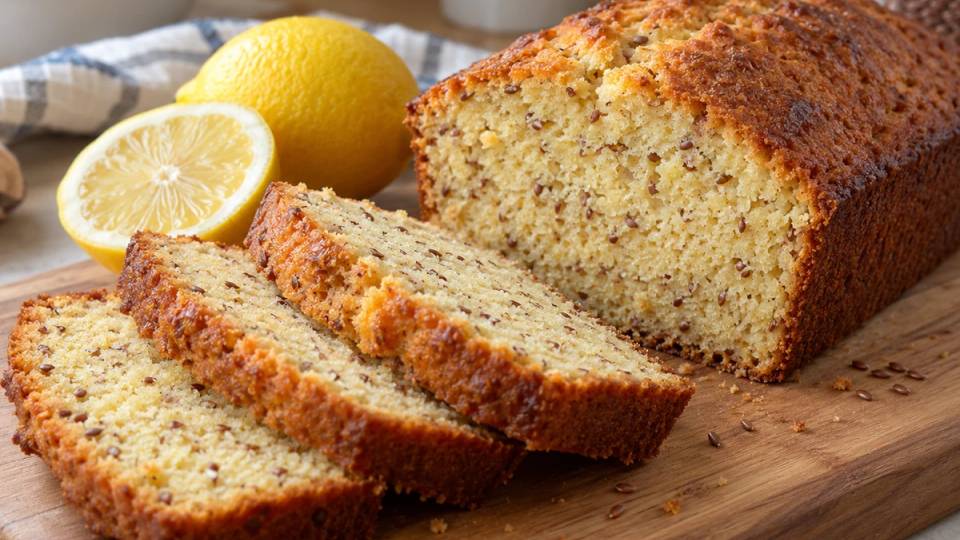
Ingredients
- 200 g all-purpose flour
- 25 g ground flaxseeds
- 2 medium-sized eggs
- 150 ml whole or semi-skimmed milk
- 60 ml neutral vegetable oil (sunflower or rapeseed)
- 90 g granulated sugar
- 8 g baking powder (approximately 2 teaspoons)
- Zest of one untreated lemon
- Juice of half a lemon
- 1 pinch of salt
Preparation
Preheat your oven to 180°C (350°F). Grease and flour a cake pan approximately 20 cm (8 inches) in diameter, or line it with parchment paper. 🎂
In a large bowl, mix the flour, ground flaxseeds, baking powder, and pinch of salt. Ensure the dry ingredients are well combined. 🥣
In another bowl, whisk the eggs with the granulated sugar until the mixture is pale and frothy. This will take a few minutes. 🥚
Gradually incorporate the vegetable oil, milk, grated lemon zest, and lemon juice into the egg and sugar mixture. Mix well to homogenize. 🍋
Gradually pour the liquid ingredients over the dry ingredients, mixing gently with a spatula or a hand whisk. Do not overmix, just enough so there are no lumps of flour. Excessive mixing can make the cake dense. 🥄
Transfer the cake batter to the prepared pan and smooth the surface with the spatula. 🍰
Bake for 35 to 40 minutes. Baking time may vary depending on the oven. To check for doneness, insert a toothpick into the center of the cake: it should come out clean. 🔥
Once baked, remove the cake from the oven and let it cool in its pan for about 10 to 15 minutes before unmolding it onto a wire rack. 🌬️
Let the cake cool completely on the wire rack before slicing and serving. This allows the flavors to develop and the texture to stabilize. 🍽️
Introduction
Eritrea, a country in the Horn of Africa, boasts a rich culinary culture that is often overlooked, where cereals and legumes play a central role. While Eritrean cuisine is globally celebrated for its savory dishes like Zigni or Shiro, traditional desserts, as we know them in the West, are less predominant. Historically, sweets often manifested in simpler forms, incorporating dried fruits, honey, or spices, and were consumed during specific celebrations or as an accompaniment to coffee. Flaxseed, meanwhile, is a plant cultivated in Eritrea, primarily for its seeds and the oil they produce. Its culinary uses are diverse, ranging from integration into porridges to enriching breads or flatbreads. The idea for this flaxseed and lemon cake was born from a desire to explore the possibilities of integrating local products into more modern pastry preparations, while respecting the spirit of simplicity and authenticity. This is not an ancestral Eritrean recipe passed down through generations, but rather a contemporary creation inspired by the country's agricultural resources. The objective is to offer a pastry that, while being accessible and easy to make, highlights the subtle flavor of flaxseed and the freshness of lemon, elements that can be found or appreciated in Eritrea. This cake is an invitation to discover another facet of Eritrean gastronomy, one that turns towards innovation while honoring local ingredients. It represents a bridge between culinary traditions and modern adaptations, offering a new and pleasant taste experience. The preparation is designed to be simple, allowing everyone to recreate this sweet treat at home with common ingredients. The result is a moist, fragrant, and balanced cake, ideal for a gourmet break.
Cultural context
In Eritrea, the cultivation of flax (Teff, Linum usitatissimum) is attested, primarily for its oilseeds and fibers. Flaxseeds are used in various culinary preparations, notably to enrich porridges or breads, appreciated for their nutritional contribution. However, the integration of ground flaxseed into a Western-style cake, with a specific structure and texture, is not an ancestral traditional Eritrean culinary practice. This 'Flaxseed and Lemon Cake' is a contemporary adaptation, a modern creation inspired by the existence of flax as an agricultural resource in Eritrea. It is not a recipe passed down through generations, but rather an exploration of the possibilities of using local ingredients in different pastry contexts. The addition of lemon brings a note of freshness, often appreciated in Eritrean beverages and certain preparations. This recipe aims to highlight the versatility of Eritrean products through an innovative approach, without claiming a direct lineage with established culinary traditions for desserts of this type.
Tips
For a more aromatic lemon zest, use an organic lemon and grate only the yellow part of the peel, avoiding the white pith which is bitter. 🍋
Do not overmix the batter once the dry and wet ingredients are combined; excessive mixing develops gluten and can make the cake less moist. 🚫
If you don't have ground flaxseeds, you can grind whole seeds using a coffee grinder or a small blender. ⚙️
For optimal storage, keep the cake at room temperature in an airtight container for 2-3 days. It can also be frozen in portions. 🧊
Adjust the amount of sugar according to your preference, but keep in mind that sugar also contributes to the cake's texture. ⚖️
For an extra touch of indulgence, you can dust the cooled cake with a light veil of powdered sugar before serving. ✨
Variations
Although this recipe is an adaptation, several variations can be explored to diversify flavors and textures. For a spicier version, one could add half a teaspoon of ground cardamom or cinnamon to the batter, spices commonly used in Eritrean and African cuisine to flavor beverages and certain pastries. The addition of dried fruits, such as chopped dates or raisins, could bring natural sweetness and a different texture, reminiscent of the use of dried fruits in traditional sweets. For a touch of richness, a handful of crushed nuts (cashews or almonds, if available) could be incorporated. If cow's milk is not desired, a plant-based alternative such as almond or soy milk can be used, although this may slightly alter the final texture. For a simple glaze, a mixture of lemon juice and powdered sugar can be prepared and poured over the cooled cake, adding a layer of lemony flavor and a shiny finish. Finally, for a gluten-free version, it would be possible to experiment with gluten-free flours, such as a blend of rice flour and cornstarch, potentially adjusting the amount of liquid to maintain the correct batter consistency.
Accompaniments
This flaxseed and lemon cake, with its sweet flavor and fresh aroma, pairs ideally with hot beverages. A traditional Eritrean coffee, prepared according to the coffee ceremony (Jebena Buna), would be a perfect accompaniment, offering rich and deep notes that pleasantly contrast with the lightness of the cake. Black tea, plain or lightly spiced, is also an excellent option. For a more refreshing drink, fresh fruit juice, such as mango or orange juice, can complement the cake's sweetness. In terms of food, this cake is designed to be enjoyed on its own as an afternoon or evening pastry. It is not traditionally served with other savory dishes. However, for a complete snack, it could be accompanied by a fresh seasonal fruit salad, adding a touch of lightness and vitamins.
Nutrition notes
Ground flaxseed is known for its richness in dietary fiber, which can contribute to good digestion and a prolonged feeling of satiety. It is also a source of lignans, plant compounds with antioxidant properties. Eggs provide high-quality protein, essential for tissue building and repair, as well as B vitamins and minerals. Milk contributes to calcium intake, important for bone health, and protein. Lemon, meanwhile, is an excellent source of vitamin C, an antioxidant that supports the immune system. Vegetable oil provides essential fatty acids. Although this cake contains sugar, it offers a pleasant way to incorporate beneficial ingredients into a pastry. It is important to note that this information is qualitative and does not constitute medical claims or personalized dietary advice.