Pumpkin Cake
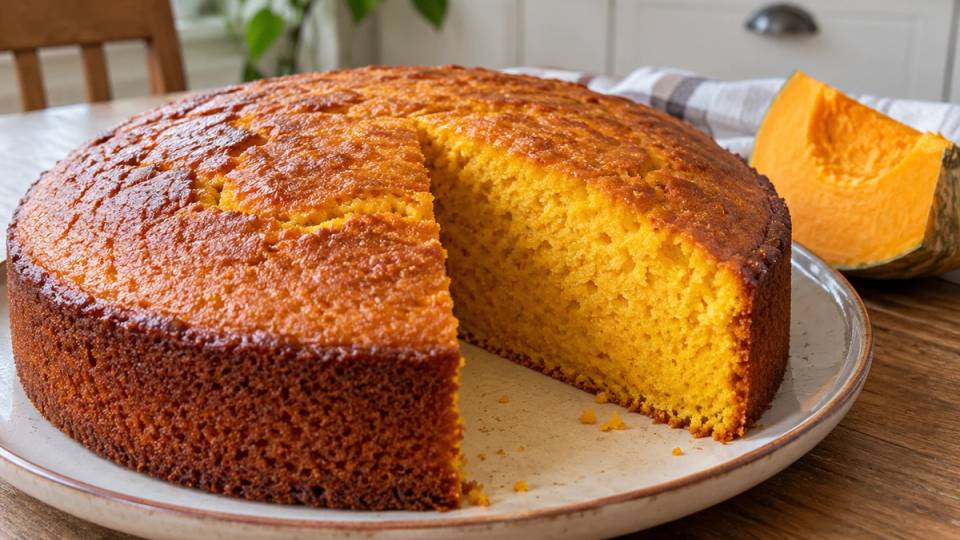
This moist pumpkin cake is a homemade adaptation inspired by Eritrean flavors. It highlights pumpkin in baking, offering a comforting and fragrant sweetness, ideal for a snack or a light dessert.
Ingredients
- 250 g pumpkin puree (butternut or red kuri squash)
- 200 g all-purpose wheat flour
- 2 medium-sized eggs
- 90 g granulated sugar
- 60 ml neutral vegetable oil (sunflower or rapeseed)
- 8 g baking powder (about 2 teaspoons)
- 1 teaspoon ground cinnamon
- 1 pinch of salt
Preparation
Preheat your oven to 180°C (Gas Mark 4) and butter and flour a cake pan about 20 cm in diameter, or line it with parchment paper. 🎂
In a large bowl, mix the flour, baking powder, ground cinnamon, and pinch of salt. Make sure the dry ingredients are well combined. 🥣
In another bowl, beat the eggs with the granulated sugar until the mixture is pale and frothy. This will take a few minutes with an electric mixer. 🥚
Incorporate the vegetable oil and pumpkin puree into the egg and sugar mixture. Mix well until the puree is fully integrated and the preparation is homogeneous. 🎃
Gradually add the dry ingredients (flour, baking powder, cinnamon, salt) to the wet mixture. Gently fold them in with a spatula, being careful not to overmix the batter to maintain its softness. 🥄
Pour the cake batter into the prepared pan and smooth the surface with the spatula. 🍰
Bake the cake in the preheated oven for 35 to 45 minutes. Baking time may vary depending on your oven. ⏱️
To check for doneness, insert a toothpick into the center of the cake: it should come out clean. If not, extend baking in 5-minute intervals. ✅
Once baked, remove the cake from the oven and let it cool in its pan for about 10 to 15 minutes before gently unmolding it onto a wire rack. 🌬️
Let the cake cool completely on the rack before slicing and serving. A well-cooled cake is easier to slice. 🔪
Introduction
Eritrea, a country in the Horn of Africa, boasts a rich culinary culture where local ingredients are often ingeniously transformed. While sweet pastries do not hold the same prominent place as traditional savory dishes, local produce, such as pumpkin, is nevertheless valued in various preparations. This pumpkin cake is a creation that aligns with this approach of valuing local agricultural resources, drawing inspiration from the principles of simplicity and flavor that characterize Eritrean cuisine. It is not a national dessert or an ancestral recipe, but rather a contemporary adaptation, designed to integrate the natural sweetness of pumpkin into an accessible and appreciated pastry. Pumpkin, with its tender and slightly sweet flesh, lends itself wonderfully to this type of preparation, bringing a melting texture and natural moisture to the cake.
The idea behind this recipe is to offer an alternative to more conventional desserts, using a vegetable often associated with savory dishes. The addition of spices like cinnamon, commonly used in Eritrean cuisine to flavor various dishes and beverages, enhances the taste of the pumpkin and gives the cake a warm aromatic dimension. The preparation is simple, requiring no exotic ingredients or complex techniques, making it achievable by everyone. This cake is an invitation to explore new ways of appreciating local products, while offering a sweet and comforting taste experience. It reflects a modern approach to cooking, where innovation blends with respect for authentic flavors and seasonal ingredients. It is a way to celebrate the diversity of Eritrean products, even in adapted culinary contexts.
Cultural context
In Eritrea, pumpkin is a cultivated and consumed vegetable, often integrated into stews or savory dishes. However, its use in sweet preparations like a cake is a modern adaptation and not an established culinary tradition. Eritrean sweet pastry, though present, is less diverse than main dishes based on cereals like teff or legumes. Traditional desserts may include fresh fruits, or preparations based on dates and honey, but a pumpkin cake as presented here is not an ancestral dish. This recipe is inspired by the valorization of local ingredients and the use of spices like cinnamon, which is common in Eritrean cuisine to flavor various beverages and dishes. It is important to note that this creation is a personal interpretation aiming to explore new applications for pumpkin, moving away from strictly traditional uses to offer a contemporary and gourmet pastry. It does not claim to be a historical dish or representative of a specific Eritrean custom.
Tips
For homemade pumpkin puree, cut the pumpkin into pieces, steam or roast it in the oven until tender, then blend it finely. Let it drain well to avoid excess moisture in the cake. 💧
Feel free to add a pinch of nutmeg or ground ginger with the cinnamon to complexify the aromas, if you enjoy these spices. 🌶️
For an even softer cake, make sure all ingredients are at room temperature before starting the preparation. 🌡️
Do not overmix the batter once the dry ingredients are added; excessive mixing can make the cake dense. Stop as soon as the flour is incorporated. 🚫
If you don't have a round pan, a loaf pan can also work, then adjust the baking time if necessary. 📏
For a gourmet touch, you can sprinkle the cake with powdered sugar before serving, or drizzle it with a light cream cheese frosting. 🧁
This cake keeps well at room temperature, in an airtight container, for 2 to 3 days. 📦
Pumpkin puree can be prepared in advance and stored in the refrigerator. Make sure it is very cold before using it. 🧊
Variations
This pumpkin cake offers several adaptation possibilities to vary the pleasures. For a richer texture version, you can incorporate 50 g of chopped nuts or chocolate chips into the batter just before baking. Nuts will provide a pleasant crunch and chips a touch of chocolate indulgence. If you want to accentuate the spicy side, adding half a teaspoon of ground ginger or a hint of ground cloves can harmoniously complement the cinnamon. For a gluten-free version, it is possible to replace wheat flour with a gluten-free flour blend, being careful to adjust the liquid quantity if the batter seems too dry or too liquid, as gluten-free flours absorb differently. Another option is to add the grated zest of an orange or a lemon for a fresh and fragrant citrus note that pairs very well with pumpkin and cinnamon. Finally, for a more festive cake, a light cream cheese and powdered sugar frosting, possibly flavored with vanilla or orange zest, can be spread over the cake once cooled.
Accompaniments
This pumpkin cake pairs perfectly with a cup of traditional Eritrean coffee, prepared according to the coffee ceremony, or a lightly sweetened black tea. The robustness of the coffee or the warmth of the tea complements the sweetness of the cake without overpowering it. For a more refreshing drink, a fresh fruit juice, such as mango or orange juice, can be an excellent option, bringing a touch of acidity that balances the moistness of the dessert. In terms of food, this cake is ideal as a snack or a light dessert after a traditional Eritrean meal, such as a shiro or tsebhi dish, where spicy and savory flavors predominate. It offers a soft and comforting transition. It can also be served with a scoop of vanilla ice cream or a spoonful of plain yogurt for a contrast in temperature and texture.
Nutrition notes
Pumpkin, the main ingredient of this cake, is an excellent source of vitamins and minerals. It is particularly rich in beta-carotene, a precursor to vitamin A, essential for vision and skin health. Its dietary fiber content contributes to good digestion and can help maintain a feeling of fullness. This cake, thanks to the pumpkin, also provides antioxidants that help protect body cells. Cinnamon, used to flavor the cake, is known for its antioxidant properties. Although this cake contains sugar and oil, the presence of pumpkin allows for the integration of beneficial nutrients into a gourmet preparation. It can be an option for a dessert that offers more than just empty calories, by providing nutrients from a vegetable. It is important to consider this cake as part of a balanced diet, where moderation is key to enjoying its benefits without excess.