Pumpkin Bread
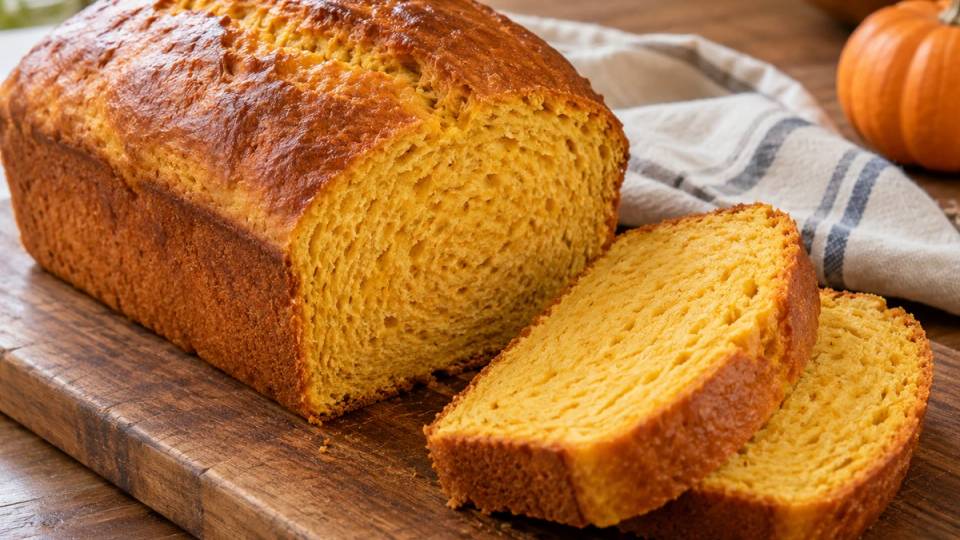
This soft pumpkin bread is an Eritrean homemade adaptation, highlighting a local vegetable. It offers a tender texture and a slightly sweet flavor, perfect for accompanying various dishes or enjoying on its own.
Ingredients
- 400 g all-purpose wheat flour
- 200 g drained pumpkin puree (approx. 300-350 g raw pumpkin)
- 100 ml lukewarm water (adjustable)
- 5 g active dry yeast
- 20 g vegetable oil (sunflower or corn type)
- 7 g fine salt
Preparation
Prepare the pumpkin puree: cut the pumpkin into pieces, steam or boil until very tender. Drain thoroughly and mash into a puree. Let cool completely and drain again if necessary to remove excess water. 🎃
In a large bowl, mix the dry yeast with lukewarm water and a pinch of flour. Let stand for 5 to 10 minutes until bubbles appear on the surface, indicating the yeast is active. 🫧
Add the cooled pumpkin puree, oil, and salt to the yeast mixture. Mix well to combine the wet ingredients. 🥣
Gradually incorporate the flour into the mixture, kneading by hand or with a stand mixer fitted with a dough hook. Knead for about 8 to 10 minutes, until you obtain a smooth, elastic, and non-sticky dough. Adjust the amount of water or flour if the dough is too dry or too sticky. ✨
Form the dough into a ball, place it in a lightly oiled bowl, cover with a clean cloth, and let rise in a warm place for 1 to 1.5 hours, or until it doubles in volume. 📈
Gently deflate the dough by pressing it down softly. Shape it into a round or oval loaf and place it on a baking sheet lined with parchment paper. 🍞
Cover the bread again with a cloth and let it rise a second time for 30 to 45 minutes, or until it has visibly puffed up. Meanwhile, preheat your oven to 190°C (375°F). 🔥
Just before baking, you can lightly brush the top of the bread with a little water or milk for a more golden crust. You can also make a few decorative incisions on top. 🔪
Bake the preheated bread for 30 to 35 minutes, or until golden brown and it sounds hollow when you tap the bottom. ⏱️
Let the bread cool on a wire rack before slicing and serving. This allows the crumb to stabilize and achieve a better texture. 🌬️
This pumpkin bread is ready to be enjoyed. It offers a soft crumb and a delicate flavor. 😋
Introduction
Eritrea, a country in the Horn of Africa, boasts a rich and varied culinary culture, often centered around injera, the traditional flatbread made from teff. However, local culinary creativity is not limited to this staple. Ingredients available in different regions of the country inspire adaptations and innovations in homes. Pumpkin, for example, is a vegetable cultivated in Eritrea, appreciated for its versatility and nutritional value. It is often used in stews, soups, or side dishes. The idea of incorporating pumpkin into a leavened bread is a modern adaptation, aiming to explore new textures and flavors while utilizing local produce. This approach aligns with efforts to promote local agricultural products, as sometimes highlighted by the Eritrean Ministry of Agriculture in its communications, encouraging the diversified use of harvests for food security and nutrition. This pumpkin bread is not a traditional dish with a historical name in Tigrinya or Arabic, but rather a contemporary creation inspired by Eritrean resources and culinary ingenuity. It represents a fusion between classic bread-making techniques and the integration of local flavors and ingredients, offering an interesting alternative to more conventional breads. The soft texture and slight sweetness of the pumpkin transform a simple bread into a comforting and nutritious accompaniment. Its preparation is accessible and allows for the discovery of another facet of Eritrean cuisine, one that evolves and adapts to available tastes and resources. This bread can be served on various occasions, from breakfast to dinner, and pairs well with a multitude of dishes, whether savory or slightly sweet. It is an invitation to explore the richness of Eritrean flavors beyond the beaten path, appreciating the simplicity and authenticity of local ingredients.
Cultural context
In Eritrea, cuisine is deeply rooted in daily life and traditions. While injera is undeniably the emblematic bread, other forms of bread and cereal products exist, often adapted to local resources and occasions. The use of vegetables like pumpkin in cooking is common, particularly in vegetarian stews consumed during fasting periods observed by the Eritrean Orthodox Tewahedo Church. However, this pumpkin bread is a modern homemade adaptation and does not correspond to a traditional Eritrean dish with a specific name or ancient history. It is a culinary innovation, highlighting local pumpkin in a leavened bread form. This approach is in line with a broader trend of exploring and adapting recipes to diversify diets and use available agricultural products, an approach sometimes encouraged for food security. It is important to distinguish this contemporary creation from traditional Eritrean dishes whose history and preparation are well-established.
Tips
Ensure the pumpkin puree is well-drained and completely cooled before incorporating it into the dough; excess moisture can make the dough difficult to work with.
The water temperature for the yeast is crucial: it should be lukewarm (about 35-40°C), neither too hot (would kill the yeast) nor too cold (would slow down activation).
For a crispier crust, place a small oven-safe dish of water in the oven during the first few minutes of baking the bread.
If you don't have a stand mixer, kneading by hand is perfectly possible and even recommended to feel the dough's texture evolve.
To check for doneness, an instant-read thermometer inserted into the center of the bread should read approximately 95-100°C (200-210°F).
Don't hesitate to adjust the amount of flour or water during kneading, as the texture of pumpkin puree can vary.
To store the bread, wrap it in a clean cloth or a paper bag at room temperature for 2-3 days, or freeze it sliced for longer preservation.
Variations
This pumpkin bread can be adapted in various ways to vary the pleasures. For a more aromatic version, you can add a pinch of sweet spices like cinnamon, nutmeg, or ground ginger to the flour, which will enhance the pumpkin flavor, especially if you intend it as an accompaniment to sweet dishes or breakfast. For a savory touch, incorporating herbs de Provence, fresh chopped rosemary, or nigella seeds (often used in Eritrean cuisine) can transform the flavor profile, making it ideal for accompanying stews or salads. Adding sesame seeds or sunflower seeds to the dough or on top before baking will provide a crunchy texture and toasted notes. For a richer version, replace part of the water with milk or plant-based milk. Finally, for a touch of natural sweetness, a teaspoon of honey or agave syrup can be added to the dough, without making it a sweet bread, but accentuating the pumpkin flavor.
Accompaniments
This pumpkin bread, with its soft crumb and delicate flavor, is an excellent versatile accompaniment. It pairs perfectly with traditional Eritrean stews, whether meat-based like Zigni (spicy beef stew) or vegetarian like Shiro (spicy chickpea puree), offering a textured alternative to injera. It is also delicious served with lentil or vegetable soups. For a light meal, it can accompany a fresh salad or be spread with peanut butter or jam for breakfast. As for drinks, a lightly spiced Eritrean black tea (chai) or traditional coffee (buna) would be an excellent choice. For those who prefer cold drinks, fresh fruit juice like mango or papaya, or simply fresh water, would complement this bread nicely.
Nutrition notes
Pumpkin is a nutrient-rich vegetable, and its incorporation into this bread brings interesting qualitative benefits. It is an excellent source of vitamins, especially vitamin A in the form of beta-carotene, essential for vision and skin health. It also contains vitamin C, which contributes to the immune system, and B vitamins. Pumpkin is also rich in dietary fiber, which promotes good digestion and can help maintain a feeling of fullness. Its mineral content, such as potassium, is beneficial for heart function. The addition of pumpkin enriches the bread with antioxidants, which help protect body cells against damage. This bread thus offers a more nutritious option than classic white bread, by integrating beneficial plant elements for general well-being.