White Bean Alicha
A mild and flavorful alicha, prepared with white beans, potatoes, and carrots. This stew is delicately flavored with turmeric and garlic, offering a creamy and comforting texture, typical of Eritrean flavors.
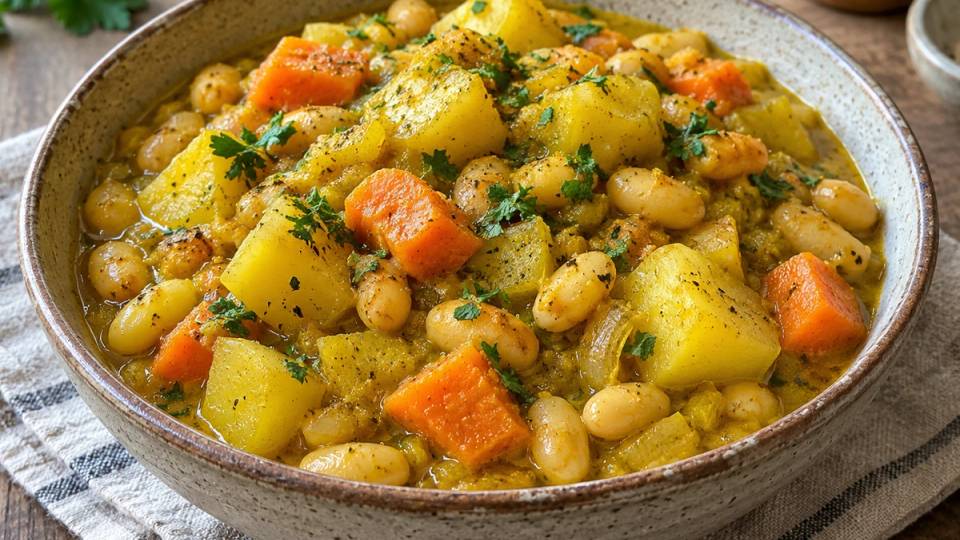
Ingredients
- 600 g cooked white beans (about 250g dry)
- 250 g potatoes, peeled and diced into 2 cm cubes
- 200 g carrots, peeled and cut into thick rounds
- 1 large onion, finely chopped
- 3 cloves garlic, minced
- 1 teaspoon ground turmeric
- 300 ml water or vegetable broth
- 2 tablespoons vegetable oil (sunflower or rapeseed)
- Salt, to taste
- Freshly ground black pepper, to taste
- A few sprigs of fresh cilantro, chopped (for garnish, optional)
Preparation
1. If using dry beans, soak them overnight, then cook until tender. Drain and set aside. If using canned beans, rinse and drain them.
2. In a large pot or heavy-bottomed Dutch oven, heat the vegetable oil over medium heat. Add the chopped onion and sauté for about 5 to 7 minutes, until translucent and lightly golden. Stir regularly to prevent burning. 🧅
3. Stir in the minced garlic and ground turmeric. Cook for an additional 1 minute, stirring constantly, until the aromas develop. Be careful not to burn the garlic. 🌿
4. Add the potato cubes and carrot rounds to the pot. Mix well to coat the vegetables with the onion and spice mixture. Cook for 5 minutes, stirring occasionally.
5. Pour in the water or vegetable broth. Season with salt and pepper to your taste. Bring to a boil, then reduce the heat to low. Cover the pot and simmer for 15 to 20 minutes, or until the potatoes and carrots are tender. Check for doneness with the tip of a knife. 🥕🥔
6. Stir the cooked white beans into the pot. Mix gently to avoid mashing the beans. Simmer uncovered for an additional 10 to 15 minutes, allowing the flavors to meld and the sauce to thicken slightly. The liquid should reduce a bit, but the dish should remain creamy.
7. Taste and adjust seasoning if necessary. If the dish seems too dry, you can add a splash of water or broth. If the sauce is too liquid, simmer a little longer uncovered.
8. Remove from heat. Let rest for a few minutes before serving. Garnish with fresh chopped cilantro if desired. Serve hot. 🔥
9. For an even creamier texture, you can lightly mash some of the beans and potatoes against the sides of the pot before serving. This will help to naturally thicken the sauce.
Introduction
White Bean Alicha is an eloquent illustration of Eritrean cuisine, characterized by its simplicity and depth of flavors. This dish, often prepared in homes, highlights basic ingredients such as legumes and root vegetables, which constitute an essential part of the local diet. In Eritrea, agriculture plays a crucial role, and the promotion of crops like beans is encouraged for their nutritional value and adaptability to climatic conditions. Alicha stands out by the absence of berbere, the emblematic spicy spice blend of many Eritrean dishes, which gives it a particular mildness and makes it accessible to all palates, including those less accustomed to strong flavors. It is often enjoyed during fasting periods observed by the Tewahedo Orthodox community, where the consumption of meat and dairy products is restricted. During these periods, vegetable and legume-based dishes become pillars of the diet, offering both satiety and nutritional richness. White Bean Alicha fits perfectly into this tradition, offering a nourishing and flavorful alternative. Its preparation is relatively simple, but it requires particular attention to the slow cooking of vegetables so that the flavors blend harmoniously and the textures become tender. This dish is not a soup, but rather a thick stew where vegetables and beans are coated in a light and fragrant sauce. It is traditionally served with injera, the spongy Eritrean flatbread, which serves as both an utensil and an accompaniment, allowing to scoop up every flavorful bite. The consumption of Alicha, like many Eritrean dishes, is a communal experience, often shared around a large central dish, strengthening social and family ties. It is a dish that warms the body and soul, a true symbol of Eritrea's hospitality and culinary richness.
Cultural context
Alicha, in Eritrea, is a generic term for mild stews, without the spiciness of berbere. This version with white beans and vegetables is a common domestic adaptation, reflecting the prevalence of legumes in the Eritrean diet, particularly for their role in food security and nutritional value. Beans are important crops, encouraged by local agriculture. This dish is particularly appreciated during religious fasting periods, where vegan diets are observed. It differs from a soup by its thicker and less liquid consistency. Although sources do not specifically describe a 'White Bean Alicha' as a fixed historical recipe, the combination of legumes, root vegetables, and mild spices like turmeric is a well-established culinary practice consistent with Eritrean Alicha traditions, which value the mildness and richness of the natural flavors of the ingredients. This recipe therefore falls within a lineage of practical and flavorful adaptations.
Tips
For dry white beans, an 8 to 12-hour soak is ideal, followed by gentle cooking to prevent them from bursting. 💧
Use good quality vegetable broth to enrich the flavor of the alicha without adding meat.
Do not overcook the vegetables at the beginning; they will continue to cook with the beans for a perfect texture.
If you don't have turmeric, a pinch of ground ginger can add a mild aromatic note, although the flavor profile will be slightly different. 🌶️
For a thicker sauce, remove a ladleful of beans and vegetables, mash them, then reincorporate them into the dish.
Let the dish rest for 10-15 minutes after cooking; the flavors will develop further.
Adjust the consistency by adding a little hot water if the dish is too thick, or by simmering uncovered if too liquid.
Variations
While White Bean Alicha is delicious as is, several variations can be explored to diversify flavors and textures. For a more vegetable-rich version, you could add fresh spinach at the end of cooking, just long enough for it to wilt. Butternut squash or sweet potato cubes can replace some of the potatoes for a sweet touch and vibrant color. If you desire a slight acidity, a small amount of crushed tomatoes or tomato paste can be incorporated with the water, but this would move the dish away from the traditional spirit of mild alicha. For lovers of varied plant-based proteins, red lentils can be added at the same time as the beans; they will slightly disintegrate to thicken the sauce. A pinch of ground cumin can be added with the turmeric for a different, yet still mild, earthy note. For an additional aromatic touch, a few bay leaves or a sprig of rosemary can simmer with the vegetables, then be removed before serving. These adaptations allow for customizing the dish while respecting its mild and comforting character.
Accompaniments
White Bean Alicha pairs ideally with injera, the Eritrean flatbread, which is traditionally used to scoop up the dish. Its spongy texture perfectly absorbs the flavorful sauce. If injera is not available, pita bread, naan bread, or even plain white rice can serve as an accompaniment. To complete the meal, a fresh tomato and cucumber salad, seasoned with a light lemon vinaigrette, would provide a welcome touch of freshness. In terms of beverages, an Eritrean black tea (chai) or traditional coffee after the meal would be authentic choices. For a refreshing drink, fresh fruit juice like mango or papaya, or simply fresh water, would pleasantly accompany this mild and flavorful dish.
Nutrition notes
This White Bean Alicha offers an interesting combination of nutrients. White beans are an excellent source of dietary fiber, essential for good digestion and blood sugar regulation. They also provide plant-based protein, contributing to satiety and muscle mass maintenance. Potatoes and carrots provide complex carbohydrates, which are a source of sustained energy, as well as vitamins and minerals. Carrots are particularly rich in vitamin A in the form of beta-carotene, beneficial for vision and skin health. Turmeric, beyond its color and flavor, is recognized for its antioxidant properties. Garlic and onion add not only flavor but also sulfur compounds and antioxidants. This dish is naturally low in saturated fat and contains no cholesterol, making it a heart-healthy choice. Its richness in fiber and plant-based protein makes it a nourishing and satisfying dish, suitable for a balanced diet.