Berbere Lasagna
An Eritrean adaptation of classic lasagna, infused with the berbere spice blend. This comforting dish marries the richness of Italian cuisine with the deep flavors of Eritrea, offering a unique and warm culinary experience.
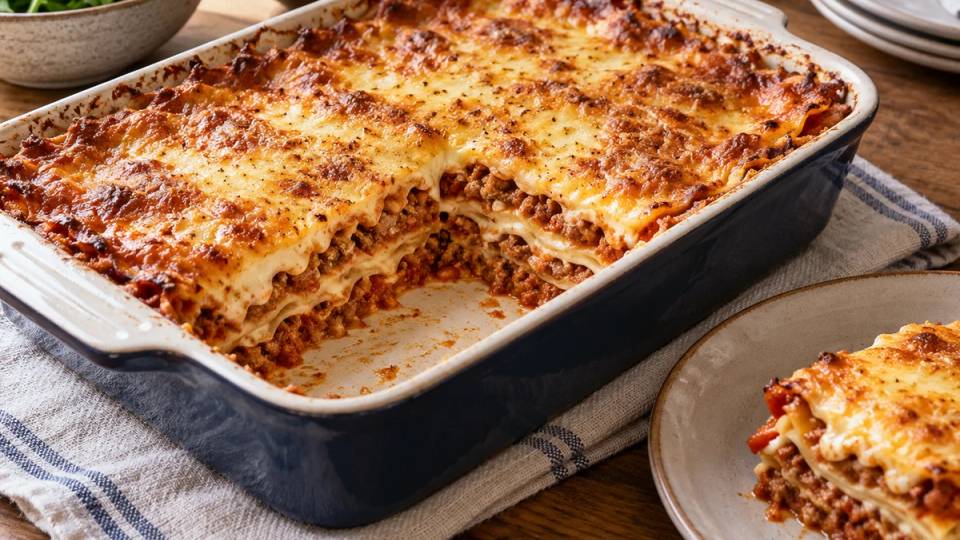
Ingredients
- 180 g lasagna sheets (ready-to-use or pre-cook according to manufacturer's instructions)
- 350 g ground beef
- 500 g crushed tomatoes or passata
- 1 large onion, finely chopped
- 2 cloves garlic, minced
- 2 tablespoons vegetable oil
- 2-3 teaspoons berbere (adjust to taste and strength of your blend)
- 1/2 teaspoon salt (or to taste)
- 1/4 teaspoon black pepper
- For the béchamel:
- 40 g butter
- 40 g wheat flour
- 500 ml whole milk
- A pinch of grated nutmeg
- Salt and white pepper to taste
- 60 g grated cheese (such as mozzarella or mild cheddar, for gratin)
Preparation
1. Prepare the meat sauce: In a large skillet or Dutch oven, heat the vegetable oil over medium heat. Add the chopped onion and sauté until translucent, about 5-7 minutes. Add the minced garlic and cook for 1 more minute until fragrant.
2. Incorporate the ground beef: Add the ground beef to the skillet. Brown it, breaking it up with a wooden spoon, until no pink remains. Drain excess fat if necessary.
3. Season and simmer: Stir in the berbere, salt, and black pepper. Mix well to coat the meat. Add the crushed tomatoes. Bring to a boil, then reduce heat and simmer, covered, for 20-25 minutes, stirring occasionally, for flavors to develop.
4. Prepare the béchamel: While the sauce simmers, melt the butter in a saucepan over medium heat. Add the flour and whisk constantly for 1-2 minutes to create a roux. Remove from heat.
5. Add the milk: Gradually whisk the cold milk into the roux vigorously to avoid lumps. Return to medium heat and continue whisking until the sauce thickens. Season with nutmeg, salt, and white pepper.
6. Preheat oven and prepare sheets: Preheat the oven to 180°C (350°F). If your lasagna sheets require pre-cooking, follow package instructions. For ready-to-use sheets, this step is not necessary.
7. Assemble the lasagna: Spread a thin layer of béchamel at the bottom of a baking dish. Arrange a layer of lasagna sheets. Cover with a layer of meat sauce, then a layer of béchamel. Repeat the process, alternating sheets, meat, and béchamel, finishing with a generous layer of béchamel.
8. Garnish and bake: Sprinkle the grated cheese over the last layer of béchamel. Bake for 35-40 minutes, or until the top is golden and bubbling. If the top browns too quickly, loosely cover with aluminum foil.
9. Rest and serve: Let the lasagna rest out of the oven for 10-15 minutes before slicing and serving. This allows the layers to set and makes slicing easier.
10. Enjoy: Serve hot.
Introduction
Eritrea, a crossroads of influences and cultures, has successfully integrated and transformed external culinary elements to create its own distinct dishes. Berbere lasagna is an eloquent example of this capacity for adaptation and innovation. The Italian heritage, particularly present in the architecture and gastronomy of cities like Asmara, has left an undeniable mark on Eritrean cuisine. Pasta, and more specifically lasagna, has found its place in Eritrean homes, where it is often reinterpreted with local ingredients and spices.
Berbere, an emblematic spice blend from the Horn of Africa, is at the heart of this adaptation. Composed of a myriad of ingredients such as chili pepper, ginger, garlic, cardamom, coriander, cumin, and fenugreek, it imparts an aromatic depth and characteristic warmth to dishes. Its use in lasagna transforms a familiar Italian dish into a distinct Eritrean creation, where each bite reveals layers of complex and harmonious flavors. This recipe is not an ancient Eritrean tradition, but rather a contemporary urban adaptation, born from the fusion of cultures and local culinary ingenuity.
Preparing this berbere lasagna means embarking on a culinary journey that honors both the simplicity of pasta and the richness of Eritrean spices. It is an invitation to explore how world cuisines can meet and enrich each other, creating new culinary traditions. This dish is ideal for a family meal or with friends, offering a tasty and original alternative to classic lasagna, while celebrating the diversity and creativity of modern Eritrean cuisine.
Cultural context
Eritrea has a complex and rich history, marked by various influences, including that of Italy during the colonial period. This presence has left lasting traces, notably in the architecture of Asmara, often called 'Little Rome,' and in gastronomy. Pasta, coffee, and other elements of Italian cuisine have been adopted and adapted by Eritreans. This berbere lasagna recipe is a modern urban adaptation, inspired by this heritage. It does not represent an ancient Eritrean culinary tradition, but rather a contemporary innovation that fuses Italian techniques and ingredients with the distinctive aromatic profile of berbere, a central spice blend in Eritrean cuisine. It is an example of how culinary cultures can evolve and enrich each other, creating new gastronomic expressions.
Tips
For homemade berbere, lightly toast whole spices before grinding them to intensify the aromas.
If the meat sauce seems too dry, add a little water or beef broth during simmering.
For lump-free béchamel, ensure the milk is cold when you add it to the hot roux, and whisk vigorously.
You can prepare the meat sauce and béchamel the day before and store them in the refrigerator to save time on assembly day.
For a crispier cheese crust, broil the lasagna for a few minutes at the end of cooking, watching carefully.
Use an appropriately sized gratin dish so that the layers are compact and do not collapse when cut.
Feel free to adjust the amount of berbere according to your spice tolerance and preference for spicy flavors.
Variations
This recipe is open to many variations to suit tastes and dietary needs. For a vegetarian version, ground beef can be replaced with cooked red or green lentils, finely chopped mushrooms, or a mixture of grated root vegetables like carrots and celery. Berbere pairs very well with these alternatives. Another vegetarian option would be to use crumbled and seasoned tofu. For those who prefer other meats, ground chicken or ground turkey can be substituted for beef, offering a lighter flavor while retaining the richness of berbere. For a touch of freshness, fresh or frozen spinach (well-drained) can be added to the meat sauce or layered between the sheets. Finally, for a gluten-free version, gluten-free lasagna sheets are commercially available, and the flour in the béchamel can be replaced with a gluten-free flour such as rice or corn flour, adjusting proportions if necessary to achieve the correct consistency.
Accompaniments
Berbere lasagna, with its rich and spicy flavors, pairs ideally with accompaniments that balance its intensity. A fresh green salad, dressed with a light lemon or apple cider vinegar vinaigrette, will bring a welcome note of freshness. Steamed green vegetables, such as green beans or broccoli, can also complement the dish without making it heavy. For drinks, a light and fruity red wine, like a Gamay or a young Valpolicella, can accompany the spicy flavors without overpowering them. A light and refreshing lager, or even an amber ale with caramel notes, would also be an excellent choice. For a non-alcoholic option, iced mint tea or water infused with citrus and ginger will offer a refreshing contrast.
Nutrition notes
This berbere lasagna offers an interesting combination of nutrients. Ground beef is a source of high-quality protein, essential for tissue building and repair, as well as heme iron, important for oxygen transport in the body. Tomatoes provide vitamins, especially vitamin C, and antioxidants like lycopene. Onion and garlic contribute beneficial sulfur compounds. Berbere, a spice blend, is rich in antioxidants and may have anti-inflammatory properties thanks to ingredients like turmeric and ginger. Dairy products in the béchamel and cheese provide calcium, essential for bone and teeth health. Pasta provides complex carbohydrates, a source of sustained energy. This dish, consumed in moderation, can be part of a balanced diet, providing a variety of macronutrients and micronutrients.