Pasta with Zigni
This dish fuses the Italian culinary heritage of pasta with the iconic Eritrean stew, Zigni. A flavorful marriage of slow-cooked beef, caramelized onions, tomatoes, and a blend of berbere spices, offering a rich and comforting taste experience.
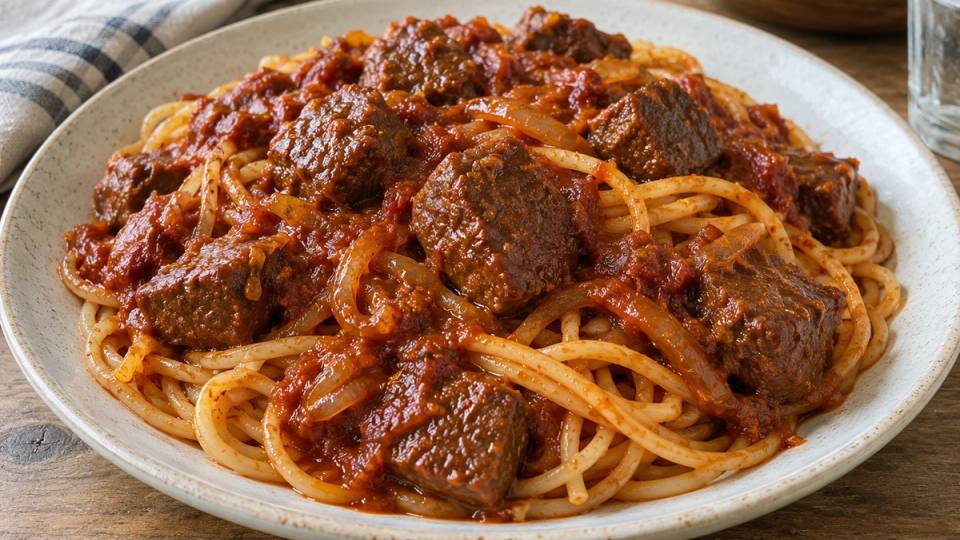
Ingredients
- 320 g Dry pasta (such as penne or fusilli)
- 500 g Stewing beef (shoulder or shank), cut into 2-3 cm cubes
- 300 g Onions, finely chopped
- 400 g Crushed tomatoes (canned)
- 2 tablespoons Vegetable oil
- 2-3 tablespoons Berbere (adjust to taste)
- 2 cloves Garlic, minced
- 1 cm Fresh ginger, grated
- 1 teaspoon Salt
- 1/2 teaspoon Ground black pepper
- 500 ml Hot water (approximate, adjust as needed)
- A few fresh coriander leaves for garnish (optional)
Preparation
In a large Dutch oven or heavy-bottomed pot, heat the vegetable oil over medium heat. Add the finely chopped onions and sauté gently for 15 to 20 minutes, until very tender and lightly caramelized. This step is crucial for the flavor of the Zigni. 🧅
Add the cubed beef to the pot and slightly increase the heat. Brown the meat on all sides for about 5 to 7 minutes. Stir regularly to ensure even cooking. 🔥
Stir in the minced garlic, grated ginger, and berbere. Mix well and cook for 2 to 3 minutes, stirring constantly so that the spices release their aromas without burning. The smell should be intense and fragrant. 🌶️
Add the crushed tomatoes, salt, and black pepper. Mix all ingredients thoroughly. Pour in about 250 ml of hot water, just enough to cover the meat. Bring to a boil. 🍅
Reduce the heat to low, cover the pot, and simmer for at least 90 minutes. Check regularly and add small amounts of hot water if necessary to maintain the sauce and prevent it from sticking to the bottom. The meat should become very tender. ⏳
While the Zigni is simmering, bring a large pot of salted water to a boil. Add the pasta and cook according to package directions until al dente. 🍝
Once the pasta is cooked, drain it, reserving a small ladleful of the cooking water. Taste the Zigni and adjust seasoning if necessary. The sauce should be thick and rich. ✨
Add the drained pasta directly to the pot with the Zigni. Mix gently to coat the pasta thoroughly with the sauce. If the sauce is too thick, add a little of the reserved pasta cooking water. Serve immediately. 🍽️
For a neat presentation, garnish with a few chopped fresh coriander leaves if desired. This dish is best served hot, allowing the flavors to fully express themselves. Enjoy this unique culinary fusion. 🌿
Introduction
Eritrea, a crossroads of influences and cultures, offers a rich and varied cuisine, often little known. Zigni, a spicy meat stew, is undoubtedly one of the country's most emblematic dishes, celebrated for its depth of flavor and comforting character. Traditionally served with injera, the Eritrean flatbread, Zigni has, over time and through cultural interactions, found new expressions. One of the most fascinating adaptations is its association with pasta, a direct legacy of the Italian colonial period. This culinary fusion is not a simple juxtaposition, but a true integration where the robust flavors of Zigni marry the familiar texture of pasta, creating a unique and appreciated dish. 🍝
This Pasta with Zigni recipe is an exploration of this culinary encounter. It highlights the richness of berbere spices, a complex and aromatic blend that is the soul of Zigni. The slow cooking process of onions and meat allows for the development of deep, caramelized flavors, essential to the dish's authenticity. The addition of tomatoes brings a balanced acidity and a creamy texture to the sauce. Although injera remains the traditional companion to Zigni, the pasta option offers an accessible and delicious alternative, particularly appreciated in Eritrean homes and beyond. It is a way to celebrate cuisine's ability to evolve, adapt, and create new traditions while honoring its roots. This dish is a testament to Eritrean culinary ingenuity, capable of transforming simple ingredients into a memorable feast. It embodies generosity and conviviality, values dear to Eritrean culture. Preparing this dish is to immerse oneself in a part of Eritrean history and gastronomy, a gustatory journey that awakens the senses and nourishes the soul. Each step of this recipe is designed to faithfully recreate the authentic flavors of Zigni, while harmoniously adapting it to pasta.
Cultural context
Zigni is a pillar of Eritrean cuisine, often prepared for special occasions and family meals. Its name is synonymous with spicy meat stew, and there are many variations, including beef Zigni (Sga Zigni) and chicken Zigni (Doro Zigni). The use of berbere is fundamental, this spice blend being the aromatic heart of the dish. The association with pasta is a modern adaptation, born from Italian influence during the colonial period. It is important to note that this pasta version is not an ancestral tradition, but rather a culinary evolution that has found its place in Eritrean homes. It differs from Italian 'pasta al sugo' by the intensity and complexity of Zigni's flavors, particularly thanks to berbere and the prolonged cooking of onions. This encounter between two culinary cultures testifies to the richness and integrative capacity of Eritrean gastronomy. 🇪🇷🇮🇹
Tips
Do not rush the cooking of the onions: this is the foundation of Zigni's flavor. Slow and gentle cooking until caramelized is essential. 🧅
Adjust the amount of berbere according to your spice tolerance. Start with 2 tablespoons and add gradually if you want more intensity. 🌶️
Use good quality stewing meat. Beef shoulder or shank are ideal as they become very tender after long cooking. 🥩
Monitor the water level while the Zigni simmers. Add small amounts of hot water to maintain the desired sauce consistency and prevent the bottom from sticking. 💧
For a deeper flavor, prepare the Zigni the day before. The flavors have time to develop and intensify. Reheat gently before mixing with fresh pasta. 🗓️
Choose pasta shapes that hold sauce well, such as penne, rigatoni, or fusilli. Their shape allows the sauce to adhere well. 🍝
Don't hesitate to save a little pasta cooking water. It's valuable for binding the sauce when mixing the pasta with the Zigni. ✨
Variations
Although this recipe focuses on beef, Zigni can be prepared with other meats. A popular variation is Doro Zigni, which uses chicken. To adapt it, replace the beef with 500g of boneless chicken thighs cut into pieces. The cooking time for chicken will be reduced to approximately 45-60 minutes, or until tender. For a vegetarian or vegan version, it is possible to replace the meat with brown lentils or chickpeas. In this case, soak the legumes the day before if necessary, then add them after the onions and spices, extending the cooking time until they are tender. Vegetables such as diced carrots or potatoes can also be added to enrich the dish. For an extra touch of acidity, a few drops of lime juice can be added at the end of cooking. 🍋
Accompaniments
Pasta with Zigni, with its rich and spicy flavors, pairs well with simple accompaniments that balance its intensity. A fresh green salad, dressed with a light lemon vinaigrette, will bring a welcome touch of freshness. Steamed green vegetables, such as green beans or broccoli, can also complement the dish without overpowering it. For drinks, a traditional Eritrean black tea, often served with sugar and sometimes spices like cardamom, would be an excellent choice to accompany the robust flavors of Zigni. A light and fruity red wine, such as a Gamay or Pinot Noir, could also pair with the richness of the dish without dominating. For a non-alcoholic option, sparkling water with a slice of lime offers a refreshing contrast. 🥂
Nutrition notes
This dish, rich in beef, is an excellent source of high-quality protein, essential for building and repairing body tissues. Beef also provides heme iron, easily absorbed, crucial for oxygen transport in the blood, as well as B vitamins, particularly B12, important for the nervous system. Onions and tomatoes contribute antioxidants, fiber, and various vitamins, such as vitamin C. Berbere spices, beyond their aromatic profile, are often associated with anti-inflammatory and digestive properties. Pasta provides an energy source in the form of complex carbohydrates, offering a gradual release of energy. The whole constitutes a nourishing and balanced meal, providing a combination of essential macronutrients and micronutrients for the proper functioning of the body. It is important to note that specific benefits may vary depending on quantities and preparation methods. 💪