Fish Fata
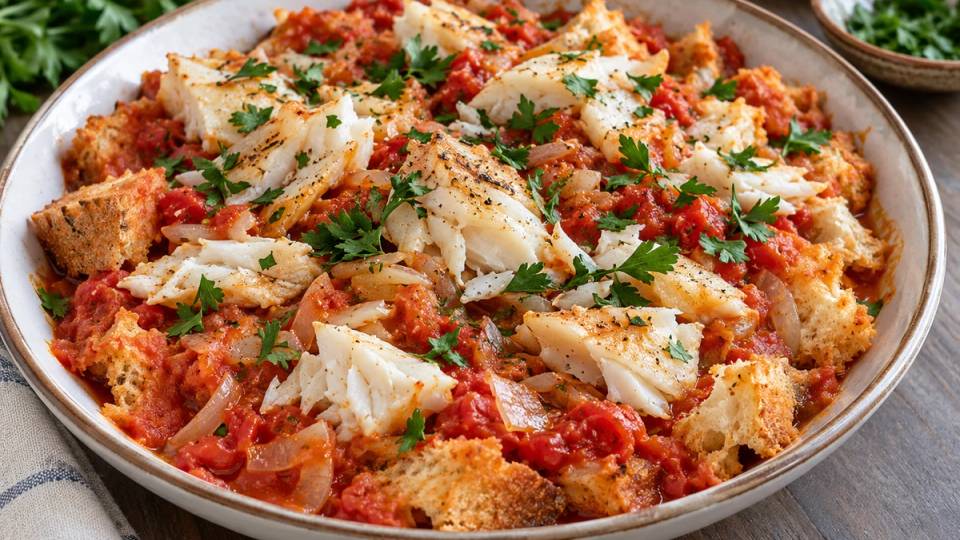
This Eritrean dish reinterprets the concept of fata with white fish and stale bread. A simple and comforting preparation, where flavors blend harmoniously for a tasty and nourishing meal.
Ingredients
- 250 g stale bread (e.g., baguette or country bread)
- 600 g white fish fillet (cod, hake, tilapia)
- 400 g crushed tomatoes or passata
- 1 large onion
- 2 cloves garlic
- 2 tablespoons vegetable oil (sunflower or rapeseed)
- 1/2 teaspoon berbere (Eritrean spice blend, adjust to taste)
- 1/4 teaspoon ground cumin
- Salt, freshly ground black pepper
- 100 ml water (approx., adjust as needed)
- A few sprigs fresh cilantro for garnish (optional)
Preparation
1. 🐟 Prepare the fish: Steam or poach the white fish in lightly salted water for 5 to 7 minutes, until opaque and easily flaked. Let cool slightly, then flake it, carefully removing all bones. Set aside.
2. 🥖 Prepare the bread: Tear the stale bread into medium-sized pieces (about 2-3 cm). The goal is to have pieces that will absorb the sauce well without completely disintegrating.
3. 🧅 Prepare the aromatic base: Peel and finely chop the onion and garlic cloves. In a large skillet or heavy-bottomed pot, heat the vegetable oil over medium heat.
4. 🍳 Sauté the aromatics: Add the chopped onion to the skillet and sauté for 5 to 7 minutes, until translucent and lightly golden. Then add the chopped garlic and sauté for 1 more minute, being careful not to burn it.
5. 🌶️ Incorporate spices and sauce: Add the berbere and ground cumin to the skillet. Sauté for 30 seconds, stirring constantly to release the aromas. Then pour in the crushed tomatoes or passata. Season with salt and pepper to your taste.
6. 💧 Simmer the sauce: Add about 100 ml of water to the sauce. Mix well and let simmer over low heat for 10 to 15 minutes, stirring occasionally, for the flavors to develop and the sauce to thicken slightly. The consistency should be liquid enough to soak the bread.
7. 🍞 Soak the bread: Incorporate the torn bread pieces into the hot sauce. Mix gently so that the bread is well impregnated with the sauce. Let rest for 2 to 3 minutes for the bread to absorb the liquid, but without becoming mushy.
8. 🐟 Add the fish: Gently incorporate the flaked fish into the preparation. Mix gently to avoid breaking the fish too much. Reheat the entire dish for 2 to 3 minutes, just long enough for the flavors to meld.
9. 🌿 Adjust and serve: Taste and adjust seasoning if necessary. If desired, garnish with fresh chopped cilantro before serving. Serve immediately, hot.
10. 🍽️ Presentation: Fish Fata is a rustic dish. It is usually served directly in the cooking dish or in deep plates, allowing everyone to serve themselves generously.
Introduction
Fata, in its essence, is an Eritrean dish that embodies culinary ingenuity and the valorization of available resources. Traditionally, it often consists of a preparation based on torn or cut bread, mixed with a sauce or stew. This approach allows simple ingredients to be transformed into a complete and satisfying meal. Eritrea, with its rich history and cultural diversity, has developed a cuisine that reflects its environment and interactions. Dishes are often designed to be shared, promoting conviviality and social connection around the table. Eritrean cuisine is also marked by the use of aromatic spices that impart a unique depth of flavor to each preparation.
Our version of Fish Fata is a contemporary adaptation, designed to highlight white fish and stale bread in a way that respects the spirit of fata. The idea is to create a balanced dish where the soft texture of the soaked bread contrasts with the delicate flesh of the fish. The tomato sauce, a central element of this recipe, brings an acidity and richness that bind all the components together. This dish is particularly appreciated for its simplicity and its ability to transform leftovers into a delicious meal. It is part of a zero-waste cooking approach, while offering an authentic and comforting taste experience. The preparation is accessible, even for novice cooks, and does not require exotic ingredients that are difficult to find. It is an invitation to explore the flavors of Eritrea through a dish that, although adapted, retains the soul of its culinary tradition. Fish Fata is an excellent option for a weekday meal, offering both speed and flavor.
Cultural context
The concept of 'fata' in Eritrea and the Horn of Africa generally refers to a dish where bread is a central component, often mixed with other ingredients to form a meal. This can involve torn bread mixed with a spicy sauce, vegetables, or meat. This practice is rooted in a tradition of valuing food and creating nourishing meals from simple ingredients. Our Fish Fata recipe is a modern adaptation of the fata principle. It is important to note that this specific version with white fish and a tomato sauce as described is not an attested Eritrean coastal tradition or a historical dish. It is inspired by the general idea of fata to create a homemade dish, using common ingredients. It does not claim to be an ancestral recipe or a specific regional specialty, but rather a creative interpretation that fits into the spirit of Eritrean cuisine, where ingenuity and flavor are paramount. It reflects a contemporary approach to cooking that honors the principles of traditional cuisine.
Tips
Use good quality stale bread, like day-old baguette or country bread, for better hold and absorption.
Do not overcook the fish; it should remain tender and easy to flake without being dry.
Berbere is essential for the Eritrean flavor. If you don't have any, a mixture of paprika, cayenne pepper, ginger, and garlic powder can be a very simplified alternative.
Adjust the amount of water in the sauce according to your bread's absorption. The goal is soft bread, not soggy.
For a deeper flavor, you can add a pinch of ground cardamom to the sauce.
If you prepare this dish in advance, reheat it gently over low heat, adding a little water if the sauce has thickened too much.
Don't hesitate to taste the sauce before adding the bread to adjust the seasoning to your liking.
For a more homogeneous texture, you can lightly mash the soaked bread with a fork before adding the fish.
Variations
Although our Fish Fata is an adaptation, several variations can be explored to diversify flavors and textures. For a vegetarian version 🌱, fish can be replaced by cooked lentils (about 200g) or chickpeas (one 400g can, drained), added to the sauce at the same time as the bread. Vegetables cut into small dice such as carrots, zucchini, or bell peppers can be added with the onion to enrich the dish with fiber and vitamins. For an extra touch of spice, a small fresh green chili, chopped, can be incorporated into the sauce. If berbere is not available, a spice blend like sweet paprika, cumin, ground coriander, and a hint of cayenne pepper can be used, although the flavor will be different. The type of bread can also vary: injera, traditional Eritrean bread, could be used if available, offering a more authentic texture and flavor. However, injera is more delicate and soaks up very quickly. For a richer version, a drizzle of extra virgin olive oil can be added just before serving.
Accompaniments
Fish Fata, with its robust and comforting flavors, pairs ideally with simple dishes that complement its richness without overpowering it. A classic accompaniment would be a fresh green salad 🥗, dressed with a light lemon vinaigrette, which will bring a touch of acidity and freshness to balance the dish. Steamed green vegetables, such as spinach or green beans, can also make an excellent accompaniment. For drinks, a traditional Eritrean black tea, often served sweet and sometimes spiced, would be an authentic choice. A fresh fruit juice, like mango or orange juice, would bring a refreshing fruity note. For those who prefer an alcoholic beverage, a light, low-bitterness beer or a dry and fruity white wine, such as a Sauvignon Blanc or a Pinot Grigio, would pair well with the flavors of fish and tomato.
Nutrition notes
This Fish Fata offers several nutritional benefits. White fish is an excellent source of lean protein, essential for building and repairing body tissues. It is also rich in B vitamins, important for energy metabolism, and minerals like phosphorus and selenium. Tomato sauce provides antioxidants, particularly lycopene, which is better absorbed after cooking. Onions and garlic are known for their beneficial sulfur compounds. Stale bread, while being a source of carbohydrates, contributes to energy intake and, if whole grain, can provide fiber. This dish, by combining these ingredients, offers a balanced meal that supports muscle function, the immune system, and general health, without specific medical claims. It is part of a varied and balanced diet.