Berbere Shrimp
A contemporary adaptation of sautéed shrimp, enhanced by the berbere spice blend. This quick dish highlights the intense flavors of Eritrea, offering a rich and fragrant culinary experience, inspired by Red Sea seafood.
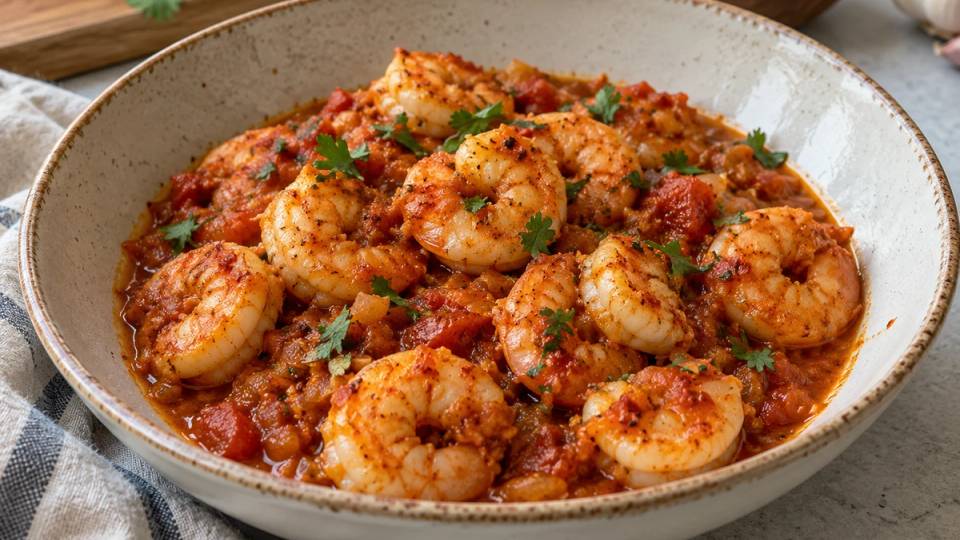
Ingredients
- 600 g peeled, raw shrimp
- 2 tablespoons vegetable oil (sunflower or rapeseed)
- 3 cloves garlic, finely minced
- 200 g crushed tomatoes (canned or fresh and peeled)
- 2 tablespoons berbere (Eritrean spice blend)
- 1/2 teaspoon salt (adjust to taste)
- 1/4 teaspoon freshly ground black pepper
- 50 ml water or vegetable broth
- A few sprigs fresh cilantro, chopped (for garnish)
Preparation
1. Prepare the shrimp: If not already peeled, peel and devein them. Rinse them under cold water and pat them thoroughly dry with paper towels. It is crucial that they are very dry for quick and even cooking. 🦐
2. Prepare the aromatics: Finely mince the garlic cloves. If using fresh tomatoes, peel, deseed, and crush them. Measure out the berbere and other seasonings.
3. Heat the oil: In a large pan or wok, heat the vegetable oil over medium-high heat. The oil should be very hot before adding the ingredients to quickly sear the shrimp.
4. Sauté the garlic: Add the minced garlic to the hot pan and sauté for about 30 seconds, just until fragrant without letting it burn. 🧄
5. Add tomatoes and berbere: Stir in the crushed tomatoes and berbere. Mix and simmer for 2 to 3 minutes, stirring occasionally, for the flavors to develop and the sauce to thicken slightly. 🍅
6. Add water or broth: Pour the water or vegetable broth into the pan. Bring to a gentle boil, then reduce the heat and simmer for 2 minutes to fully integrate the spices into the sauce. The consistency should be slightly coating.
7. Cook the shrimp: Add the peeled shrimp to the sauce. Sauté for a maximum of 2 to 4 minutes, stirring constantly, until they turn opaque and pink. Overcooking would make the shrimp rubbery. ⏱️
8. Season and serve: Season with salt and pepper to your taste. Taste and adjust seasoning if necessary. Remove immediately from heat. Serve hot, garnished with fresh chopped cilantro. 🌱
Introduction
Eritrea, with its extensive coastline along the Red Sea, boasts a wealth of marine products which, although less frequently at the heart of iconic national dishes like zigni or shiro, constitute an important food resource for coastal communities. Eritrean cuisine is deeply rooted in the use of spices, cereals like teff, and vegetables, but seafood is consumed and appreciated. This berbere shrimp dish is an exploration of Eritrean flavors applied to a marine ingredient. It is not a traditional Eritrean recipe in the strict sense, but rather a contemporary creation inspired by the region's distinctive aromatic profiles, notably the omnipresence of berbere. Berbere, a complex and pungent spice blend, is the cornerstone of many Eritrean dishes, bringing warmth, depth, and an inimitable taste signature. The idea here is to marry the delicacy of shrimp, quickly seared to preserve their texture, with the aromatic power of berbere, garlic, and tomato. This synergy creates a balanced dish where the freshness of the shrimp is sublimated by the complexity of the spices. The goal is to offer an accessible, quick-to-prepare recipe that can be enjoyed by those looking to discover Eritrean flavors from a different angle, using readily available ingredients. The quick cooking of shrimp is essential to prevent them from becoming rubbery, thus ensuring perfect texture and optimal flavor. This dish is an invitation to explore the versatility of berbere beyond traditional stews, by integrating it into lighter and faster preparations. It reflects a modern approach to cooking, where innovation draws on culinary traditions to create new taste experiences.
Cultural context
Eritrean cuisine is renowned for its spicy stews, often meat or vegetable-based, served with injera, a fermented flatbread. Berbere is a fundamental spice blend, present in almost every Eritrean household, and it is the beating heart of many dishes. However, seafood, although available along the Eritrean coast, is not traditionally the main ingredient in the most well-known national dishes. This berbere shrimp recipe is a contemporary adaptation. It does not claim any specific traditional Eritrean appellation. It is inspired by the use of berbere and the abundance of Red Sea products to create a dish that evokes local flavors without being a reproduction of an ancestral recipe. It is important to note that Eritrea has a rich culinary tradition, but this recipe is a modern interpretation, a bridge between local ingredients and current culinary techniques, respecting the spirit of Eritrean spices.
Tips
Use good quality shrimp, preferably fresh, for optimal taste. If using frozen shrimp, make sure to thaw them completely and pat them dry before cooking.
Never overcook shrimp: they become rubbery very quickly. As soon as they are pink and opaque, remove them from the heat.
Adjust the amount of berbere according to your spice tolerance. For a less spicy dish, reduce the amount of spices.
For a deeper flavor, you can marinate the shrimp with a little minced garlic and a pinch of berbere for 15-20 minutes before adding them to the sauce.
If you don't have berbere, you can substitute it with a spice blend including paprika, cayenne pepper, cumin, coriander, ginger, and cardamom, but the flavor profile will be different.
Serve this dish immediately after cooking to enjoy the best texture of the shrimp and the warmth of the spices.
Variations
This berbere shrimp dish is already an adaptation, but it offers several possibilities for variations to explore other flavors or textures. For a richer version, one could add a touch of coconut milk at the end of cooking, which would soften the spiciness of the berbere and bring extra creaminess to the sauce. Another option would be to incorporate finely chopped vegetables, such as colorful bell peppers or onions, sautéed with the garlic before adding the tomatoes, to increase the texture and nutritional value of the dish. For lovers of smoky flavors, a pinch of smoked paprika could be added to the berbere. If you want a touch of acidity, a squeeze of lime juice just before serving will enhance the freshness of the shrimp. For those who prefer other seafood, calamari rings or mussels could be used, adjusting cooking times accordingly. Finally, for a vegetarian or vegan version, shrimp could be replaced by firm tofu cubes or chickpeas, extending the cooking slightly so that the tofu absorbs the sauce flavors well.
Accompaniments
These berbere shrimp pair ideally with accompaniments that can absorb the spicy sauce and balance the intense flavors. Injera, the traditional Eritrean flatbread, is a natural choice, allowing you to scoop up the sauce and fully appreciate the dish. In the absence of injera, basmati rice or couscous can serve as excellent bases. For a touch of freshness, a simple green salad with a light lemon and olive oil vinaigrette would be a good counterpoint. In terms of beverages, an Eritrean black tea, often sweetened and spiced, can complement the flavors of berbere. For those who prefer a more refreshing drink, a light lager beer or a dry and fruity white wine, such as a Sauvignon Blanc or a Pinot Grigio, will help cleanse the palate and balance the spiciness of the dish. Fresh water is always a welcome option to accompany spicy dishes.
Nutrition notes
This berbere shrimp dish offers several nutritional benefits. Shrimp are an excellent source of lean protein, essential for building and repairing body tissues. They are also low in calories and saturated fat. Shrimp provide important vitamins and minerals, including selenium, a powerful antioxidant, vitamin B12, necessary for nerve function, and phosphorus, crucial for bone health. Berbere, a spice blend, contains ingredients like turmeric, ginger, and chili, which are known for their antioxidant and anti-inflammatory properties. Tomatoes, meanwhile, are rich in vitamin C and lycopene, another antioxidant. Garlic also contributes to the intake of beneficial compounds. The vegetable oil used provides unsaturated fatty acids. This dish, consumed in moderation and as part of a balanced diet, can contribute to a varied intake of essential nutrients.