Lemon Fried Fish
This lemon fried fish is a simple and flavorful preparation, inspired by Eritrean culinary traditions. White fish fillets are delicately coated and fried until tender with a golden crust, enhanced with a touch of cumin and fresh lemon.
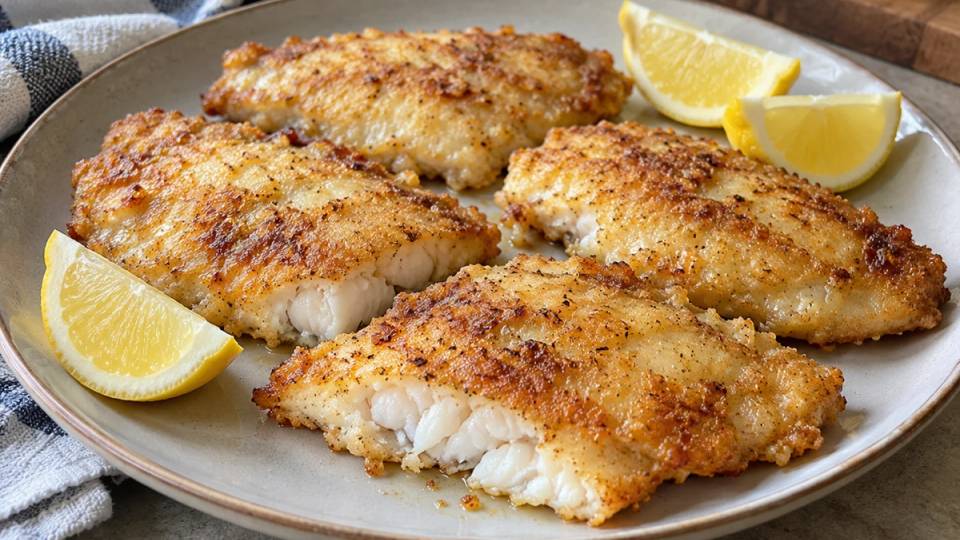
Ingredients
- 4 white fish fillets (such as cod, tilapia, or sea bream) 🐟, about 700 g total, deboned and skinless
- 40 g fine wheat flour
- 1 teaspoon ground cumin
- 1/2 teaspoon fine salt
- 1/4 teaspoon freshly ground black pepper
- 200 ml vegetable oil (sunflower or peanut) for frying
- 1 yellow lemon, cut into wedges for serving
Preparation
Gently rinse the fish fillets under cold water and pat them thoroughly dry with paper towels. Good moisture absorption is crucial for crispy frying.
In a shallow dish, mix the flour, ground cumin, fine salt, and ground black pepper. Ensure the spices are well distributed in the flour.
Dredge each fish fillet in the seasoned flour mixture, making sure it is fully and evenly coated. Lightly tap off any excess flour.
In a large, deep skillet or a deep fryer, pour the vegetable oil. Heat the oil over medium-high heat until it reaches a temperature of approximately 170-175°C (338-347°F). A small piece of flour dropped into the oil should sizzle immediately.
Carefully place the fish fillets into the hot oil, one or two at a time, to avoid overcrowding the pan and dropping the oil temperature. Leave space between each fillet.
Fry each side for about 3 to 5 minutes, or until the fish is golden brown, crispy, and the flesh is opaque and cooked through. Cooking time may vary depending on the thickness of the fillets.
Using a slotted spoon, remove the fish fillets from the oil and place them on a wire rack lined with several layers of paper towels to drain excess fat. This helps maintain crispiness.
Repeat the process with the remaining fillets, ensuring to maintain the oil temperature between each batch. If the oil becomes too hot, slightly lower the heat.
Serve the fried fish immediately, accompanied by fresh lemon wedges. Each diner can squeeze lemon juice over their fish to taste.
For a neat presentation, you can garnish the dish with a few fresh cilantro leaves or flat-leaf parsley, if desired.
Introduction
The Eritrean coastline, bordered by the Red Sea, offers an abundance of fresh fish that has naturally found its place at the heart of local cuisine. While fish stews and grilled fish are common preparations, fried fish, often prepared simply and directly, is a popular method for its speed and the flavor it imparts to the fish. This lemon fried fish recipe is part of this domestic tradition, where product freshness is paramount and seasoning aims to enhance the natural taste of the fish without masking it. It represents a culinary approach that prioritizes simplicity and efficiency, allowing one to savor fish in all its splendor.
Historically, access to marine resources has always been an asset for Eritrean coastal communities, influencing eating habits and cooking techniques. Frying is an ancient and universal technique, but its application in Eritrea, particularly for fish, is often characterized by the use of simple spices and the accompaniment of fresh condiments. Lemon, for example, is a citrus fruit widely used in Eritrean cuisine for its ability to enhance flavors and bring a welcome note of freshness, especially with seafood. This recipe is an adaptation that seeks to capture the essence of these domestic preparations, emphasizing the quality of ingredients and the precision of cooking. It stands out from more elaborate dishes by its simplicity, offering a direct and authentic taste experience. The goal is to present an accessible method for preparing fried fish that is both crispy on the outside and tender on the inside, with a perfect balance between marine flavors and tangy and spicy notes.
Cultural context
In Eritrea, fish consumption is particularly widespread in coastal regions, where fishing is an important economic and cultural activity. Preparation methods vary, but frying is a common technique for daily meals. This lemon fried fish recipe is a domestic adaptation, inspired by how fish is often prepared in Eritrean homes, where simplicity and highlighting fresh produce are essential. It differs from fish stew dishes (like 'Zigni Asa') or whole grilled fish, which may be served on specific occasions. The addition of lemon is a very common practice for seasoning fish, providing an acidity that balances the richness of frying. Cumin, although present in many cuisines, is used here sparingly to complement without dominating. It is important to note that this recipe is not an exact reproduction of a named traditional Eritrean dish, but rather an interpretation of local techniques and flavors for a simple and tasty fried fish dish.
Tips
Always use very fresh fish for this recipe; the quality of the fish is the most important factor for the final taste.
Meticulously dry the fish fillets before coating them in flour to ensure a crispy crust and prevent oil splatters.
Do not overcrowd the pan when frying; cook the fish in batches to maintain a constant oil temperature and achieve even cooking.
Use an oil with a high smoke point, such as sunflower or peanut oil, for optimal frying without flavor alteration.
To check for doneness, the fish flesh should be opaque and flake easily with a fork. Avoid overcooking, which would make the fish dry.
Season the fish with salt and pepper just before coating to prevent the salt from drawing moisture out of the fish.
Serve the fried fish as soon as it's ready to fully enjoy its crispy texture and flavor.
Fresh lemon juice is essential to balance the richness of the frying and add a touch of freshness.
Variations
To vary the pleasures, several adjustments can be made to this fried fish recipe. You could experiment with different spices in the coating: add a pinch of sweet paprika for a more pronounced color and a slight smoky note, or a touch of garlic powder for a more intense aroma. An Eritrean spice blend like 'berbere', used in moderation, could also offer a more complex aromatic dimension, although this moves away from the simplicity of the original approach. For those who appreciate a different texture, adding a small amount of fine cornmeal to the flour can provide extra crispiness. Regarding the fish, although white fish is preferred here, other firm fish like sea bass or trout could be used, adjusting the cooking time slightly. Finally, for a gluten-free version, replace wheat flour with rice flour or a gluten-free flour blend, ensuring the coating adheres well.
Accompaniments
This lemon fried fish pairs ideally with light and fresh accompaniments. Simple plain white rice or 'injera' (Eritrean flatbread) are classic choices that absorb flavors well. A crisp green salad with a light lemon and olive oil vinaigrette will bring a welcome freshness. Quickly sautéed vegetables, such as spinach or Swiss chard, seasoned with garlic and a drizzle of lemon, also complement the dish very well. For drinks, Eritrean black tea, often served sweet, offers an interesting contrast. Fresh fruit juice, like mango or papaya juice, can also accompany the meal. For those who prefer an alcoholic beverage, a light and refreshing lager or a dry and crisp white wine, such as a Sauvignon Blanc, would pair perfectly with the lightness of the fish and the acidity of the lemon.
Nutrition notes
White fish, the main ingredient in this recipe, is an excellent source of high-quality protein, essential for building and repairing body tissues. It is also naturally low in saturated fat, making it an interesting dietary choice. Lemon provides a significant amount of vitamin C, an antioxidant that contributes to cell protection and the proper functioning of the immune system. Cumin, although used in small quantities, is known for its aromatic properties and contains beneficial plant compounds. Frying, while providing a pleasant texture, adds fat to the dish. However, by carefully draining the fish after cooking, oil absorption can be reduced. This dish, consumed as part of a balanced diet, can contribute to a varied intake of essential nutrients.