Fenugreek Drink
A light and fragrant infusion of fenugreek seeds, traditionally enjoyed in Eritrea. This simple drink offers a unique, slightly bitter and earthy flavor, often sweetened with honey. A refreshing and comforting break.
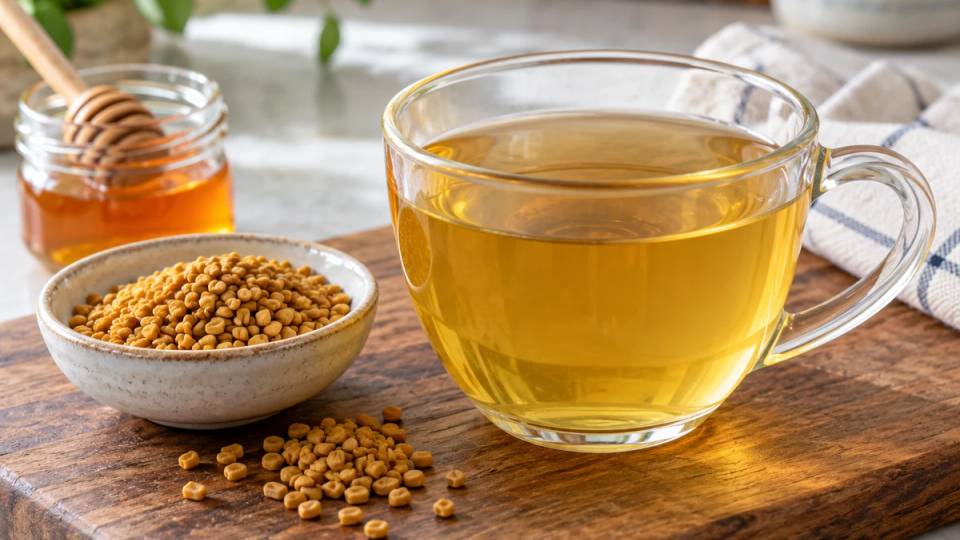
Ingredients
- 1 teaspoon whole fenugreek seeds
- 800 ml filtered water
- 1 to 2 teaspoons honey (optional, to taste)
Preparation
1. Rinse the fenugreek seeds thoroughly under cold water to remove any impurities. Drain them well. 💧
2. In a small saucepan, pour the 800 ml of filtered water. Add the rinsed fenugreek seeds. 🔥
3. Bring the water to a boil over medium heat. Once the water boils, reduce the heat to low. ⏳
4. Let it simmer gently for about 10 to 15 minutes. The fenugreek seeds will gradually release their aromas into the water. 🌿
5. Monitor the color of the water: it should take on a slight golden hue. Avoid boiling too vigorously to prevent excessive concentration of bitterness. 🎨
6. Remove the saucepan from the heat. Let the drink rest and infuse for another 5 to 10 minutes, covered, for the flavors to fully develop. 🌬️
7. Strain the drink through a fine sieve or cheesecloth to separate the fenugreek seeds from the liquid. Discard the seeds. 🗑️
8. If desired, add the honey to the hot drink and stir until completely dissolved. Taste and adjust the amount of honey to your preference. 🍯
9. Serve the drink hot or let it cool to room temperature. It can also be refrigerated and served chilled. 🧊
10. This drink is ready to be enjoyed. It offers a unique and comforting flavor, characteristic of fenugreek. ✨
Introduction
The fenugreek drink, though less publicized than other Eritrean specialties, holds a discreet but significant place in the domestic culinary repertoire. It embodies a simple and direct approach to using local ingredients, reflecting a tradition where each element has its own function and flavor. In Eritrea, cuisine is often characterized by ingenuity and the valorization of available resources, and this drink is an eloquent example. It is not a festive or ceremonial drink, but rather a daily preparation, appreciated for its simplicity and intrinsic qualities. The history of this drink is intrinsically linked to the use of fenugreek in Eritrean cuisine, where its seeds are also used to thicken certain sauces or to flavor breads. Fenugreek infusion is a way to extract its subtle aromas and properties without the complexity of an elaborate culinary preparation. It is a drink often passed down from generation to generation, not through written recipes, but through observation and practice within households. Its preparation is a simple, almost meditative gesture, requiring only a few ingredients and a little patience. It is not a remedy, nor a drink with miraculous virtues, but an infusion that is part of a lifestyle where natural flavors and simple gestures are appreciated. The fenugreek drink is an invitation to discover a lesser-known facet of Eritrean culinary culture, an authentic and unadorned facet. It testifies to a cuisine that knows how to take advantage of the richness of its environment, transforming modest ingredients into comforting and distinctive flavors. This recipe is a domestic adaptation of this drink, aiming to faithfully reproduce the spirit of its traditional preparation, without adding superfluous ingredients or complex techniques. It is designed to be accessible to all, allowing one to discover an authentic Eritrean flavor in the comfort of their own kitchen. Fenugreek, with its unique aromatic profile, is at the heart of this taste experience, offering a drink that stands out for its character and simplicity. It is a drink that invites contemplation, slow tasting, and the appreciation of natural flavors. It is an illustration of the richness and diversity of Eritrean cuisine, even in its simplest expressions.
Cultural context
In Eritrea, fenugreek (abish in Tigrinya) is a common ingredient, used in various forms in cooking. The seeds are often ground to thicken sauces like shiro or to flavor certain breads. The fenugreek drink is a simpler and more direct use of these seeds, attested in domestic practices. It is not a ceremonial drink or a traditional remedy, but rather a daily infusion appreciated for its distinct flavor. The addition of honey is a common adaptation to sweeten the natural bitterness of fenugreek, although the drink can be consumed plain. This preparation reflects a culinary approach where ingredients are valued for their intrinsic qualities. It is important to note that this recipe is a domestic adaptation and does not claim to be a drink with therapeutic purposes. It is part of the Eritrean tradition of using local resources simply and effectively to create comforting and distinctive flavors.
Tips
For a milder flavor, soak the fenugreek seeds in cold water for 2 to 3 hours before boiling them. This can slightly reduce the bitterness.
Do not boil the seeds for too long or over too high heat, as this could intensify the bitterness of the drink.
Use filtered water for better taste quality, as fenugreek is sensitive to water flavors.
If you don't have a fine sieve, a paper coffee filter or clean cheesecloth can be used to strain the seeds.
For optimal storage, keep the filtered drink in the refrigerator in an airtight bottle for 2-3 days.
Experiment with serving temperature: some prefer this drink hot, others find it more refreshing cold.
If you find the drink too concentrated or bitter, you can dilute it with a little hot or cold water after straining.
Variations
While the fenugreek drink is traditionally simple, a few variations can be explored to suit individual preferences. For those who enjoy a spicy note, a small pinch of fresh grated ginger or a thin slice of lemon can be added to the water during infusion. This will bring an additional aromatic dimension without masking the distinctive taste of fenugreek. Another approach is to infuse a small sprig of fresh mint with the fenugreek seeds for a touch of freshness. For a richer version, one could consider adding a very small amount of milk or plant-based drink after straining, although this deviates from the simplicity of the original recipe. For palates that prefer a more pronounced sweetness, honey can be replaced with date sugar or agave syrup, adjusting quantities to taste. It is important to maintain balance so that fenugreek remains the dominant flavor. These variations are modern adaptations and are not part of attested traditional preparations, but they offer avenues for customizing the drink while respecting its essence.
Accompaniments
This fenugreek drink, with its earthy and slightly bitter flavor, pairs well with dishes that can balance or complement its profile. It can be enjoyed alone as a comforting drink. As an accompaniment, it goes well with light pastries or dry biscuits, where their sweetness pleasantly contrasts with the bitterness of fenugreek. For a more substantial pairing, it can accompany Eritrean dishes like injera with mild sauces or sautéed vegetables, where its unique flavor brings an interesting dimension. In terms of beverages, it can be alternated with fresh water or a light tea to cleanse the palate. Avoid overly sweet or acidic drinks that could mask or alter its delicate taste. It is not intended to be paired with strong alcohols, but rather with moments of calm and tasting.
Nutrition notes
Fenugreek is a seed that contains dietary fiber, thus contributing to good digestion. It is also a source of minerals like iron and manganese. Its consumption, in the form of an infusion, can provide essential hydration. The compounds present in fenugreek give it a distinctive flavor and can contribute to a varied diet. This drink, when consumed without added sugar, is a low-calorie option. The addition of honey provides a natural source of energy. It is important to note that this drink is a culinary infusion and not a dietary supplement or a remedy. It is part of a balanced diet and does not replace a varied diet and a healthy lifestyle. Its value lies in its simplicity and its ability to offer a unique and natural flavor.