Tomato and Chili Salad
A fresh and spicy salad, made with ripe tomatoes, crisp onions, and pungent green chili. This simple yet flavorful side dish is perfect for balancing the rich flavors of traditional Eritrean meals.
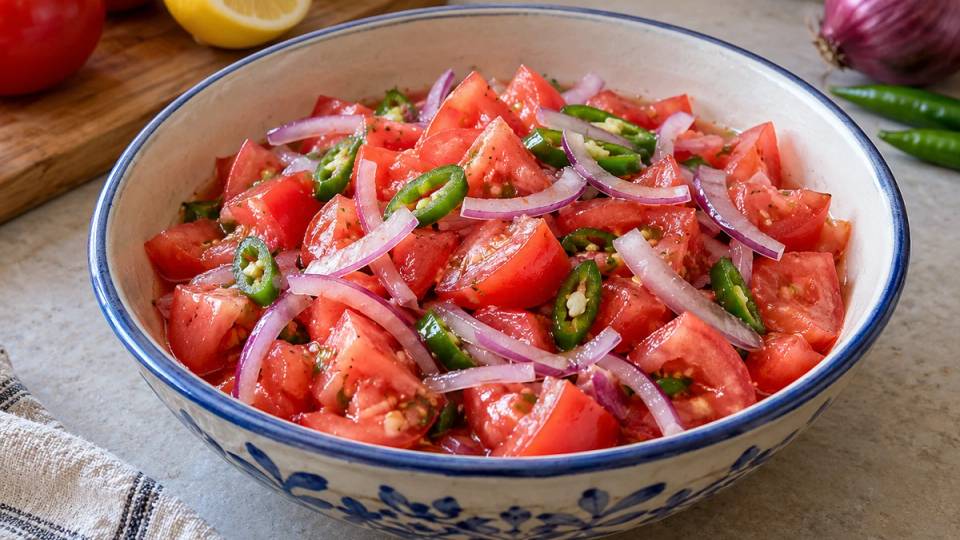
Ingredients
- 500 g ripe tomatoes
- 80 g red or white onion
- 1-2 fresh green chilies (to preference, jalapeño or serrano type)
- Juice of 1/2 lime or lemon
- 2 tablespoons neutral vegetable oil (sunflower or canola)
- 1/2 teaspoon fine salt
- Freshly ground black pepper (to taste)
Preparation
Wash the tomatoes thoroughly. Cut them into small dice, about 1 cm. For a more pleasant texture, you can lightly deseed them before cutting, but it's not mandatory.
Place the diced tomatoes in a fine sieve and let them drain for at least 15 minutes. This step is crucial to prevent an overly watery salad and to concentrate the flavors.
Meanwhile, peel the onion. Cut it into very thin slices or small dice. If the onion is strong, you can quickly rinse it under cold water and drain it to soften its taste.
Wash the green chilies. Remove the seeds and white membranes if you wish to reduce the intensity of the heat, then chop them very finely. Wear gloves if you have sensitive skin.
In a large bowl, combine the drained tomatoes, sliced onion, and chopped green chili. Ensure the tomatoes are well-drained before adding them.
Squeeze the juice of half a lemon directly over the vegetables. Add the vegetable oil, salt, and a pinch of freshly ground black pepper.
Gently mix all ingredients with a spoon or your clean hands, being careful not to crush the tomatoes. The goal is to coat all elements well with the dressing.
Taste and adjust seasoning if necessary. You can add more salt, pepper, or lemon juice according to your personal preference.
Cover the bowl and let the salad rest in the refrigerator for at least 30 minutes before serving. This resting time allows the flavors to meld and develop harmoniously.
Before serving, mix the salad one last time. Serve it fresh, ideally alongside injera and an Eritrean main dish.
If preparing the salad in advance, it is best to season it just before serving to maintain the freshness of the vegetables and prevent it from becoming too soft.
Introduction
Eritrean cuisine, rich and varied, is often characterized by spicy stews and slow-cooked dishes, served with the indispensable injera, a fermented flatbread. Amidst these intense flavors, fresh and vibrant side dishes play a crucial role in providing balance and contrast. This tomato and chili salad fits perfectly into this culinary tradition, offering a touch of freshness and a spicy note that awakens the palate. While not an exclusive “regional specialty” or a festive dish in itself, it represents a common domestic offering, made with simple and accessible ingredients, reflecting the ingenuity of Eritrean households in preparing balanced and flavorful daily meals. It is the result of a practical approach where fresh vegetables are valued for their ability to complement main dishes. The use of tomatoes, onions, and green chili is omnipresent in local cuisine, these ingredients being pillars of Eritrean flavors. Lemon, for its part, brings a welcome acidity that cuts through the richness of stews and helps cleanse the palate. Oil, often sunflower or another neutral vegetable oil, binds the flavors and provides a silky texture without dominating the aromas of the vegetables. This salad is designed to be served alongside injera and main dishes, allowing everyone to modulate the flavors on their plate. It is not intended to be mixed directly into stews, but rather to be eaten alternately, offering a refreshing break between each bite of a more substantial dish. Its simplicity is its strength, allowing the natural flavors of the ingredients to express themselves fully. It embodies an essential facet of Eritrean gastronomy: the art of elevating basic products to create a complete and harmonious culinary experience.
Cultural context
In Eritrea, fresh side dishes like this salad are essential to complement meals, often centered on spicy stews served with injera. This salad, while not a ceremonial dish or an exclusive regional specialty, is a common domestic adaptation. It aligns with the spirit of traditional accompaniments that value raw vegetables for their freshness and their ability to balance flavors. The use of tomatoes, onions, and green chili is widespread in Eritrean cuisine, these ingredients being staple elements for many dishes. Lemon and vegetable oil are also classic components of local dressings. This recipe is not a fixed ancestral tradition, but rather an illustration of how local ingredients are used creatively and practically in Eritrean households to enrich the daily meal. It reflects a culinary approach where simplicity and freshness are appreciated for their contribution to the overall balance of the meal.
Tips
Choose ripe but firm tomatoes for optimal flavor and better texture.
Draining the tomatoes is essential: do not skip this step to avoid a watery salad.
For controlled heat, remove the seeds and white membranes from the chilies. For more heat, leave them in.
If you don't have fresh chili, a pinch of red chili powder (berbere or other) can be used, but the flavor will be different.
Prepare the salad at least 30 minutes in advance to allow the flavors to meld well.
For an aromatic touch, add a few freshly chopped cilantro leaves just before serving.
Serve the salad well chilled for a pleasant contrast with hot dishes.
Avoid overmixing the salad once seasoned to prevent crushing the tomatoes.
Variations
Although this salad is appreciated for its simplicity, a few variations can be considered to diversify the pleasures. For a slightly more herbaceous version, the addition of a small amount of fresh flat-leaf parsley or chopped cilantro can bring an additional aromatic dimension, without masking the taste of the tomatoes and chili. If you want a crunchier texture, a few diced fresh cucumbers, previously deseeded and drained, can be incorporated. For those who appreciate a slightly sweet-sour note, a very small amount of finely diced green mango can be an interesting addition, offering a fruity contrast. Regarding the spiciness, if fresh green chilies are not available or if you prefer another form of heat, a pinch of dried red chili flakes can be used, although the flavor will be less fresh and drier. For a touch of umami, a very thin slice of pressed garlic can be added, but sparingly so as not to overpower the other flavors. Finally, for a milder version, replace part of the green chili with sweet green bell pepper, cut into small dice.
Accompaniments
This tomato and chili salad is an ideal accompaniment for many Eritrean dishes. It pairs perfectly with rich and spicy stews like Zigni (beef stew) or Tsebhi Dorho (chicken stew), where its freshness and acidity cut through the richness of the sauces. It is also excellent with vegetarian dishes such as Shiro (chickpea puree) or various vegetable preparations like Alicha (mild vegetable stew). Injera, the fermented teff flatbread, is the main accompaniment with which this salad is traditionally consumed, allowing one to scoop up the salad and other dishes. For drinks, a glass of fresh water is always welcome to temper the spiciness. For a more authentic experience, a glass of Suwa (traditional Eritrean sorghum beer) or Mies (Eritrean mead) can complete the meal. A light black tea or a mint infusion can also offer a refreshing contrast after the meal.
Nutrition notes
This salad offers several nutritional benefits thanks to its simple and fresh ingredients. Tomatoes are an excellent source of vitamins, especially vitamin C, an important antioxidant, and vitamin K. They also contain lycopene, a carotenoid known for its properties. Onions, whether red or white, provide sulfur compounds and flavonoids, which contribute to nutrient diversity. Green chili, in addition to adding spiciness, is a source of vitamin C and capsaicin, a compound that can influence metabolism. Lemon juice enriches the salad with vitamin C and aids in the absorption of certain minerals. Vegetable oil provides essential fatty acids. All these ingredients, consumed raw, help preserve their heat-sensitive nutrients as much as possible. This salad, low in calories and rich in fiber, contributes to a feeling of satiety and a good dietary balance, providing a variety of micronutrients without making the meal heavy.