Eritrean Taamiya
These crispy fritters, made from hulled dried fava beans, fresh herbs, and spices, are a popular snack in Eritrea. They offer a tender interior texture and a golden, flavorful crust, ideal for accompanying various meals or enjoying on their own.
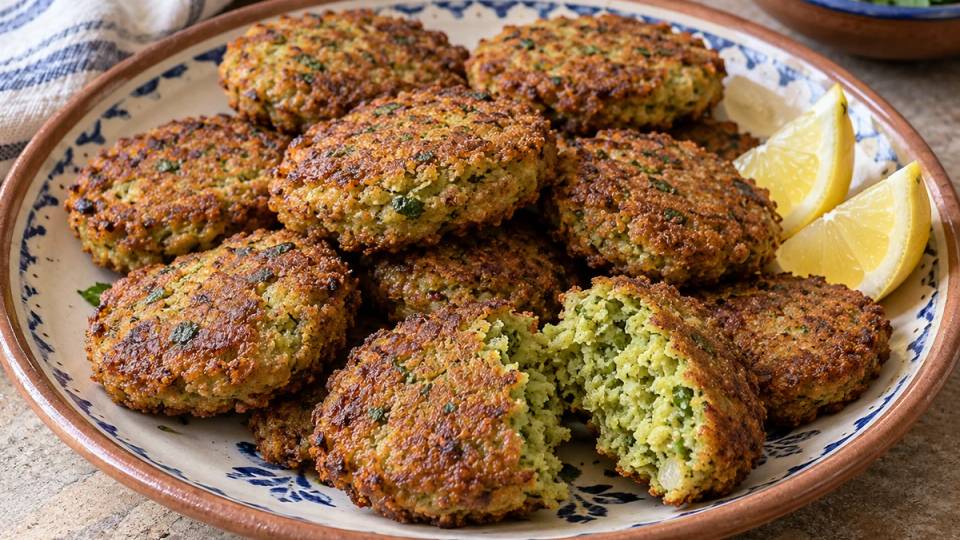
Ingredients
- 250 g hulled dried fava beans
- 1 small onion, coarsely chopped
- 3 cloves garlic, germ removed
- 1/2 bunch fresh parsley (about 30 g)
- 1/2 bunch fresh cilantro (about 30 g)
- 1 teaspoon ground cumin
- 1/2 teaspoon ground coriander
- 1/4 teaspoon cayenne pepper (optional)
- 1/2 teaspoon baking soda
- Salt, to taste
- Vegetable oil for frying (about 500 ml)
Preparation
1. 🫘 Rinse the hulled dried fava beans thoroughly and soak them in a large volume of cold water for at least 12 to 18 hours, or even overnight. Ensure they are fully submerged and change the water at least once if soaking exceeds 12 hours. They should double in volume and be tender to the touch.
2. 💧 Drain the soaked beans and rinse them again. It is crucial that they are well-drained before the next step to avoid a too-liquid paste.
3. 🧅 In a food processor, combine the drained fava beans, chopped onion, garlic cloves, fresh parsley, fresh cilantro, ground cumin, ground coriander, and cayenne pepper (if used).
4. 🥣 Pulse until a coarse but homogeneous paste is formed. The texture should not be completely smooth; a few small pieces of fava beans are desirable for the final texture of the fritters. Avoid over-processing to prevent heating the paste.
5. ✨ Transfer the paste to a large bowl. Stir in the baking soda and salt. Mix well with a spoon or your hands so that the ingredients are evenly distributed. Baking soda will help make the fritters lighter and airier.
6. 🌡️ Heat vegetable oil in a deep fryer or a high-sided pot over medium-high heat, until it reaches a temperature of approximately 170-175°C (340-345°F). It is important to maintain a constant temperature for even cooking.
7. 🖐️ With slightly damp hands or an ice cream scoop, form small balls or patties about 3-4 cm (1.2-1.6 inches) in diameter with the paste. Do not press them too firmly.
8. 🍳 Gently drop the Taamiya into the hot oil, in small batches to avoid lowering the oil temperature. Fry for 3 to 5 minutes, turning occasionally, until golden brown and crispy on all sides.
9. 🍽️ Remove the Taamiya from the oil with a slotted spoon and place them on paper towels to drain excess fat. Serve immediately to enjoy their optimal texture.
10. 🌶️ Serve with hot sauces, fresh salads, or flatbread according to your preferences.
11. 🧊 If you have any leftover paste, it can be stored in the refrigerator in an airtight container for a maximum of 24 hours before frying.
Fava beans are contraindicated in cases of G6PD deficiency (favism). Do not offer this preparation to an affected person; a clear announcement of a replacement with a distinct chickpea recipe must be made.
Introduction
Taamiya, though often associated with other regions of the Middle East and the Horn of Africa, holds an appreciated place in Eritrean cuisine, particularly as a comforting and nourishing snack. Its history is intrinsically linked to the cultural and commercial exchanges that have shaped the Red Sea region over centuries. Fava beans, the central ingredient of Taamiya, have been cultivated since antiquity and constitute a basic food source in many cultures. In Eritrea, their use in preparations like Taamiya testifies to a culinary tradition that values legumes for their nutritional contribution and versatility. Preparing Taamiya is a process that requires a little patience, mainly due to the prolonged soaking of the fava beans, but the final result is a reward for the effort. Dried fava beans, once rehydrated, are blended with an aromatic mixture of onion, garlic, parsley, cilantro, and cumin, creating a green and fragrant paste. This paste is then shaped into small balls or patties before being fried until golden and crispy on the outside, while remaining tender and moist on the inside. Taamiya is often eaten hot, freshly out of the oil, and can be served in various ways. It is commonly accompanied by spicy sauces, fresh salads, or flatbread, such as injera or kitcha, which are fundamental elements of the Eritrean table. Its popularity extends across different Eritrean communities, and it is particularly prized during fasting periods, where vegetarian and vegan dishes are favored. Taamiya thus represents more than just a dish; it is a symbol of sharing and conviviality, rooted in the eating habits and social traditions of Eritrea. This recipe aims to capture the essence of Eritrean Taamiya, emphasizing the simplicity of ingredients and the richness of flavors, to offer an authentic and delicious culinary experience.
Cultural context
Taamiya, while sharing similarities with falafel from other regions, is an integrated element in Eritrean culinary offerings, especially as a snack or side dish. Its origin is shared along the Red Sea coasts, reflecting the historical and cultural exchanges of the region. In Eritrea, Taamiya is appreciated for its simplicity and its ability to fit into various dietary contexts, including during fasting periods where legume-based dishes are favored. It is important to note that this recipe is a faithful adaptation of documented local practices, using hulled dried fava beans and a specific blend of herbs and spices. It does not claim an exclusive Eritrean origin but highlights its presence and appreciation in the country's cuisine. The use of dried fava beans, rather than canned fava beans, is a traditional practice that gives Taamiya its characteristic texture and flavor. Taamiya is an example of the diversity and richness of legume-based dishes in Eritrea.
Tips
For a perfect texture, ensure the fava beans are well drained after soaking. Excess water would make the paste too soft.
Do not process the paste too finely; a slightly grainy texture is ideal for Taamiya that are soft inside and crispy outside.
Baking soda is essential for light and airy fritters. Do not omit it.
Maintain a constant oil temperature (170-175°C / 338-347°F) for even cooking and to prevent the fritters from absorbing too much oil or burning.
Fry the Taamiya in small batches to avoid lowering the oil temperature and ensure even cooking.
For a more intense flavor, you can lightly toast the cumin and coriander seeds before grinding them and adding them to the paste.
If the paste is too sticky, you can refrigerate it for 30 minutes before forming the fritters, which will make handling easier.
Serve the Taamiya immediately after frying to fully enjoy their crispiness.
Variations
While the basic Taamiya recipe is appreciated for its simplicity, several variations can be explored to diversify flavors and textures. For a spicier version, you can increase the amount of cayenne pepper or add a pinch of dried red pepper flakes to the paste. Some prefer to incorporate other aromatic herbs like chopped fresh mint, which brings an unexpected note of freshness. For a touch of acidity, a little lime juice can be added to the paste before frying. Regarding spices, adding a small amount of smoked paprika can impart additional depth of flavor. For those seeking a different texture, it is possible to incorporate a small amount of chickpea flour (besan) into the paste if it seems too wet, which will help bind the ingredients and achieve a firmer consistency. However, this may slightly alter the final texture. Taamiya can also be shaped into flatter patties for quicker cooking and a crispier surface, or into smaller balls for appetizer bites. For a lighter cooking option, though less traditional, it is possible to bake the Taamiya in the oven at 180°C (350°F) for about 20-25 minutes, flipping them halfway through, after lightly brushing them with oil. This will result in a less crispy texture but will reduce the fat content.
Accompaniments
Eritrean Taamiya pairs harmoniously with a variety of dishes and beverages. Traditionally, it is often served with injera, the spongy Eritrean flatbread, which is used to scoop up the fritters and sauces. It can also be accompanied by kitcha, another type of flatbread. For sauces, a spicy tomato sauce, such as shiro wat (a ground chickpea sauce) or a green chili sauce (berbere), perfectly complements the flavor of the fava beans. A fresh salad made with tomatoes, cucumbers, and onions, seasoned with a light lemon vinaigrette, brings a welcome touch of freshness. As for beverages, a spiced Eritrean black tea (chai) is an excellent choice to accompany Taamiya, offering a warm and aromatic contrast. For a refreshing option, a fresh fruit juice drink, such as mango or papaya juice, can balance the flavors. A light beer or sparkling water with a slice of lemon are also pleasant accompaniments.
Nutrition notes
Taamiya, prepared with fava beans, is an interesting plant-based source of protein, essential for building and repairing body tissues. Fava beans are also rich in dietary fiber, which contributes to good digestion and can help maintain a feeling of fullness. They provide complex carbohydrates, offering sustained energy. This dish also contains various vitamins and minerals, including B vitamins, important for energy metabolism, as well as iron, magnesium, and potassium. Fresh herbs like parsley and cilantro add antioxidants and additional vitamins, while garlic and onion contribute with their beneficial compounds. Although frying adds fat, Taamiya remains a nutritious dish thanks to its legume base. It is a vegetarian and vegan option that can be integrated into a balanced diet, offering an alternative to animal protein sources.