Awaze
Awaze is an Eritrean chili paste, an essential condiment that enhances many dishes. This freshly prepared, alcohol-free adaptation offers an explosion of spicy and aromatic flavors, ideal for accompanying meats and vegetables.
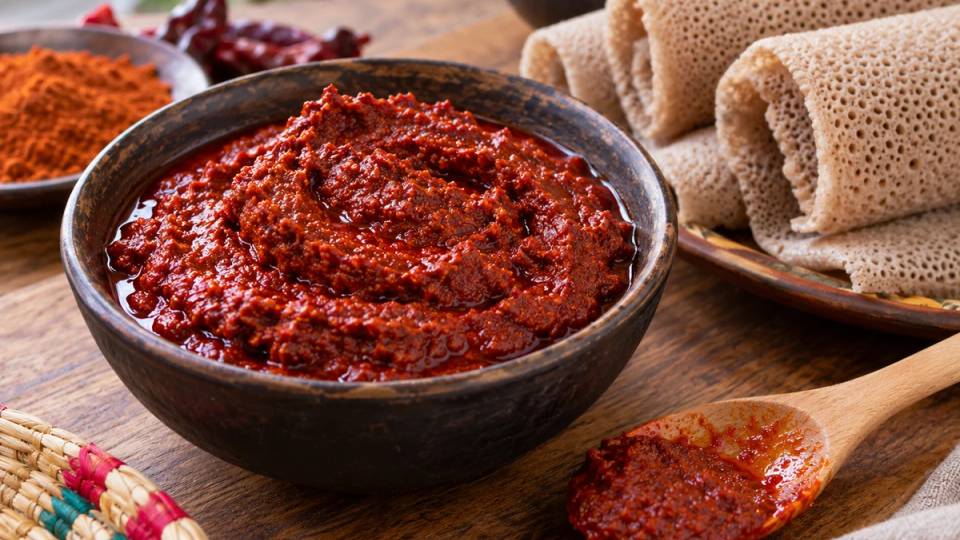
Ingredients
- 50 g of high-quality berbere powder
- 2 medium garlic cloves, peeled and finely chopped
- 1 cm fresh ginger root, peeled and grated
- 2 tablespoons potable water, adjust as needed
- 1 teaspoon neutral vegetable oil (sunflower or rapeseed)
- 1/2 teaspoon fresh lemon juice
- 1/4 teaspoon fine salt (or to taste)
Preparation
In a small bowl, mix the berbere powder with the chopped garlic and grated ginger. Ensure dry ingredients are well combined for even flavor distribution. 🌶️
Gradually add the potable water, spoon by spoon, mixing continuously with a small spatula or spoon. The goal is to obtain a thick, homogeneous paste, not liquid. 💧
Incorporate the neutral vegetable oil. The oil helps bind the flavors and gives the condiment a slightly smoother texture. Mix until fully absorbed. ✨
Add the fresh lemon juice and fine salt. The lemon brings a touch of acidity that balances the spiciness of the berbere and enhances the aromas. Adjust salt to your preference. 🍋
Continue mixing for about 2 to 3 minutes, lightly pressing the paste against the sides of the bowl. This helps release more essential oils from the spices and achieve a more uniform consistency. 🥣
Taste a small amount of the paste and adjust seasoning if necessary, adding a little more salt, lemon juice, or even a hint of water if the paste is too thick. 👅
Transfer the Awaze to a clean, airtight small container. A small glass jar is ideal for storage and presentation. 🏺
Let the Awaze rest in the refrigerator for at least 30 minutes before serving. This resting time allows the flavors to meld and intensify, offering a better taste experience. ❄️
Introduction
Awaze is much more than just a condiment in Eritrea; it is a culinary expression of the richness of local flavors. This chili paste, often prepared with berbere, a complex and fragrant spice blend, is a pillar of Eritrean cuisine, also shared with the cuisines of neighboring regions. Its presence on the table is almost systematic, offering a touch of spice and aroma that awakens the taste buds and harmoniously complements a multitude of dishes. Awaze is traditionally used to marinate meats before cooking, to accompany hearty stews, or simply as a dip for injera, the spongy flatbread that is the base of many Eritrean meals. Its versatility makes it an indispensable ingredient for anyone wishing to explore the depths of this fascinating cuisine. The preparation of Awaze is often a skill passed down from generation to generation, with each family sometimes having its own nuance or secret to perfect the balance of spices. Although the basic ingredients remain constant – berbere being the central element – the proportions and additions may vary slightly, creating a diversity of flavors within the tradition itself. This recipe offers an adaptation of Awaze, designed to be freshly prepared and alcohol-free, making it accessible to a wider audience while respecting the spirit and intensity of the original condiment. The goal is to capture the essence of Eritrean Awaze, highlighting the depth of berbere and the freshness of other ingredients, for an authentic and flavorful result. The simplicity of its preparation contrasts with the complexity of its flavors, inviting everyone to discover this culinary treasure. It is an invitation to a culinary journey, where each bite reveals the warmth and hospitality of Eritrea.
Cultural context
Awaze is an emblematic condiment of Eritrean cuisine, whose popularity also extends to neighboring countries. It is deeply rooted in eating habits, serving as a marinade, a side sauce, and a flavor enhancer. Berbere, a complex and fundamental spice blend, is the soul of Awaze, giving it its characteristic red color and distinctive aromatic profile. The preparation of Awaze is often a moment of sharing, although this recipe is a modern adaptation. Traditionally, some versions might include a small amount of local alcoholic beverage for preservation or to intensify flavors. However, this adaptation is specifically designed without alcohol and for quick consumption, prioritizing the freshness of the ingredients. It respects the spirit of the original condiment by focusing on the intense flavors of berbere, garlic, ginger, and lemon juice, offering an accessible version faithful to the spicy Eritrean essence. Awaze is a testament to the richness of spices and their central role in the gastronomy of the Horn of Africa.
Tips
Always use good quality berbere for an authentic and flavorful Awaze. The quality of spices is paramount. 🌿
Adjust the amount of water very gradually to achieve the desired consistency. A paste that is too liquid would lose its intensity. 💧
For a more pronounced flavor, you can let the Awaze rest in the refrigerator for a few hours, or even overnight. ⏳
If you prefer a less spicy version, you can slightly reduce the amount of berbere or add a pinch of sugar to soften. 🌶️
Awaze keeps in the refrigerator in an airtight container for 3 to 5 days. Beyond that, it loses its freshness. 🧊
For a smoother texture, you can use a small mortar and pestle to crush the ingredients after the initial mixing. 🥣
Don't hesitate to taste and adjust the balance of flavors (salt, lemon) according to your personal preferences. It's your Awaze! 😋
Variations
While this recipe is an alcohol-free and freshly prepared adaptation, Awaze can have various variations. For a richer and deeper version, some add a small amount of red wine or local beer during the mixing process, which alters the aromatic complexity and shelf life. However, this practice is omitted here for a version accessible to all. Another common variation involves adding honey or sugar to sweeten the spiciness of the berbere, creating a different balance of flavors, particularly appreciated by those who prefer less intense heat. For fresh herb lovers, incorporating freshly chopped cilantro or parsley can bring a herbaceous note and additional freshness. Finally, for a thicker, more rustic Awaze, some use less water, or none at all, relying solely on the moisture of other ingredients to form a very concentrated paste, ideal for intense marinades. Each variation offers a unique taste experience, while remaining true to the spirit of the Eritrean condiment.
Accompaniments
Awaze is an extremely versatile condiment that pairs wonderfully with a multitude of Eritrean dishes and beyond. It is traditionally served with Tsebhi (meat or vegetable stew), Shiro (chickpea stew), or Zigni (spicy beef stew), where it adds depth of flavor and appreciable spiciness. It is also excellent as a dip for injera, the Eritrean flatbread, or to accompany lentils. Outside of Eritrean cuisine, Awaze can enhance grilled meats, roasted vegetables, or even sandwiches. For beverages, an Eritrean black tea (Shay) or a fresh ginger infusion can help balance the spiciness. Fresh fruit juices, such as mango or guava juice, also offer a refreshing contrast. For those who enjoy fermented beverages, a light beer or a ginger ale can complement the intense flavors of Awaze without masking them.
Nutrition notes
Awaze, thanks to its berbere base, is rich in spices that are recognized for their properties. Berbere contains a variety of spices such as chili, ginger, garlic, coriander, and cumin, which are sources of plant compounds. Chili, for example, contains capsaicin, which is responsible for its heat. Ginger and garlic are also valued for their aromatic compounds. Awaze is a condiment that can add flavor to dishes without requiring excessive addition of fats or sugars. It can encourage the consumption of simpler, less processed dishes by making them more appetizing. Lemon juice provides a touch of freshness and acidity. As a condiment, Awaze is consumed in small quantities, meaning its overall contribution is modest, but it contributes to a rich taste experience and can encourage a varied diet by making vegetables and legumes more attractive.