Tesmi
Tesmi is Eritrean clarified butter, infused with spices like ginger, garlic, cardamom, and fenugreek. It enriches many dishes, offering a distinctive aromatic depth to local cuisine.
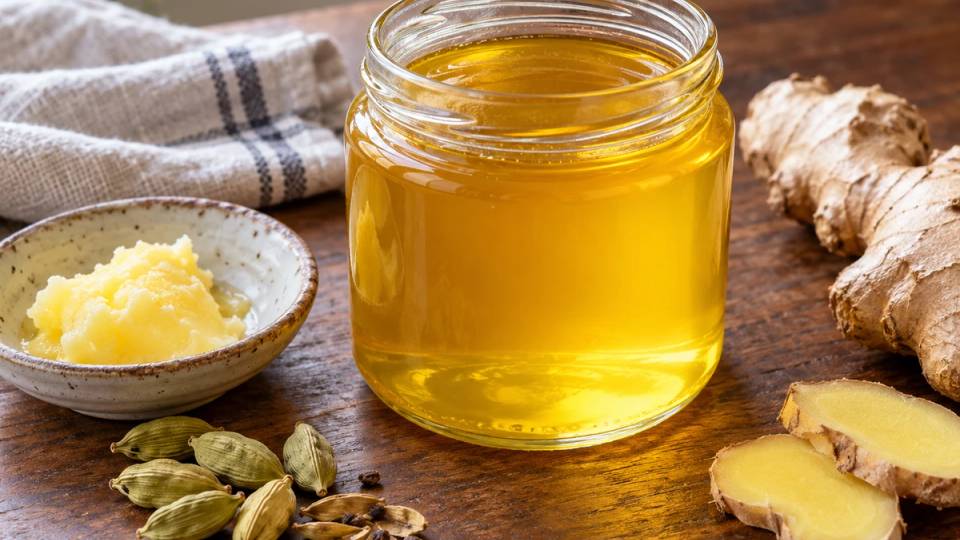
Ingredients
- 250 g unsalted butter
- 1 teaspoon fresh grated ginger
- 2 cloves garlic, crushed
- 1/2 teaspoon green cardamom seeds, lightly crushed
- 1/4 teaspoon fenugreek seeds
- 1 pinch turmeric (optional, for color)
Preparation
Cut the butter into pieces and place it in a heavy-bottomed saucepan. Melt it over low heat, without stirring, to avoid mixing the milk solids.
Let the butter simmer gently. You will see foam form on the surface and milk solids settle at the bottom of the pan. The process should be slow to prevent burning the butter.
While the butter clarifies, prepare the aromatics: grate the ginger, crush the garlic, lightly crush the cardamom seeds, and measure the fenugreek seeds. If using turmeric, prepare it as well.
Once the butter is clarified (the liquid is golden and clear, and the milk solids are golden at the bottom), remove the saucepan from the heat. Gently skim off any remaining foam from the surface.
Immediately add the grated ginger, crushed garlic, crushed cardamom seeds, fenugreek seeds, and turmeric (if used) to the still-warm clarified butter.
Let the aromatics infuse in the hot butter for about 10 to 15 minutes. The residual heat of the butter will allow the flavors to release without overcooking the spices.
Prepare a fine sieve or a colander lined with several layers of cheesecloth or a clean cloth. Place it over a heatproof container.
Slowly pour the infused Tesmi through the sieve or cheesecloth to completely filter out all solids and aromatics. Ensure no residue remains in the filtered liquid.
Let the filtered Tesmi cool completely to room temperature in the container. It will solidify and take on an opaque golden color.
Once cooled and solidified, transfer the Tesmi to a clean airtight jar. Store it in the refrigerator for better preservation and to maintain its aromatic freshness.
Tesmi is now ready to be used to enrich your Eritrean dishes, adding an incomparable depth of flavor to your wats, vegetables, or grains.
Before each use, take out the desired amount and let it return to room temperature or melt it gently if necessary to incorporate it more easily into your preparations.
Introduction
Tesmi is much more than just clarified butter in Eritrean cuisine; it is a cornerstone, an essential ingredient that imparts a unique aromatic signature to a multitude of dishes. Its preparation is an art in itself, a transmitted tradition that transforms ordinary butter into a rich and fragrant condiment. Eritrea, with its rich history and diverse cultural influences, has developed a cuisine where spices play a predominant role. Tesmi embodies this philosophy, incorporating flavors such as pungent ginger, robust garlic, fragrant cardamom, and earthy fenugreek. These spices are not added randomly; they are carefully selected for their ability to create a complex and balanced flavor profile, capable of enhancing hearty stews as well as simple vegetables. The clarification of butter, the first step in preparing Tesmi, is crucial. It involves separating milk solids and water from pure fat, resulting in a stable product concentrated in flavor. This process is similar to Indian ghee, but Tesmi distinguishes itself with its specific spice blend, which gives it its Eritrean identity. Once clarified, the butter is gently infused with aromatics, allowing the flavors to blend harmoniously without burning the spices. The result is a golden liquid, clear and intensely fragrant, ready to be used in a variety of culinary preparations. Tesmi is a testament to Eritrean culinary ingenuity, demonstrating how simple ingredients can be transformed into a sophisticated condiment that elevates an entire meal. It is a symbol of hospitality and the richness of flavors found on Eritrean tables.
Cultural context
Tesmi is a fundamental element of Eritrean gastronomy, often compared to Indian ghee, but with a distinctive aromatic profile of its own. Its presence is almost indispensable in many traditional dishes, especially wats (stews) and various vegetable or meat-based preparations. It is not just an ingredient, but a flavor marker that defines Eritrean cuisine. The preparation of Tesmi is a common practice in Eritrean households, where it is often made in larger quantities for storage. This recipe is an adaptation for home preparation, aiming to faithfully reproduce traditional flavors with accessible ingredients. It is important to note that while Tesmi is traditionally stored at room temperature in some regions, refrigeration is recommended here for food safety reasons and to best preserve its organoleptic qualities, given climatic variations and modern practices. This is not an alteration of tradition, but a practical precaution. Tesmi is an eloquent example of the importance of flavored condiments in Eritrean cuisine, where each addition contributes to the complexity and depth of flavors.
Tips
Always use good quality unsalted butter for the best taste and to control the final seasoning of your dishes.
Butter clarification should be done over very low heat to avoid burning the milk solids, which would give Tesmi a bitter taste.
Do not let the spices infuse for too long in the hot butter after removing it from the heat, to prevent them from developing bitterness.
Filter the Tesmi with great care to remove all spice particles, thus ensuring a smooth texture and optimal preservation.
For prolonged storage, ensure the Tesmi jar is perfectly clean and airtight before placing it in the refrigerator.
If you don't have cardamom seeds, you can use ground cardamom, but reduce the quantity and add it at the end of the infusion to preserve its delicate aroma.
Tesmi can be prepared in larger quantities and stored, which is convenient for regular use in Eritrean cuisine.
Before using Tesmi in a recipe, you can melt it gently so that it incorporates more easily with other ingredients.
Variations
While the basic Tesmi recipe is quite standardized in Eritrea, some variations can be explored to adapt flavors according to personal preferences or the dishes it is intended for. For a spicier version, one could increase the amount of fresh ginger or add a small pinch of crushed dried red chili during infusion. If a more herbaceous profile is desired, the addition of a few holy basil (tulsi) leaves or fresh cilantro (to be filtered with other aromatics) could bring a different note, although this deviates slightly from pure tradition. For those who appreciate deeper, roasted flavors, a slight toasting of fenugreek and cardamom seeds before crushing them can intensify their aroma. Another approach is to experiment with other whole spices, such as cloves or black peppercorns, always in small quantities so as not to mask the main flavors. However, it is crucial to remember that each addition modifies the distinctive character of Eritrean Tesmi. These variations are modern adaptations and do not represent the traditional methods of Tesmi preparation, which favor a specific spice blend for its balance and versatility.
Accompaniments
Tesmi is a versatile condiment that pairs wonderfully with a wide variety of Eritrean dishes. It is traditionally used to enrich wats, these spicy stews based on meat (beef, chicken, lamb) or vegetables (lentils, chickpeas, spinach). Its complex aromatic profile enhances the flavors of injera, the Eritrean fermented flatbread, often served to accompany these wats. It can also be incorporated into sautéed vegetable dishes or cereals to give them a touch of richness. Outside of Eritrean cuisine, Tesmi can be used as a flavored clarified butter to sauté vegetables, cook eggs, or even drizzle over cooked grains. For beverages, a spicy Eritrean black tea (chai) or traditional Eritrean coffee, often served with spices, complements the flavors of Tesmi well. For a non-alcoholic option, fresh fruit juice like mango or papaya can offer a refreshing contrast. When accompanying dishes rich in Tesmi, fresh water remains a simple and effective option to balance the flavors.
Nutrition notes
Tesmi, as clarified butter, is primarily composed of fats, making it a concentrated energy source. Clarification removes most milk solids, making Tesmi more digestible for some lactose-sensitive individuals. The incorporated spices, such as ginger, garlic, cardamom, and fenugreek, bring their own bioactive compounds. Ginger is known for its aromatic properties and may contribute to a feeling of digestive well-being. Garlic is a source of sulfur compounds. Cardamom is appreciated for its distinctive fragrance and refreshing notes. Fenugreek, for its part, is a spice with earthy flavors. The integration of these spices into Tesmi allows dishes to be infused with aromatic richness without having to add excessive amounts of salt or other flavor enhancers. It contributes to the complexity of flavors, which can make meals more satisfying and enjoyable. It is important to consume Tesmi in moderation, like any fat, as part of a balanced diet.