Berbere
This berbere is a domestic adaptation of the Eritrean spice blend, designed to be made with commonly available ingredients. It brings aromatic warmth and depth of flavor to dishes, without claiming to be a unique or exhaustive national formula. A cornerstone of Eritrean cuisine.
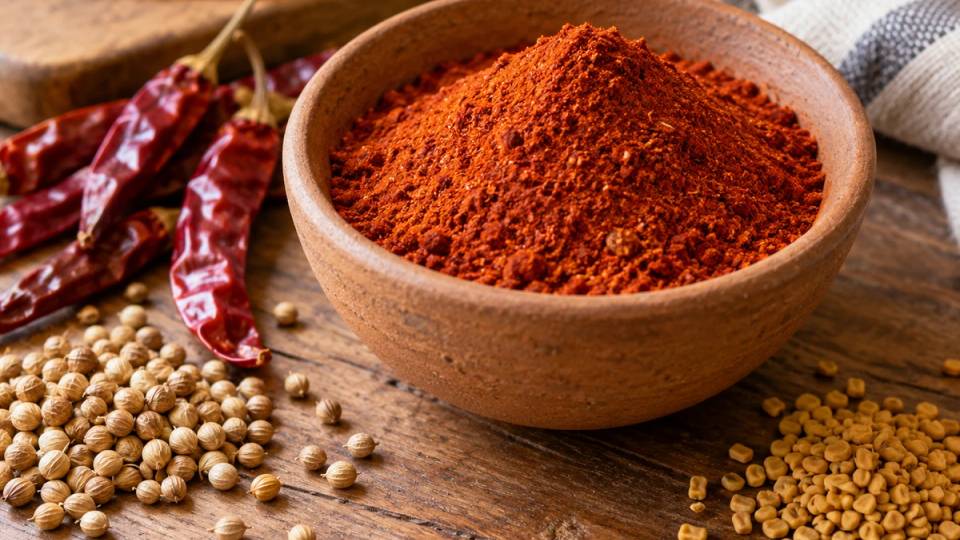
Ingredients
- 50 g dried red chili (Cayenne pepper or bird's eye chili type, adjust according to heat tolerance)
- 20 g sweet paprika powder
- 10 g whole fenugreek seeds
- 10 g whole coriander seeds
- 5 g whole cumin seeds
- 5 g ginger powder
- 5 g green cardamom powder (or 10-12 green pods, shelled and ground)
- 2 g black peppercorns
- 1 g whole cloves
- 1 g fine salt
Preparation
Prepare all spices. If using cardamom pods, shell them and keep only the seeds. For dried chilies, remove the stems. 🌶️
In a heavy-bottomed dry skillet over medium-low heat, toast separately the fenugreek seeds, coriander seeds, cumin seeds, black peppercorns, and cloves. Heat them until they release a pronounced fragrance, about 1 to 3 minutes per spice. Be careful not to burn them. Remove from heat and let cool completely. 🔥
In the same skillet, toast the dried chilies over very low heat for 2 to 3 minutes, just enough to make them more brittle and enhance their aroma, without blackening them. Let cool. 🌶️
Once all spices are toasted and cooled, combine them in a coffee grinder or powerful blender. Add the sweet paprika powder, ginger powder, cardamom powder, and fine salt. 🧂
Grind everything in short pulses until a fine, homogeneous powder is obtained. Avoid overheating the grinder, which could alter the aromas. If necessary, take breaks to let the appliance cool down. 🌀
Pass the resulting powder through a fine sieve to remove any unground pieces. Residues can be returned to the grinder for a second pass or discarded. ✨
Spread the berbere powder on a clean baking sheet and let it air dry for a few hours, or in a very low oven (about 50°C) for 30 minutes, with the door ajar, to eliminate any residual moisture. This step is crucial for preservation. 🌬️
Once completely cooled and dry, transfer the berbere to an airtight glass jar. Store it in a cool, dark place, away from light and humidity. 🫙
Your berbere is ready to be used in your favorite Eritrean recipes. It is recommended to let it rest for at least 24 hours before use for the flavors to fully develop. 😋
Introduction
Berbere is an emblematic spice blend of Eritrean cuisine, renowned for its aromatic complexity and distinctive warmth. It forms the base of many traditional dishes, lending them an incomparable depth of flavor. While countless regional and family variations exist, this recipe offers a domestic adaptation, crafted to be accessible with common spices, while capturing the essence of this essential blend. The goal is not to reproduce a unique and fixed formula, but rather to offer a gateway to the richness of Eritrean flavors. The preparation of berbere is an art in itself, where each spice is carefully toasted to enhance its aromas before being ground. This meticulous process is crucial for developing the final taste profile of the blend. Chili, a central ingredient, is balanced by earthy notes of fenugreek and cumin, floral touches of cardamom, and the pungent heat of ginger. Paprika adds vibrant color and subtle sweetness, while coriander brings herbaceous freshness. Historically, Eritrean families prepared their berbere in large quantities, often using traditional mortars and pestles, a task that could be shared and that permeated homes with intoxicating scents. Today, electric blenders greatly facilitate this task, but the spirit of artisanal preparation remains. This berbere is more than just a seasoning; it is the beating heart of many stews (wat), sauces, and marinades, transforming simple ingredients into flavorful feasts. Its versatility makes it indispensable for anyone wishing to explore the authentic flavors of Eritrea. This version, though simplified, respects the balance of flavors and the preparation method that characterize traditional berbere, allowing everyone to recreate a piece of this vibrant culinary culture at home. It is important to note that proportions can be adjusted according to personal preferences for heat and aroma intensity, thus encouraging a creative appropriation of the recipe. The quality of the spices used is paramount to the success of this blend, so it is recommended to choose fresh, whole spices if possible, to maximize their aromatic potential during toasting.
Cultural context
Berbere is a cornerstone of Eritrean cuisine, deeply rooted in the country's culinary traditions. There isn't a single berbere recipe, but a multitude of family and regional variations, each carefully guarded and passed down. This recipe is a domestic adaptation, designed to be achievable with spices commonly available outside Eritrea, and does not claim to be the national or most authentic formula. It aims to offer a taste experience close to Eritrean flavors. Berbere is essential in dishes like Zigni (spicy beef stew) or Shiro (chickpea puree), where it imparts its characteristic red color and complex flavor. Its preparation is often an event in itself, involving the meticulous toasting of spices to enhance their aromas before grinding. This practice is a living culinary tradition, testifying to the importance of spices in Eritrean gastronomy. It is crucial to understand that this adaptation does not replace berbere blends prepared locally in Eritrea, which may include less accessible spices or specific preparation techniques. It is an invitation to discover and appreciate Eritrean flavors with available means.
Tips
Use whole, fresh spices for maximum flavor; toasting whole spices releases essential oils that intensify aromas. 🌿
Toast each spice separately as they have different toasting times; this prevents burning some while under-toasting others. 🔥
Ensure all spices are completely cooled before grinding to prevent condensation and preserve the powdery texture. ❄️
Grind spices in short pulses to avoid overheating the grinder, which could alter delicate flavors. 🌀
Sifting is essential to obtain a fine, homogeneous powder, ensuring better integration into dishes. ✨
Final drying is crucial for preservation; residual moisture can lead to mold formation. 🌬️
Adjust the amount of chili according to your preference for heat; you can increase or decrease the proportion. 🌶️
Store berbere in an airtight container, away from light and heat, to preserve its aromas for several months. 🫙
Variations
The beauty of berbere lies in its ability to be adapted to personal tastes and available ingredients. For a milder version, reduce the amount of dried red chili and slightly increase the sweet paprika. If you prefer more intense heat, incorporate a small amount of additional hot chili, such as ground cayenne pepper, after toasting. For a more earthy aromatic profile, you can slightly increase the amounts of cumin and fenugreek. Some add a touch of nigella (black cumin) for a slightly bitter and peppery note. Another variation is to include a small amount of dried garlic powder or dried onion powder for additional umami depth, although this is not always traditional. For those who like citrus notes, a pinch of dried and ground lemon zest can be added. It is also possible to experiment with other spices like nutmeg or mace, in very small quantities, to complexify the aromatic bouquet. The important thing is to taste and adjust the proportions according to your preferences, keeping in mind the overall balance of flavors. Each variation creates a unique berbere, reflecting the palate of its creator.
Accompaniments
Berbere is a versatile spice blend that pairs wonderfully with a multitude of Eritrean dishes. It is the key ingredient in Zigni, a spicy beef stew, and Shiro, a creamy chickpea puree. It also enhances the flavors of chicken (Dorho Wat) and vegetable dishes. To accompany these dishes, injera, the traditional Eritrean flatbread, is indispensable. Its spongy texture is perfect for soaking up rich and spicy sauces. In terms of beverages, an Eritrean black tea (chai) or a strong, aromatic coffee, often served after the meal, ideally complements the intense flavors of berbere. For those who prefer more refreshing drinks, fresh water or a light beer can help balance the heat of the spices. Avoid overly tannic wines that might clash with the spices. A dry, fruity white wine or a light rosé could be an option for some palates, but water remains the best choice to fully appreciate the complex flavors of berbere.
Nutrition notes
This berbere blend, rich in various spices, offers interesting qualitative nutritional benefits. Chili, the main ingredient, is known for its capsaicin content, which can contribute to a sense of well-being. Fenugreek is valued for its fiber and plant compounds. Coriander and cumin are sources of various antioxidants. Ginger is recognized for its aromatic properties and bioactive compounds. Cardamom, meanwhile, brings floral notes and contains essential oils. Sweet paprika contributes to color and contains carotenoids. These spices, consumed regularly as part of a balanced diet, can enrich the intake of micronutrients and phytochemicals. They are also used to enhance the flavor of dishes, potentially allowing for a reduction in the use of salt or fats. It is important to note that this information is general in nature and does not constitute medical claims. The exact nutritional value will depend on the quantities consumed and the overall balance of the diet. This berbere is primarily a natural flavor enhancer, contributing to savory and aromatic cuisine.