Peas and Carrots
A comforting Egyptian vegetable side dish, where the sweetness of peas and carrots marries a fragrant tomato sauce, ideal for serving with white rice.
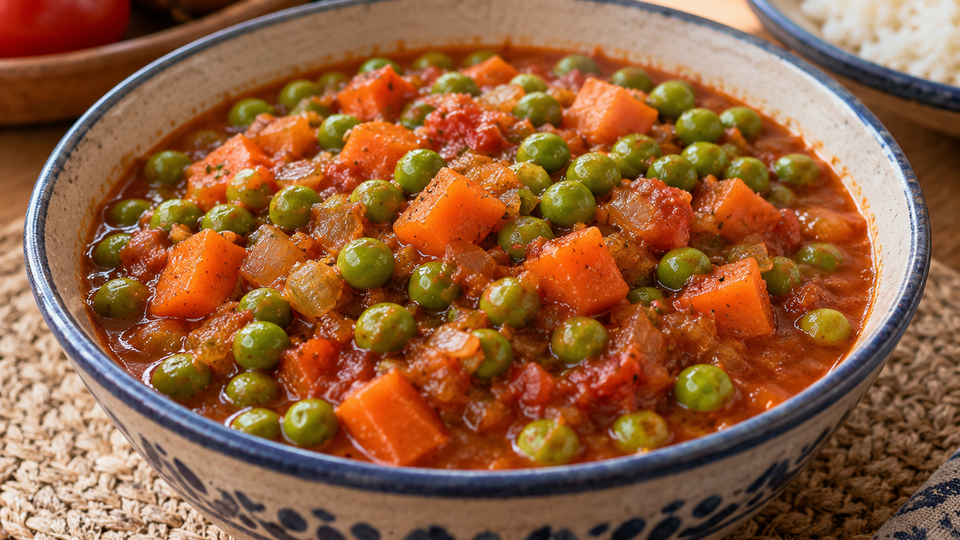
Ingredients
- Fresh or frozen peas 500 g
- Carrots 300 g
- Crushed tomatoes (canned or fresh) 400 g
- Onion 1, medium-sized
- Garlic cloves 2
- Vegetable oil (sunflower or rapeseed) 2 tablespoons
- Vegetable broth 250 ml
- Fine salt To your taste
- Freshly ground black pepper To your taste
- Ground cumin (optional) 1/2 teaspoon, or to your taste
Preparation
Prepare the vegetables 🥕: Wash and peel the carrots, then cut them into rounds about 0.5 cm thick. Peel the onion and chop it finely. Peel the garlic cloves and crush or chop them very finely. If using fresh peas, shell them. If using frozen peas, keep them in the freezer until ready to add. 10-15 minutes
Sauté the onion 🧅: In a Dutch oven or a large, heavy-bottomed pot, heat the 2 tablespoons of vegetable oil over medium heat. Add the chopped onion and sauté gently for 5 to 7 minutes, until it becomes translucent and very tender, without excessive browning. It should 'melt' to release its aromas without bitterness. 5-7 minutes
Add carrots and garlic 🔥: Incorporate the carrot rounds into the pot with the onion. Cook them together for 5 minutes, stirring occasionally. The carrots should start to soften slightly. Then add the chopped garlic and sauté for 1 more minute, until fragrant, being careful not to burn it. 6 minutes
Integrate tomato and broth 🍅: Pour the crushed tomatoes and vegetable broth into the pot. Season with salt and pepper to your taste. If using cumin, add it now. Mix all ingredients well. Bring the mixture to a gentle boil, then reduce the heat to low. 3 minutes
Initial simmering ⏳: Cover the pot and let simmer for 15 minutes. During this time, the carrots will continue to cook and the sauce will begin to develop its flavors. The sauce should remain liquid, do not let it reduce to dry. Check the seasoning and adjust if necessary. 15 minutes
Add peas and finish cooking 🟢: Incorporate the peas (fresh or frozen) into the pot. Mix gently. If using fresh peas, let simmer for about 10 to 15 minutes, or until tender. If using frozen peas, the cooking time will be shorter, about 5 to 8 minutes, just until they are hot and tender. Taste to check for doneness and tenderness. 5-15 minutes
Check consistency and serve ✨: The sauce should be thickened but not excessively reduced. It should coat the vegetables without being too thick or too thin. If it's too thick, add a splash of broth. If it's too thin, remove the lid and let simmer for a few more minutes over low heat, watching carefully. Serve hot. 2 minutes
Introduction
Discover a symphony of sweet and earthy flavors with this Egyptian recipe for peas and carrots. This dish, often served as a side, is a celebration of simplicity and freshness. Imagine tender peas and melting carrot slices, coated in a light and fragrant tomato sauce, subtly enhanced by onion and garlic. The texture is creamy, the color vibrant, and the aroma evokes the warmth of family kitchens. It's a dish that warms the body and soul, easy to prepare and incredibly satisfying. It's perfectly suited for serving with plain white rice, allowing each ingredient to express itself fully. Its preparation is accessible, even for beginner cooks, and promises a delicious result that will delight the taste buds.
Cultural context
Peas and carrots, or 'basella w gazar' in Egyptian Arabic, is a very popular and beloved vegetable dish in Egyptian homes. It embodies simple, comforting family cuisine, often prepared with seasonal vegetables. This type of vegetable stew is a staple of daily meals, served as a main side dish or as a light vegetarian meal. Egyptian cuisine is rich in dishes based on vegetables simmered in fragrant tomato sauces, reflecting the abundance of local agricultural products. The use of onion and garlic as an aromatic base is omnipresent, creating a characteristic depth of flavor. This dish is a perfect example of how simple ingredients can be transformed into a delicious and nourishing meal, testifying to the culinary ingenuity and generosity of the Egyptian table. It is often prepared in large quantities to be shared with family, emphasizing the importance of the meal as a moment of conviviality.
Tips
Choosing peas 🌱: For optimal flavor, opt for fresh, seasonal peas. If not possible, good quality frozen peas are an excellent alternative and do not require prior thawing, which simplifies preparation.
Tomato quality 🍅: Good quality crushed tomatoes will make all the difference. If using fresh tomatoes, blanch, peel, deseed, and crush them for a finer texture and sweeter flavor.
Cooking the onion 🧅: The key to a good base is to 'melt' the onion slowly over low heat. This allows it to release its natural sweetness without burning, which could make the dish bitter.
Balanced seasoning ✨: Taste the sauce several times during cooking and adjust salt, pepper, and cumin. Cumin is optional but adds an aromatic touch characteristic of Egyptian cuisine.
Sauce consistency 🥣: The sauce should be creamy and coat the vegetables. If it's too thin, remove the lid and let it evaporate a little. If it's too thick, add a little hot vegetable broth to adjust to the desired consistency.
Ideal accompaniment 🍚: This dish is designed as a side. It is traditionally served with plain white rice, which deliciously absorbs the sauce and complements the vegetable flavors.
Planning
For preparation, a sharp chef's knife and a stable cutting board are essential for mincing the onion and cutting the carrots into regular rounds. A Dutch oven or a large, heavy-bottomed pot is ideal for even cooking and to prevent vegetables from sticking. Choose firm, brightly colored carrots, without blemishes. For peas, if you opt for fresh, make sure they are bright green and crisp. Good quality frozen peas are an excellent practical alternative. When cooking the onion, patience is key: it should become translucent and soft, not browned, for an optimal aromatic base. Carrot rounds should be of similar thickness for even cooking. Vegetable broth can be homemade or store-bought; be sure to choose a low-sodium version to better control the final seasoning. Stirring regularly during simmering is important to prevent vegetables from sticking to the bottom and to ensure the sauce coats all ingredients well.
Serving
Serve this dish hot, ideally with plain white rice on the side, allowing everyone to portion the amount of sauce and vegetables. It can be garnished with a pinch of chopped fresh parsley for a touch of color and freshness. This dish is designed as a side for 4 people. If serving as a vegetarian main course, portions should be adjusted accordingly.
Storage
🧊 Divide perishable leftovers into small containers and refrigerate promptly at 4°C or below; do not wait for complete cooling on the worktop. Preferably eat them the next day. Follow commercial ingredient labels too. Reheat only the portions needed until steaming hot throughout.
Variations
For a touch of freshness, you can add a few chopped fresh cilantro or flat-leaf parsley leaves just before serving. For a slightly spicier flavor, a pinch of sweet chili powder or paprika can be incorporated with the tomatoes. Some appreciate a hint of dried mint, added at the end of cooking, for an unexpected but refreshing aromatic note. If you want a richer version, a drizzle of extra virgin olive oil can be added just before serving. For a more substantial variant, diced potatoes can be added at the same time as the carrots, slightly extending the cooking time to ensure their tenderness.
Accompaniments
This dish is traditionally served with plain white rice, which is the perfect accompaniment to absorb the fragrant sauce. It can also be served with Egyptian flatbread (aish baladi) for dipping. As a vegetable side dish, it pairs very well with slow-cooked meat dishes like lamb or beef stew, or grilled meats. For a refreshing drink, a glass of karkadeh (hibiscus infusion) or fresh mint tea would be ideal. Karkadeh, prepared by infusing dried hibiscus flowers in hot water, then filtered and served cold, offers a tangy and floral flavor that pleasantly contrasts with the sweetness of the dish. For mint tea, infuse fresh mint leaves in hot water, sweeten lightly if desired, and serve hot or cold.
Nutrition notes
📊 Figures are rounded estimates per serving, excluding optional bread, sauces and toppings. Products, actual serving size, retained syrup and absorbed oil affect them. Vitamin and mineral descriptions are qualitative, with no measured amounts or health promises.