Chicken with Freekeh
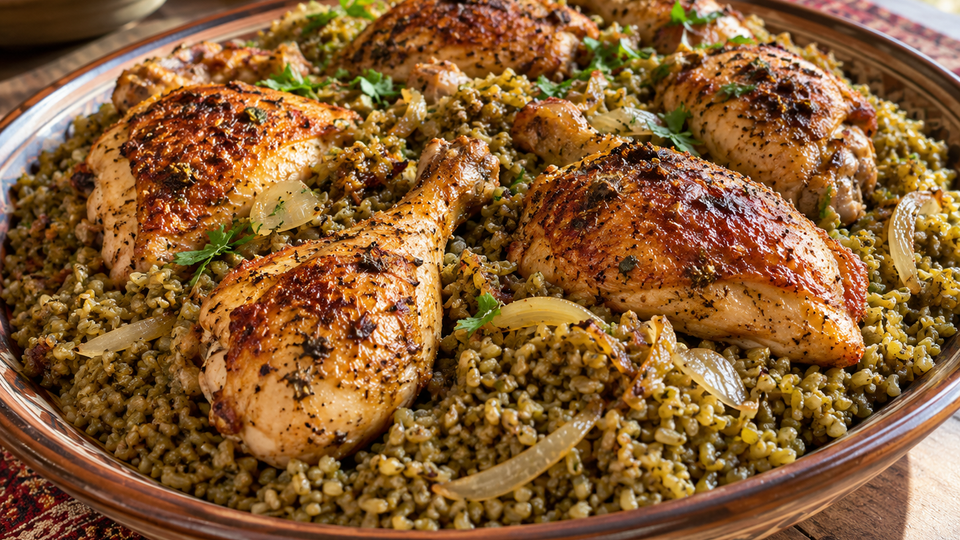
A comforting Egyptian family dish, where golden, tender chicken is simmered with freekeh, a cracked green wheat with smoky flavors, seasoned with mild spices.
Ingredients
- Chicken, cut into pieces 1 piece, about 1.5 kg
- Freekeh (cracked green wheat) 300 grams, well rinsed
- Onion 1 medium, finely chopped
- Garlic 2 cloves, minced or pressed
- Vegetable oil 2 tablespoons, for cooking
- Low-sodium chicken broth approximately 900 milliliters, adjust according to freekeh absorption
- Ground cinnamon 1 pinch or more, to taste
- Ground cardamom 1 pinch, optional, for an aromatic note
- Freshly ground black pepper to taste
- Salt to taste, adjust at the end of cooking, considering the broth
Preparation
Initial preparation: Rinse the freekeh thoroughly under cold running water in a fine-mesh sieve until the water runs clear. Let it drain. Meanwhile, preheat your oven to 180°C (350°F) if you opt for oven cooking. Ensure the chicken is well cut into pieces (thighs, drumsticks, wings, breasts) and pat them dry with paper towels to promote nice browning. Season the chicken pieces generously with salt and pepper. 🧂 10 minutes
Browning the chicken: In an oven-safe Dutch oven or large skillet, heat the vegetable oil over medium-high heat. When the oil is hot, place the chicken pieces skin-side down. Brown them on all sides for about 5 to 7 minutes per side, until they achieve a beautiful golden and crispy color. Remove the chicken from the pot and set aside on a plate. This step is crucial for the final taste and texture. 🔥 15 minutes
Preparing the aromatic base: In the same pot, reduce the heat to medium. Add the chopped onion and sauté for about 5 to 7 minutes, stirring regularly, until it becomes translucent and tender. It should not brown. Then add the minced garlic and sauté for 1 additional minute, until fragrant. Be careful not to burn the garlic, which would give it a bitter taste. 🧅🧄 8 minutes
Integrating freekeh and spices: Add the rinsed and drained freekeh to the pot with the onions and garlic. Mix well for 2 to 3 minutes to coat the freekeh with the flavors and lightly toast it. Incorporate the pinch of cinnamon and, if desired, the pinch of cardamom. Mix again to distribute the spices evenly. This step helps to develop the aromas of the freekeh. ✨ 5 minutes
Setting up for cooking: Return the browned chicken pieces to the bed of freekeh in the pot. Pour in about 600 ml of the low-sodium chicken broth, just enough to cover the freekeh and chicken pieces halfway. The liquid level is important: the freekeh should be submerged, but the chicken should not float entirely. Bring everything to a gentle simmer on the stovetop. 🍲 5 minutes
Covered cooking (oven or stovetop): Cover the pot tightly with its lid or heavy-duty aluminum foil. If using the oven, bake for about 45 to 60 minutes at 180°C (350°F). If cooking on the stovetop, maintain a very low heat and simmer for the same duration. Cooking time may vary depending on the size of the chicken pieces and the type of freekeh. The chicken should be cooked through and the freekeh tender. ⏱️ 45-60 minutes
Checking and adjusting broth: During cooking, check the liquid level after about 30 minutes. If the freekeh seems dry or if the broth has been too absorbed, add the remaining hot broth, in small quantities (about 100 ml at a time), until the freekeh is well hydrated and tender. The freekeh should be chewy but retain a slight bite. 💧 5 minutes (intermediate)
Checking chicken doneness: To ensure the chicken is perfectly cooked, insert a meat thermometer into the thickest part of a thigh, without touching the bone. The internal temperature should reach 74°C (165°F). If not, extend cooking in 5 to 10-minute intervals. The chicken should be tender and easily fall off the bone. 🌡️ 5 minutes (check)
Resting and serving: Once the chicken and freekeh are cooked, remove the pot from the oven or heat. Let the dish rest, still covered, for 5 to 10 minutes. This resting time allows the chicken juices to redistribute and the freekeh to finish absorbing the last flavors. Serve hot, directly from the pot, arranging the chicken pieces harmoniously over the freekeh. 🍽️ 10 minutes
Introduction
Imagine a dish where every bite reveals a distinct texture and flavor: the crispy, golden skin of juicy chicken, the tenderness of its meat that easily falls off the bone, and the firm yet chewy grain of freekeh, infused with subtle aromas of cinnamon and cardamom. This Chicken with Freekeh is an invitation to the Egyptian table, a preparation that warms both body and soul. It's an accessible recipe, ideal for a family meal or with friends, offering a rich and balanced culinary experience. Slow cooking allows the flavors to meld harmoniously, transforming simple ingredients into a memorable feast. Its apparent simplicity hides a depth of flavor that will pleasantly surprise your guests. Get ready for a culinary journey to the heart of Egypt, without leaving your kitchen. 🇪🇬
Cultural context
Freekeh, or cracked green wheat, is an ancient and revered ingredient in Middle Eastern and North African cuisine, particularly in Egypt. It is obtained by harvesting wheat while still green, then roasting and cracking it, which gives it a distinctive smoky flavor and unique texture. This Chicken with Freekeh dish is a domestic adaptation of Egyptian family preparations, where freekeh is often used as a base for stews with poultry or lamb. It should not be confused with freekeh-stuffed pigeon, another Egyptian specialty already present in our repertoire. This dish embodies the generosity and conviviality of Egyptian cuisine, where meals are often shared with family, around hearty and fragrant dishes. It reflects culinary ingenuity in transforming local grains into tasty and nourishing meals. The presence of cinnamon and cardamom, though subtle, is typical of the spice blends used in the region to flavor savory dishes, adding an aromatic warmth without being overwhelming.
Tips
Choosing Freekeh There is whole and cracked freekeh. For this recipe, cracked freekeh is preferable as it cooks faster and its texture is more suitable to accompany chicken. If you only have whole freekeh, plan for a prior soaking time (about 30 minutes) and slightly longer cooking.
Browning the Chicken Do not skip the chicken browning step. It brings an incomparable depth of flavor and a pleasant texture to the skin. Make sure the pot is hot and do not overcrowd the pan to allow for good caramelization.
Broth Management Freekeh absorbs liquid variably. It is crucial to add the broth in stages and monitor the moisture. Too dry freekeh will be hard, too watery freekeh will be mushy. The goal is a tender but distinct grain.
Balanced Seasoning Low-sodium broth is a base. Taste the dish at the end of cooking before adding salt. Spices like cinnamon and cardamom are subtle; feel free to adjust quantities according to your preferences, but without making them dominant.
Oven vs. Stovetop Cooking Oven cooking at 180°C (350°F) offers more uniform heat and freekeh that is less likely to stick to the bottom. Stovetop cooking requires more attentive monitoring of the heat and occasional stirring (but gently so as not to damage the chicken) to prevent the freekeh from sticking.
Chicken Internal Temperature Using a meat thermometer is the most reliable way to ensure perfectly cooked chicken (74°C / 165°F) without drying it out. It's a small pro tip that makes all the difference for food safety and tenderness.
Planning
For equipment, an enameled cast iron Dutch oven or a large skillet with a tight-fitting lid is ideal for this recipe, as it allows you to brown the chicken on the stovetop and then transfer it directly to the oven for slow, even cooking. A good chef's knife and a stable cutting board are essential for finely chopping the onion and garlic. A meat thermometer is highly recommended to ensure perfect chicken doneness. Regarding product selection, opt for quality chicken, free-range if possible, for better flavor and texture. Freekeh is usually found in Middle Eastern grocery stores or organic shops; make sure it is of good quality and well cleaned. Useful tips include thoroughly drying the chicken before browning for crispy skin, regularly stirring the onion so it doesn't burn, and gradually adding the broth to control freekeh absorption. Rinsing the freekeh is crucial to remove impurities and excess starch. Patience is key for slow cooking, which allows flavors to fully develop. Don't forget to taste and adjust seasoning at the end of cooking.
Serving
Serve this Chicken with Freekeh directly from the pot, arranging the chicken pieces over the bed of freekeh. You can garnish with a few chopped fresh parsley leaves for a touch of color and freshness. Accompany with a simple green salad or a raw vegetable salad for a balanced meal. The dish is hearty on its own and does not require heavy accompaniments. For a more elegant presentation, you can shred the chicken meat and gently mix it with the freekeh before serving, but presenting whole pieces is more traditional.
Storage
🧊 Divide perishable leftovers into small containers and refrigerate promptly at 4°C or below; do not wait for complete cooling on the worktop. Preferably eat them the next day. Follow commercial ingredient labels too. Reheat only the portions needed until steaming hot throughout.
Variations
For a touch of freshness, you can sprinkle the dish with chopped fresh parsley or fresh cilantro before serving. A handful of pine nuts lightly toasted dry in a pan can also add a crunchy texture and delicate flavor. For those who appreciate a tangy note, a squeeze of fresh lemon juice just before tasting can enhance the flavors. If you want a vegetarian version, the chicken can be replaced with root vegetables (carrots, potatoes, sweet potatoes) cut into large cubes and added to the freekeh, adjusting cooking times so they are tender. Chickpeas can also be incorporated for protein.
Accompaniments
This Chicken with Freekeh pairs wonderfully with a fresh cucumber and tomato salad, seasoned with a drizzle of olive oil and lemon juice. Plain yogurt or a mint yogurt sauce can bring a refreshing note and balance the richness of the dish. For a drink, freshly brewed mint tea is an Egyptian classic that cleanses the palate. To prepare it, infuse a few sprigs of fresh mint in hot water, filter, sweeten lightly if desired, and serve hot or warm. The aromas are extracted by infusing for 3 to 5 minutes. Filtration can be done with a fine-mesh sieve. The dosage is about 5-6 mint leaves per cup. Hygiene is paramount: wash the mint well. Serve in small glasses. Variations include adding a slice of lemon or a pinch of black tea for a stronger tea.
Nutrition notes
📊 Figures are rounded estimates per serving, excluding optional bread, sauces and toppings. Products, actual serving size, retained syrup and absorbed oil affect them. Vitamin and mineral descriptions are qualitative, with no measured amounts or health promises.