Kefta mkaouara
Beef or lamb meatballs with cumin and paprika simmered in herb tomato sauce, without eggs in this version.
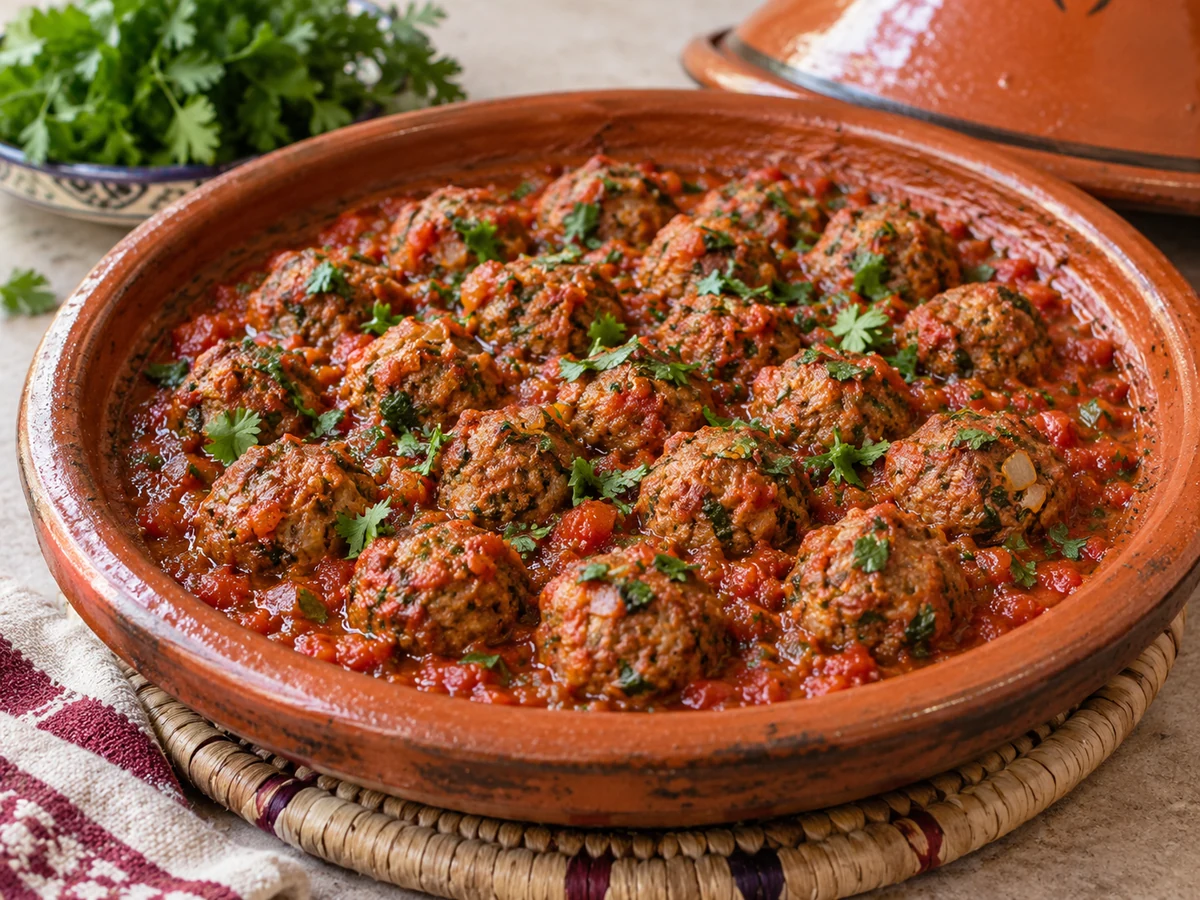
Ingredients
- 800 g minced beef or lamb, refrigerated
- 1 medium onion, finely grated and lightly squeezed
- 1/2 bunch chopped parsley
- 1/2 bunch chopped coriander
- 2 teaspoons sweet paprika, divided
- 1 teaspoon ground cumin
- 1/4–1/2 teaspoon cayenne, optional
- 800 g grated or chopped tomatoes
- 2 tablespoons tomato paste
- 3 tablespoons olive oil
- 200 ml hot water, then adjust
- Salt and pepper
Preparation
Prepare herbs, grate onion and squeeze excess water lightly. Reserve half the herbs for sauce.
Briefly mix cold meat with onion, half the herbs, one teaspoon paprika, cumin and a little seasoning.
Shape about twenty-four similar 3–4 cm meatballs and refrigerate while making sauce.
Warm oil in a wide pan or compatible tagine. Add tomatoes, paste, remaining paprika and optional cayenne.
Cook 10–15 minutes to concentrate tomatoes, then add 200 ml hot water and taste before adding more salt.
Arrange meatballs in one layer in simmering sauce, cover and cook gently 20–30 minutes, turning carefully once.
Check a thick meatball is cooked through, ideally with a food thermometer to at least 71°C for minced beef or lamb. Continue if needed without drying the sauce.
Add remaining herbs. If sauce is watery, reserve cooked meatballs and reduce uncovered before returning them.
Rest 3–5 minutes and serve hot with separate bread or salad. There are no eggs in the mixture or cracked over this version.
Introduction
This kefta mkaouara combines small seasoned meatballs and a concentrated tomato sauce. Cumin, sweet paprika, parsley and coriander give a clear flavour without an indiscriminate spice mixture. Meat cooks directly in the prepared sauce in a wide pan or suitable tagine.
This recipe is deliberately egg-free, distinct from recipe 10042 for kefta with eggs. Eggs are neither a binder in the meat nor a topping. Grated onion, herbs and brief handling allow the meatballs to hold together. Aim for meat cooked through without compression and properly cooked tomato. If sauce remains watery, reserve cooked meatballs and reduce it separately rather than drying the meat.
Eight hundred grams of meat for six people makes approximately twenty-four meatballs, or four each. The exact number can vary, but matching sizes makes checking doneness easier. For a smaller meal, reduce quantities and use a narrower pan while retaining enough sauce for gentle cooking.
Choose a pan wide enough for one layer; overlapping meatballs cook less evenly and are difficult to move. Use two batches or split the sauce if necessary. A gentle simmer should surround their bases without rolling them violently.
Grated onion contributes moisture. Squeeze briefly if it sits in a puddle, but do not replace the onion with flour to absorb excess water: that changes both texture and ingredients. Slightly wet hands aid shaping without extra oil.
Let meatballs firm after first touching hot sauce before moving them. Turn once with a broad spoon. Tomato colours their surface quickly, so outside colour does not establish cooked centres. Use clean serving utensils.
Cool advance-prepared meatballs and sauce promptly in shallow containers and refrigerate. Gently reheat only the needed amount with a little water if thickened, until hot throughout. Prolonged lukewarm holding improves neither texture nor meal organisation.
Cultural context
Tomato-simmered meatballs are familiar in Moroccan family cooking. Kefta refers to seasoned minced meat, and recipes vary between households. This egg-free formula is a defined version rather than a claim to the country’s only tradition. It distinguishes this page from the separately listed egg tagine. Serve in its cooking vessel or individual plates with khobz and salad, without automatically adding several starchy sides. Keep strong condiments separate for differing tastes. Sweet paprika and hot cayenne are not interchangeable at equal volume.
Tips
Keep meat cold and refrigerate shaped meatballs if sauce is delayed.
Lightly squeeze grated onion without removing all its pulp.
Make similar-sized meatballs for even cooking.
Concentrate tomatoes before adding meat.
Do not compact the meat through prolonged mixing.
Move meatballs with a broad spoon rather than stirring vigorously.
Recipe 10042 is the egg version; do not add eggs to this separate preparation.
Variations
Beef and lamb give different flavours; keep the same thorough centre-cooking check. Omit optional cayenne for a mild version while retaining sweet paprika. A little pepper can be cooked in the sauce as a declared variation, with liquid adjusted. The egg version has a separate recipe and is not added to this one as if the dishes were identical.
Accompaniments
Serve with a modest portion of khobz and tomato or cucumber salad, or cooked vegetables such as zaalouk. Plain rice may replace bread according to the meal, rather than being automatically added as another starch. Offer olives, lemon and chilli separately so salt and acidity do not obscure the meatballs.
Nutrition notes
Minced meat supplies protein, and fat content depends on the cut and product. Tomatoes, herbs and measured oil also contribute to the dish. This egg-free version cannot reuse a calculation for kefta with eggs. No new calorie or micronutrient figures are provided without calculation for the actual quantities and six portions. Bread, salad and the amount of sauce eaten change the complete meal. Spices provide flavour without a therapeutic claim; taste after tomato reduction before final salting.
Conclusion
Prepared tomato sauce, evenly sized meatballs and checked centre cooking define this egg-free kefta, distinct from the egg version.
Enjoy your meal
Enjoy your meal!