Ngalakh
Ngalakh combines cooked millet grains with a sauce of bouye, peanut paste, water and sugar, often called neteri. Sweet and tangy sauce coats the grains without hiding them. Serve chilled in small dishes. This version contains no condensed milk and does not turn the cereal into flour porridge.
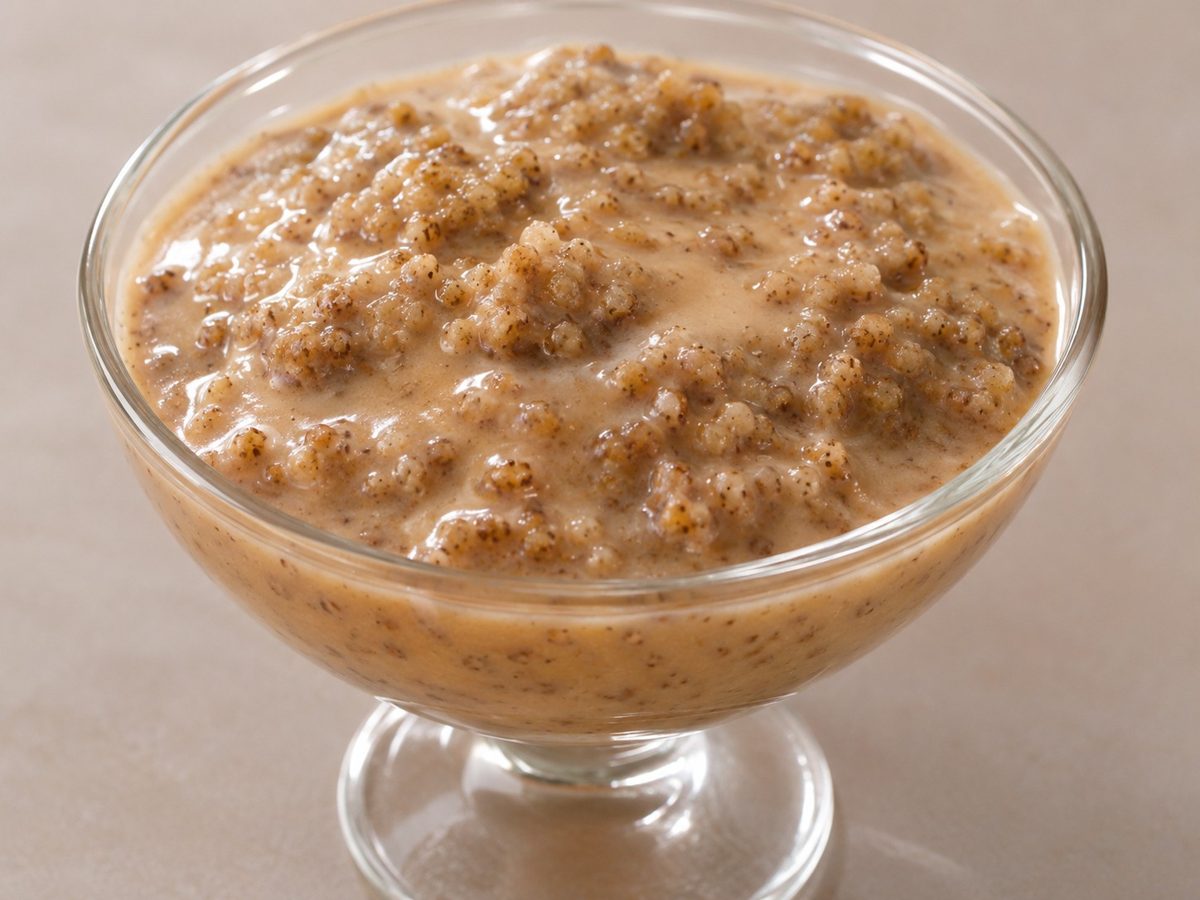
Ingredients
- 180 g dry granulated millet semolina for thiakry, ready to cook according to its packaging
- Water for cereal according to the producer
- 60 g plain bouye powder
- 100 g pure unsweetened food-grade peanut paste
- 600 ml drinking water for sauce, including 100 ml lukewarm to dilute peanuts
- 90 g fine sugar initially
- Up to 20 g optional additional sugar after tasting
- A few drops of food-grade orange-blossom water, optional
- A very small pinch of ground nutmeg, optional
Preparation
Cook granulated millet semolina according to its packaging until tender. Fluff, spread in a shallow dish and cool quickly before refrigerating.
Sift bouye powder into a bowl. Gradually whisk in 500 ml drinking water. Hydrate a few minutes, stir again and pass through a fine sieve to retain any lumps and fibers.
Stir peanut paste before weighing 100 g. Dilute with the remaining 100 ml lukewarm water, adding gradually until smooth.
Combine diluted peanut paste and bouye. Add 90 g sugar and optional flavorings in very small amounts. Mix thoroughly and refrigerate until sauce is fully cold.
Taste cold sauce. Optionally add some reserved sugar and let dissolve, retaining perceptible acidity. Stir to check no peanut-paste mass remains below.
Combine cold grains with some sauce when serving. Adjust with more until coating, neither dry nor flooded. Millet products do not absorb identical amounts.
Divide among six small dishes and serve chilled. Refrigerate unserved components and use clean spoons each time.
Introduction
Ngalakh combines cooked millet grains with a sauce of bouye, peanut paste, water and sugar, often called neteri. Sweet and tangy sauce coats the grains without hiding them. Serve chilled in small dishes. This version contains no condensed milk and does not turn the cereal into flour porridge.
Aistou Cuisine describes this combination and its connection to Easter sharing practices in Senegal. This recipe retains the dessert's recognizable ingredients with weighed quantities and an independent home method. It does not represent every family's version. Toppings and flavorings are restrained so millet, peanuts and baobab fruit remain perceptible.
Cultural context
At a glance Makes 6 small dessert dishes. Active preparation 25 minutes. Cook millet according to the product. Cool quickly, then refrigerate at least 2 hours. Equipment: millet-cooking vessel, whisk, fine sieve and bowl. Allergen: peanuts. Check prepared millet and other products for possible wheat traces. Use plain food-grade baobab pulp powder, not an already-sweetened drink mix.
Distinguishing grain and flour Granulated millet semolina gives visible small grains. Flour poured into water would make a different porridge. Check the commercial name and packet instructions. Some products are precooked and rehydrate quickly; others need longer cooking or steaming. One method cannot be determined from the word millet alone.
Taste a cooled grain for tenderness. A hard center may not disappear in cold sauce; finish cooking before assembly. Conversely, very wet grain can compact. Fluff and quickly release steam in a shallow dish. Organize cooling without leaving a large lukewarm mass on the table for hours.
Making neteri Bouye powder hydrates gradually. Pouring all water onto a large mound can leave dry-centered lumps. Whisk in liquid in stages, then rest briefly. A sieve catches troublesome particles, not all pulp. Press gently and collect the thick liquid underneath.
Dilute peanut paste separately with lukewarm water and a spoon to incorporate without large lumps. Stir the jar first if oil has separated. Sweetened or flavored peanut paste changes balance and does not match reference quantities. The label is the first guide to what enters the sauce.
Balance without concealment Bouye acidity varies and cold changes perception. Taste before adding optional sugar. Pleasant sauce should retain fruit character rather than merely strong sweetness. Orange-blossom water and nutmeg can complement, but large amounts conceal the three main ingredients. The basic version works without them.
Adjust final texture through how much sauce goes over the grain. Adding is easier than removing a large excess. Start with a loose texture and let everyone add more. Millet absorbs liquid while waiting; very early assembly makes a denser dessert. This explains keeping the two components separate until mealtime.
Sharing and presentation Ngalakh sharing practices are documented in Senegal, but the manuscript does not turn that reference into an identical rule for every family. Small dishes serve neatly while the rest stays chilled. Takeaway containers must be clean and accompanied by refrigeration instructions and a peanut-allergen notice.
Raisins, dates, chocolate and condensed milk are not implicit additions here. Other versions may contain them, but declare the ingredients. The illustrated preparation is deliberately simple. Six dishes are a dessert yield adapted to the meal, not a compulsory portion or nutritional promise.
Storage Cool grain quickly and keep grain and sauce at no more than 4 °C. Eat within 24 hours of preparation, allowing no more than two hours at room temperature during work, less in hot weather. Never return leftovers from a served dish to the common bowl. Water and cooked cereal require refrigeration even if bouye and peanut paste were sold separately as dry or shelf-stable products.
Sources Aistou Cuisine, millet, bouye and peanut combination: https://aistoucuisine.com/publications/ngalakh-dessert-senegalais-au-bouye-a-la-pate-darachide-et-semoule-de-mil The quantities and detailed explanations above are an independent formulation for the manuscript.
Enjoy your meal
Enjoy your meal!