Mbouraké
Mbouraké is a crumbly mixture of breadcrumbs, peanut paste and sugar. Eat small quantities plain or with dairy added when serving. Its texture resembles fine crumble crumbs; it is neither a baked cake nor rice pudding. Peanut paste coats the breadcrumbs without turning them into a compact block.
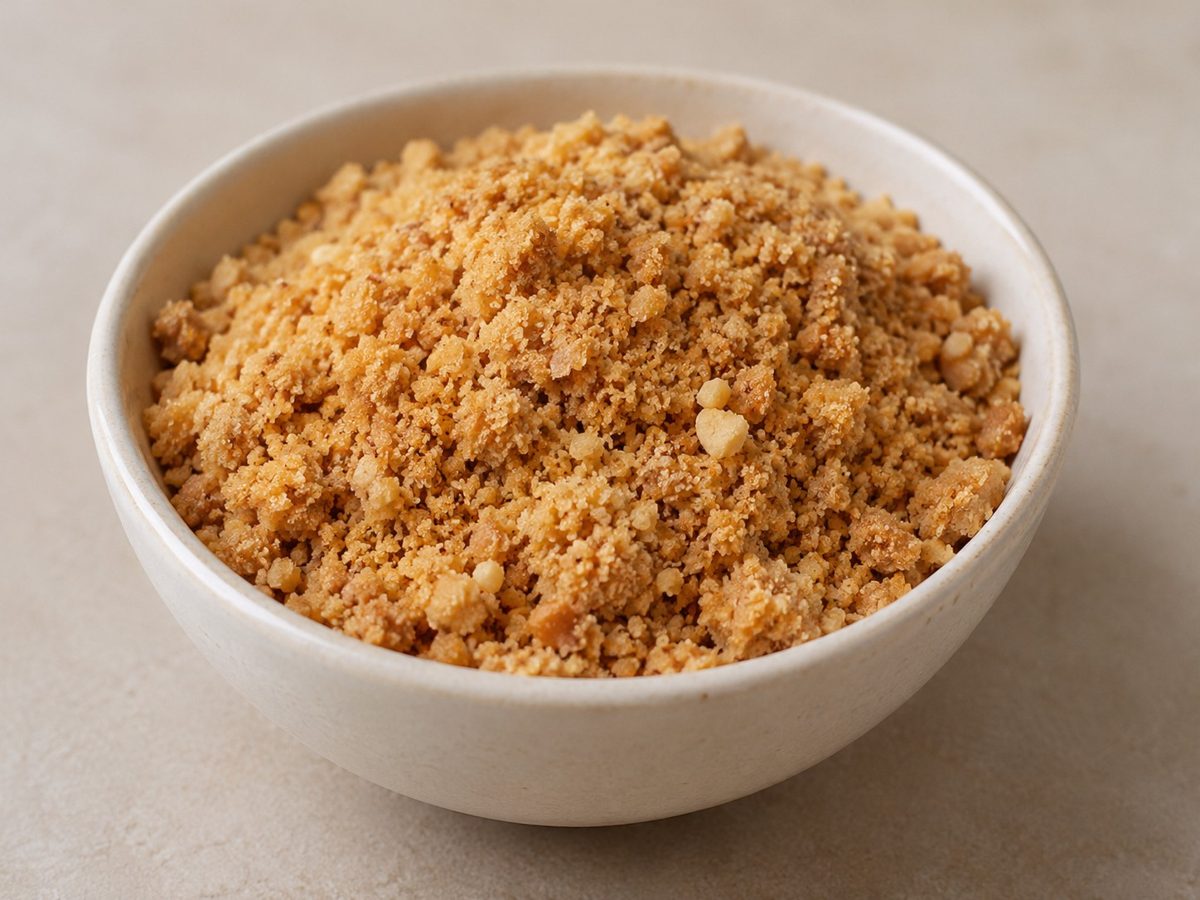
Ingredients
- 200 g fine breadcrumbs from fully dry, sound bread
- 90 g pure unsweetened food-grade peanut paste
- 35 g fine sugar
- A small pinch of salt only if the products are not already salted
Preparation
Choose sound bread. If not fully dry, cut small and dry at 120 °C, turning and watching without seeking strong browning. Cool completely.
Grind cold bread into fine crumbs. Remove overly hard large fragments and weigh 200 g usable breadcrumbs. This is dry crumb weight, not fresh bread.
Stir the peanut-paste jar with a clean spoon to reunite separated oil and denser solids. Weigh 90 g.
Combine breadcrumbs and sugar. Add paste in small portions. Mix first with a spoon, then gently rub between clean fingers or work with a fork to distribute.
Stop when small fairly even crumbs form without unmixed paste clumps. Keep crumbly, not a wet ball. Do not add water to make handling easier.
Taste and optionally add a tiny pinch of salt. This uses unsweetened paste; another product requires adjustment from the outset, not automatic addition of all stated sugar.
Serve in small dishes. If offering yogurt or fermented milk, add only to individual portions so the remaining mixture stays dry.
Introduction
Mbouraké is a crumbly mixture of breadcrumbs, peanut paste and sugar. Eat small quantities plain or with dairy added when serving. Its texture resembles fine crumble crumbs; it is neither a baked cake nor rice pudding. Peanut paste coats the breadcrumbs without turning them into a compact block.
Aistou Cuisine describes this composition in several mbouraké desserts. This formulation preserves that identity with measured home quantities. Gently dry bread if necessary, then cool before mixing. This uses sound bread that has become dry, not moldy bread. The basic preparation contains no rice, milk or raisins.
Cultural context
At a glance Makes about 6 small portions of dry mixture. Preparation 20 minutes. Optional bread drying 20–30 minutes at 120 °C in a conventional oven, then complete cooling. Equipment: tray, blade processor or mortar, scales and bowl. Allergens: wheat and peanuts. Check bread composition too. Dairy offered separately adds milk and is outside the quantities.
Preparing breadcrumbs Fully dry bread grinds more evenly. A still-soft center forms processor clumps and retains moisture. Check gentle oven drying on a cooled piece. Heat can give a misleading impression; cool a small sample before breaking it. Bread should not be burnt or very dark.
Crumb size changes mouthfeel. Large crust fragments are hard and distribute peanut paste poorly. Excessively fine powder can instead create a dense texture. Aim for fine but perceptible crumbs. Process small quantities and pause to observe rather than running continuously without checking.
Distributing peanuts Pure peanut paste may have an oil layer. Taking only oil or only the dense bottom produces different results. Mix the entire jar before weighing. Use sound food-grade paste with a pleasant flavor. Sugar or flavoring cannot conceal rancidity in this recipe.
Gradual incorporation gives an even mixture. Add small spoonfuls and distribute before adding more. A large central lump makes nearby crumbs compact while others remain almost dry. Rub or crumble to divide lumps without liquid. A fork can replace fingers.
Recognizing the right texture Mbouraké looks dry, lightly bound by peanut fat. A squeezed handful may clump slightly but should fall apart easily. Dense dough that rolls into a ball indicates a different balance. Check weights and breadcrumb condition before adjusting. Randomly adding lots of bread would dilute aroma and change portions.
Crumbs need not be identical; slight texture is normal. Remove hard fragments that impede chewing. This dry texture may not suit someone with chewing or swallowing difficulties; choose a serving method or dessert adapted to their needs rather than offering a large compact spoonful.
Simple serving Eat plain or use a little as a dairy topping. Moisture quickly changes texture, so combine individual portions only when eating. Fruit may be offered separately but is not one of the four reference ingredients. Simple serving keeps bread and peanut flavors recognizable.
Quantities make several small dishes without prescribing a compulsory portion. The mixture contains sugar and fat naturally present in peanut paste; it is not a therapeutic food. Clearly declare allergens, especially when sharing in a box that might be mistaken for ordinary sweet breadcrumbs.
Storage Keep thoroughly dry in a clean closed container away from heat and moisture and aim for 3–5 days. This assumes fully dry breadcrumbs and sound ingredients. Never store a mixture already moistened with milk or fruit at room temperature. Refrigerate dairy portions and consume promptly. Use a dry spoon and discard any spoiled preparation.
Sources Aistou Cuisine, mbouraké definition in a different creation: https://aistoucuisine.com/publications/crumble-inverse-pommes-mbourake-caramel-baobab The weights and home method above are an independent formulation.
Enjoy your meal
Enjoy your meal!