Pasta with chicken
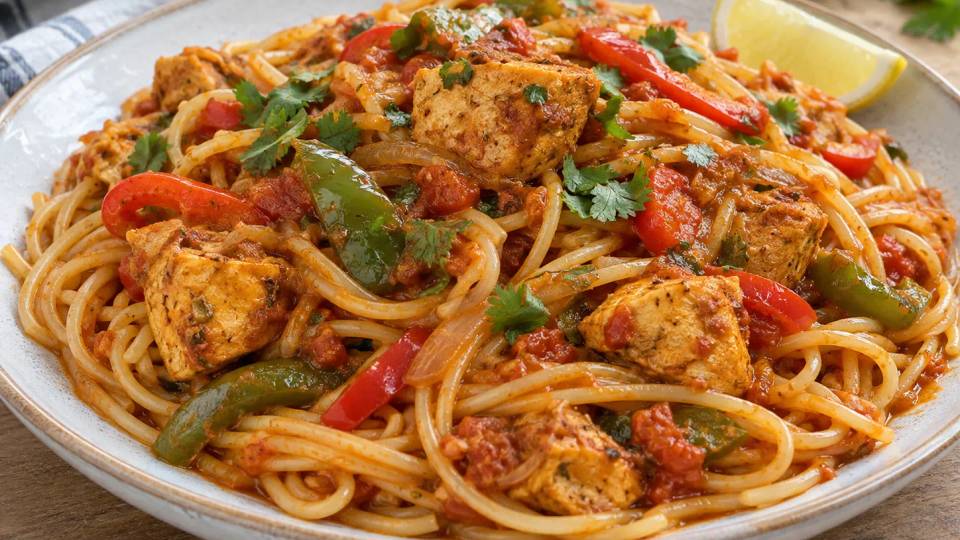
🍝🍗 Baasto iyo digaag is Somali pasta served with tender chicken, tomato sauce, bell pepper, ginger, and spices.
Ingredients
- 500 g dried spaghetti
- 800 g skinless chicken breast, cut into 3 cm pieces
- 500 g chopped tomatoes
- 3 medium onions, sliced
- 3 garlic cloves, chopped
- 15 g fresh ginger, grated
- 2 bell peppers, sliced
- 3 tbsp vegetable oil
- 1 tsp ground cumin
- 1 tsp ground coriander
- 1 tsp sweet paprika
- 1/2 tsp turmeric
- 1/2 tsp black pepper
- 3 g salt for the sauce, adjusted to taste, plus salt for the pasta water
- 1 lemon and 10 g fresh coriander
- Chilli or basbaas on the side, optional
Preparation
1️⃣ Brown the chicken in oil, then set aside.
2️⃣ Cook onion, garlic, ginger, spices, tomato, and bell pepper until reduced.
3️⃣ Return the chicken, cover, and cook through.
4️⃣ Cook pasta al dente, drain, and reserve a ladle of water.
5️⃣ Mix or top, finish with lemon and coriander, then serve with chili separately. 🇸🇴
Introduction
🇩🇯 This Somali-inspired recipe is offered as an adaptation for a Djiboutian table, rather than as a traditional speciality originating exclusively in Djibouti. Historical, family and religious background below describes its cuisine of origin and should not be read as universal Djiboutian customs. The ingredients, quantities and method define the version proposed here.
🍝🍗 Baasto iyo digaag, a tender and fragrant dish. 🌍 Introduction, history, and territory. Bariis is a family of fragrant Somali rice dishes, but there isn't one single official recipe. In the Horn of Africa, rice has been adopted, transformed, and passed down by families who adapted to local cultures, markets, ports, and available products. The Red Sea and Indian Ocean routes circulated rice, cardamom, cinnamon, cloves, cumin, coriander, ginger, pepper, raisins, and cooking techniques. These exchanges met pastoral knowledge, coastal products, garden vegetables, and urban habits. The result is not a foreign cuisine superimposed on Somalia: it is a Somali cuisine shaped by adaptation, memory, and taste. 🌊
In port cities, spices and rice could arrive through maritime markets and then be measured out according to household means. In pastoral areas, goat, lamb, beef, or camel meat provided a nourishing plate; on the coast, firm fish, lemon, tomato, and chili naturally became part of the meal. In a vegetarian family or on a day when meat is scarce, chickpeas, lentils, beans, and vegetables can take the place of protein. A white version, a red tomato version, a spicy version, or a sweet raisin version all belong to the same logic: to create fragrant rice, keep the grains separate, and organize a generous meal. 🤝
🕊️ Social and cultural context. Somalia is predominantly Muslim, and hospitality, modesty in assertions, and sharing are important in many households. Bariis can be cooked on Fridays, during Ramadan iftar, for Eid, a wedding, a birth, a visit, a family gathering, or an ordinary dinner. However, it would be inaccurate to say that every bariis is ritualistic or that all families serve it the same way. Some households prepare a large communal plate, others serve individual plates; some choose halal meat, others fish or a plant-based version. Always announce the ingredients, broths, dairy products, dried fruits, and spice level so that everyone can eat according to their beliefs, allergies, and needs. 🙏
🍚 The grain and the aromatic base. A good bariis starts with basmati or long-grain rice rinsed in several waters, then drained. Rinsing removes some of the surface starch and helps achieve airy grains. The amount of liquid depends on the variety, the pot, soaking, and residual moisture: measure, but also observe. The aromatic base requires patience. Melt the onion in oil before adding garlic, ginger, and spices. Whole spices can be briefly awakened in the fat, without burning. Tomato, bell pepper, or broth must lose their raw taste before adding the rice. A reduced base gives a deep aroma; a rushed base gives a watery and heavy dish. 🧅
🧑🏾🍳 Detailed method. Prepare all ingredients before turning on the heat. Keep meat and fish in the refrigerator, separate cutting boards for raw and cooked, wash hands, and check for bones. Brown meat in small batches to achieve good color; for fish, prefer short, gentle cooking so it remains intact. Add hot liquid and simmer until the garnish is almost tender. Taste the broth before salting, especially if a cube, smoked fish, or marinade is used. Then add the rinsed rice, spread it without compacting, and bring to a simmer. Cover tightly, reduce heat, and do not lift the lid during the first part of cooking: steam is essential. When the liquid is absorbed, turn off the heat and let rest for ten minutes. Fluff with a fork, never with a heavy spoon that would crush the grains. ⏳
🔥 Chef's tips. A thick pot limits burning points. A double cover, with parchment paper or aluminum foil then a lid, retains steam if the lid doesn't seal well. If the rice is still firm after absorption, add a few tablespoons of hot water, cover, and continue gently; never add a large volume of cold water. Reserve some browned onions for garnish. Add lemon, coriander, mint, or parsley at the last moment to keep their freshness. Basbaas can be prepared separately with tomato, chili, lemon, and coriander: the heat thus remains adjustable. Raisins and carrots provide useful sweetness when the dish is very spicy, but they should not mask the aroma of xawaash. 🌶️
🗺️ Regional and family variations. A Mogadishu table might enjoy very fragrant rice and a spicy sauce; a family from the interior might prefer slow-cooked meat and available vegetables. Coastal regions readily serve fish, lemon, and fresh herbs. In the diaspora, basmati, local rice, or another variety may be used depending on the market. Goat can become lamb, beef, chicken, or chickpeas; fish can be replaced by a firm and accessible species. Some cooks color the rice with tomato or turmeric, others keep it white to let the sauce speak. These differences are not errors: they show that transmission is alive and that identity is built with the people who cook. 🌿
🍽️ Serving, side dishes, and drinks. Present the rice in a dome or on a large platter, with the sauce, meat, fish, or vegetables arranged around it. A cucumber, tomato, onion, and lemon salad brings freshness; carrots, potatoes, eggplants, green beans, or roasted vegetables complete the plate. Basbaas and fresh chili remain separate to respect children and sensitive guests. Shaah cadays, Somali tea with cardamom and spices, is suitable for leisurely meals; fresh water, lemonade, tamarind juice, ginger, curdled milk, or lightly sweetened black tea also balance the dish. Avoid combining a very salty sauce and a very sweet drink: fragrant rice deserves a simple contrast. 🥤
❄️ Storage, nutrition, and conclusion. Cooked rice and garnishes should be cooled in shallow containers within two hours, then stored separately in the refrigerator for two to three days. Reheat only once until steaming hot and add a spoonful of water if the grains have dried out. Never leave a pot of rice at room temperature for several hours. The calories, carbohydrates, fats, proteins, fibers, sodium, and salt indicated in each recipe are estimates per serving: they change with the oil, serving size, cut of meat, fish, broth, and garnishes. Rice provides energy; protein provides amino acids, iron, zinc, phosphorus, selenium, and B vitamins; vegetables, lemon, and herbs add fiber, potassium, folate, and vitamin C. To balance the meal, reduce oil and salt if necessary, increase vegetables, and adjust the portion to appetite. These guidelines do not replace medical advice. In Somali, say Cunno wanaagsan! or Afkaaro wanaagsan! to wish a good meal. ✨
Baasto iyo digaag means “pasta and chicken” in Somali. The recipe relies on a simple contrast: supple pasta strands, tender chicken, and a tomato sauce concentrated enough to carry the spices. Chicken cooks faster than beef or goat; therefore, the sauce needs to be reduced before returning the chicken, then its cooking checked without letting it dry out. Boneless pieces are convenient, while bone-in pieces give more depth and require a few extra minutes.
🧑🏾🍳 Start by drying the chicken and browning it in batches. This browning develops a grilled flavor, but it never replaces full cooking. In the same pot, the onion absorbs the juices; garlic, ginger, cumin, coriander, and paprika release their aroma in the oil. Tomato and bell pepper must reduce before adding water. A sauce that is too liquid slides to the bottom of the plate, whereas a reduced sauce delicately clings to the pasta. Cook the pasta al dente, then use its starchy water to adjust the texture.
🌍 Somali cuisine has been built through exchanges, but families have made pasta a recognizable dish on their table. Baasto iyo digaag can accompany a workday, a visit, a children's meal, a family gathering, or a celebration. In a Muslim context, choose halal chicken; in all households, announce the broths, dairy products, and spices used. The recipe is not automatically ritualistic: it is primarily a preparation for sharing, adapted to beliefs and availability.
🗺️ Depending on the region and the diaspora, add carrots, peas, zucchini, potatoes, eggplant, or spinach. A little lemon at the end awakens the tomato. Some households prefer a mild sauce, others add fresh chili, basbaas, or pepper. Replace part of the chicken with chickpeas for a mixed plate, or use whole wheat pasta to increase fiber. A crunchy salad, cucumber wedges, and a separate hot sauce prevent the meal from becoming too heavy.
🧼 Keep chicken cold, wash hands, and separate cutting boards. Cook meat thoroughly, quickly cool pasta and sauce, store them separately for two to three days, and reheat only once. One serving provides approximately 545 kcal, 35g protein, 73g carbohydrates, 14g fat, 6g fiber, 640mg sodium, and 1.6g salt. Chicken provides protein, B3, B6, B12, selenium, and zinc; vegetables add vitamin C, folate, potassium, and fiber. Serve hot and say Cunno wanaagsan — bon appétit! ✨
Cultural context
🍗 Baasto iyo digaag is a family recipe for chicken pasta, adapted for daily meals, visits, and celebrations in Somali households.
Tips
🍗 Dry and brown the chicken.
🍅 Reduce the sauce before adding liquid.
🍝 Keep the pasta water.
🌶️ Adjust chili at the table.
🌡️ Check for thorough cooking.
Variations
Chicken with or without bones, various vegetables, whole wheat pasta, chickpeas, mild or spicy spices.
Accompaniments
Cucumber-tomato salad, lemon, vegetables, and bread; shaah cadays, tamarind, ginger, or water.
Nutrition notes
Chicken rich in protein, B vitamins, selenium, and zinc; energy-rich pasta; vegetables sources of fiber, vitamin C, and potassium.