Turmeric chicken
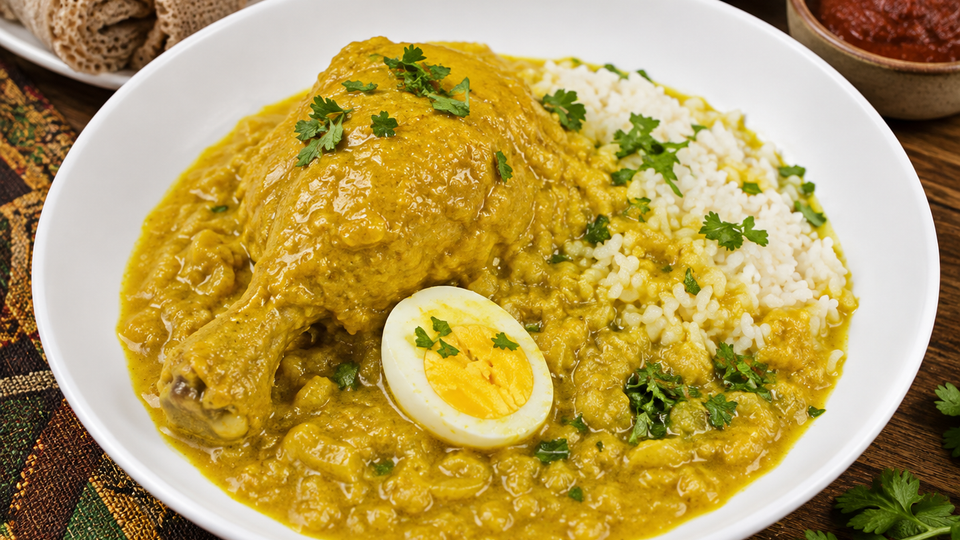
🍗🇪🇹 Chicken gently simmered in a golden sauce of onions, garlic, ginger, turmeric, and niter kibbeh, with optional hard-boiled eggs.
Ingredients
- 🍗 1.2 kg chicken thighs and drumsticks, without excess skin
- 🧅 5 yellow onions finely chopped, 5 cloves garlic, and 25 g ginger
- 🧈 3 tbsp niter kibbeh
- 🌕 2 tsp turmeric, 1/2 tsp black pepper, and 3/4 tsp salt
- 🥚 4 optional hard-boiled eggs, 500 ml hot water, lemon, injera, and green vegetables
Preparation
Lightly salt the chicken, drizzle with a little lemon, and let it wait in the refrigerator while preparing the onions. Then thoroughly wash hands, cutting board, and knife. 🧼
Cook the onions over low heat in a large pot until they melt and become creamy. Add niter kibbeh, garlic, ginger, turmeric, and pepper. 🧅
Add the chicken, coat it with the sauce, then pour in the hot water. Cover halfway and simmer gently for 40 to 50 minutes, turning the pieces. 🍗
Add the peeled hard-boiled eggs during the last ten minutes so they absorb the color of the sauce. Check that the chicken reaches 74 °C internally. 🌕
Let rest for five minutes, adjust salt and lemon, then serve with injera and gomen.
Introduction
🇩🇯 This Ethiopian-inspired recipe is offered as an adaptation for a Djiboutian table, rather than as a traditional speciality originating exclusively in Djibouti. Historical, family and religious background below describes its cuisine of origin and should not be read as universal Djiboutian customs. The ingredients, quantities and method define the version proposed here.
🍗 Doro alicha is a simmered chicken preparation that opts for bright mildness rather than the red heat of berbere. “Alicha” commonly refers to a family of dishes with more moderate spices, often recognizable by their golden color and the use of turmeric. This doesn't mean a lack of flavor: onion, ginger, garlic, and niter kibbeh build a rich, fragrant, and comforting sauce. The chicken cooks slowly until tender, while the hard-boiled eggs, when used, take on color from the sauce. 🌕
This recipe is designed for a family pot. It requires more attention than difficulty: finely chopping the onions, letting them melt slowly, adding aromatics at the right time, and maintaining a gentle simmer. The turmeric should be clear but not earthy, the chicken should be well-cooked without falling apart, and the sauce should coat the injera without becoming heavy. Lemon, green vegetables, and the acidity of injera prevent the dish from seeming monotonous. 🍽️
🧑🏾🍳 Choose bone-in pieces, such as thighs and drumsticks: they withstand simmering better than very lean breasts and add more flavor to the sauce. Keep the chicken cold until cooking. Lemon can briefly flavor the meat, but do not let it marinate too long, as its acidity would alter the surface. Immediately wash hands, cutting board, knife, and sink after handling raw meat; separate eggs, injera, and ready-to-eat vegetables from this work area. 🧼
The onions determine the texture. Chop them almost into a paste or grate them coarsely, then cook them in a large pot over low heat with a pinch of salt. They release their water, concentrate, and become soft. Do not aim for browning: doro alicha retains its light, golden hue. When the onion has melted, add the niter kibbeh. Its aroma may contain spices depending on the family recipe; simple clarified butter also works. Add garlic, ginger, turmeric, and pepper. Turmeric thrives in fat but burns quickly, hence the importance of stirring and not increasing the heat. 🥄
Coat the chicken pieces, then gradually add hot water. The sauce should reach about halfway up the chicken, not completely cover the meat. Cover halfway and maintain a gentle simmer. Turn the pieces with clean tongs once or twice for even cooking. The cooking time depends on their size: check the thickest part near the bone with a thermometer, which should read 74 °C. Do not rely solely on the color of the juice. Hard-boiled eggs, carefully peeled, can be slipped into the sauce ten minutes before the end; they absorb the turmeric and make a satisfying garnish. 🔥
Cultural context
📜 Doro alicha showcases the diversity of Ethiopian sauces beyond very spicy red dishes. The amount of turmeric, butter, eggs, and vegetables changes according to families and occasions.
📜 Chicken holds an important place in several Ethiopian meals, but recipes and occasions vary deeply. Red and very spicy doro wats are often better known abroad; a doro alicha reminds us that there are also golden, mild, and nuanced sauces. Households do not all use the same spices, the same amount of butter, the same cuts, or the same eggs. Ethiopian culinary traditions are composed of regional practices, languages, faiths, and family memories; no written recipe can reduce them to a single narrative. 🌍
In some Orthodox Christian contexts, chicken may be chosen outside of fasting periods, while the days concerned give more prominence to legumes and vegetables. Muslim families or those of other traditions organize their table according to their own customs. It is therefore preferable to speak of possibilities rather than universal rules: the same dish can be a family meal, served to guests, weekend cooking, or a contemporary adaptation. A welcoming table easily adds shiro, lentils, or vegetables so that everyone eats according to their beliefs and preferences. 🤝
Tips
🍗 Prefer bone-in pieces.
🧼 Strictly separate raw and ready-to-eat items.
🧅 Do not brown the onions.
🌕 Let the turmeric bloom in the butter without burning it.
🌡️ Check for 74 °C internal temperature.
Variations
🗺️ With or without eggs; lighter version with less niter kibbeh; vegetables served on the side or added to the pot; whole green chili for a subtle aroma.
Accompaniments
🥗 Injera, gomen, ayib, tomato-onion salad, split peas, and mild marinated vegetables. 🥤 Water, light tea, lemon-ginger infusion, or bunna (coffee). 🗣️
Nutrition notes
🥗 Chicken provides protein, selenium, phosphorus, and B vitamins; eggs add choline and B12. Vegetables and injera complete the plate with fiber and micronutrients. For more fiber, generously complement with vegetables and injera. Refrigerate leftovers within two hours, keep for two days, then reheat only once to 74 °C. Doro alicha offers another voice of Ethiopian cuisine: golden, patient, mild without being bland, and made to be shared.