Minced meat with fenugreek
🍲🇪🇹 Minced meat gently simmered in an onion, tomato, berbere, and fenugreek sauce, traditionally served with injera.
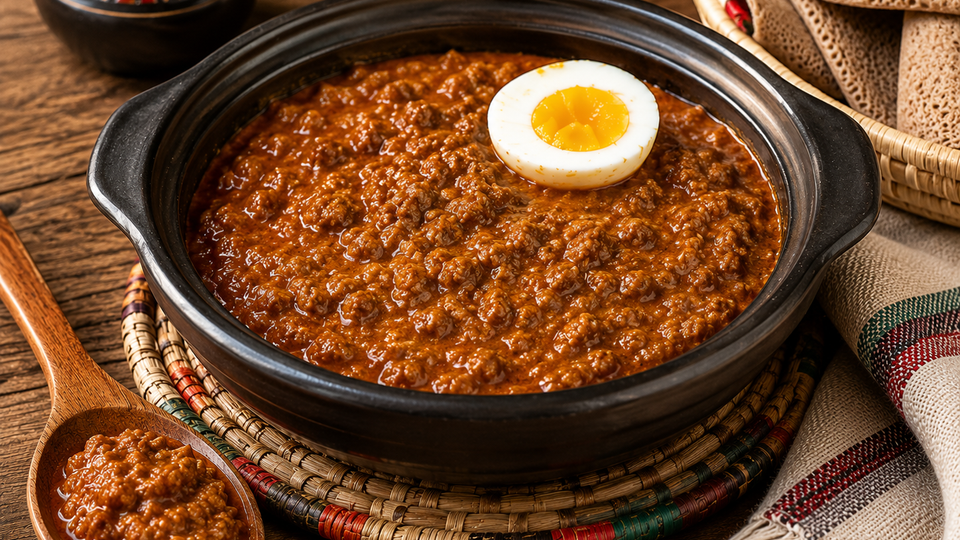
Ingredients
- 🥩 700 g (1.5 lbs) ground beef, 10% fat
- 🧅 4 chopped red onions, 4 cloves garlic, and 20 g (0.7 oz) ginger
- 🍅 400 g (14 oz) crushed tomatoes and 1 tbsp tomato paste
- 🌶️ 1 to 2 tbsp berbere, 1 tsp ground fenugreek, pepper, and 1/2 tsp salt
- 🧈 2 tbsp niter kibbeh, 350 ml (1.5 cups) water or lightly salted broth, injera and optional hard-boiled eggs
Preparation
1️⃣ Melt the onions with a pinch of salt in a heavy pot until tender and concentrated. Add niter kibbeh, garlic, ginger, berbere, and fenugreek. 🧅
2️⃣ Incorporate the ground meat, break it into small pieces, and cook until no longer pink. Remove excess fat only if necessary. 🥩
3️⃣ Add tomatoes, tomato paste, and hot water. Cover halfway and simmer gently for 30 minutes, stirring regularly. 🍅
4️⃣ Uncover for the last ten minutes to thicken the sauce; taste, adjust chili and salt, then add hard-boiled egg quarters if desired. 🍲
5️⃣ Serve hot with injera and green vegetables.
Introduction
🇩🇯 This Ethiopian-inspired recipe is offered as an adaptation for a Djiboutian table, rather than as a traditional speciality originating exclusively in Djibouti. Historical, family and religious background below describes its cuisine of origin and should not be read as universal Djiboutian customs. The ingredients, quantities and method define the version proposed here.
🍲 Minchet abish is a minced meat stew whose strength lies in a slowly built sauce. Onions form the base, tomatoes provide relief and acidity, berbere gives color and warmth, while abish — fenugreek — brings a slightly bitter, warm, and very recognizable note. The meat should not float in a bland liquid: it should blend with a thick, flavorful sauce, supple enough to be scooped up by injera. This recipe offers a family version, thoroughly cooked, with adjustable chili and accessible ingredients. 🍅
Minced meat makes the dish generous and easy to share. Each spoonful can hold meat, onion, spices, and sauce in one bite; each piece of injera absorbs the juice without needing a knife. However, this apparent simplicity requires method. Onions must reduce without burning, spices must open up in clarified butter, meat must be finely crumbled, and the sauce must simmer long enough to lose its raw taste. Gentle time replaces haste. 🌶️
🧑🏾🍳 Start with fresh minced meat, kept cold and cooked the same day. A moderate fat content adds flavor without making the sauce heavy. Wash hands and utensils after contact with raw meat, and do not use the same spoon for tasting and stirring. Chop onions very finely so they melt; if you leave them coarse, the sauce will retain an uneven texture. A large pot is preferable: it promotes evaporation and prevents the onions from simply boiling. 🧼
Cook them initially without too much fat, with a pinch of salt and medium-low heat. They gradually release their water then take on a golden hue and a deep sweetness. Then add niter kibbeh, garlic, and ginger. Spiced clarified butter can be replaced by plain clarified butter if necessary, but then the aromatics should be slightly strengthened. Add berbere and fenugreek for a short minute: the goal is to coat them in fat, never to brown them. Fenugreek easily dominates; start modestly, as it is simpler to add more than to correct excessive bitterness. 🥄
Pour in the meat and break it up with a spatula to get regular grains. Cook it completely before adding the tomato. Crushed tomatoes and concentrate add body and color; hot water or a lightly salted broth adjusts the fluidity. Simmering should be gentle, with the lid ajar: violent boiling would toughen the meat and splatter the sauce. Stir regularly, especially at the bottom, where onion and concentrate can stick. If the sauce becomes too dense, add a little hot water; if it remains liquid, uncover it for the last few minutes. 🔥
Cultural context
📜 Minchet abish illustrates an adaptable sauce-based cuisine: meat, tomato, chili, and fenugreek change proportions according to households. Injera and sharing the platter give the meal its collective dimension.
📜 Spicy onion sauces are important markers of many Ethiopian cuisines. They connect market produce, spice blends prepared at home or bought from a merchant, and serving on injera. Fenugreek is used in several cuisines of the Horn of Africa and the world; its particular notes are not an exotic decoration, but an element of balance that changes according to the freshness of the spice and the cook's hand. The name, proportions, and addition of eggs or vegetables may vary. A recipe sheet should not erase this diversity or promise a fixed authenticity. 🌍
In households, minchet abish can be a weekday dish, a way to cook a moderate amount of available meat for several people, or one of the elements of a larger meal. The preparation can adapt to budget, season, and preferences: more tomato, less chili, lamb or beef, eggs added for serving, green vegetables served alongside. Fasting periods observed by some Orthodox Christians naturally lead to plant-based tables at other times; this meat recipe therefore never exhausts the Ethiopian repertoire. Offering lentils or vegetables alongside allows everyone to be received with care. 🤝
Tips
🧅 Chop onions very finely.
🌶️ Use fenugreek sparingly.
🥩 Crumble the meat before adding tomatoes.
🔥 Simmer gently with the lid ajar.
🧂 Salt after tasting.
Variations
Homemade versions can use beef, lamb, or a mix. Some add hard-boiled egg quarters at the end; others serve potatoes, carrots, or peas alongside, rather than in the sauce. A less spicy variation reduces berbere and increases ginger and tomato. A more intense version adds mitmita at serving, not necessarily in the pot.
Accompaniments
SIDE DISHES: 🥗 Injera, gomen, ayib, tomato-onion salad, and mild pickled vegetables. DRINKS: 🥤 Water, light tea, ginger infusion, or bun coffee. 🗣️
Nutrition notes
🥗 This dish combines protein, iron, zinc, and B vitamins from the meat with fiber, vitamin C, and plant compounds from the aromatics and tomatoes. Limit salt and serve with vegetables.