White beans in tomato sauce
🫘 Fasolia is an Egyptian white bean stew in tomato sauce, flavored with onion, garlic, and mild spices. It can be vegetarian or include a little beef or lamb; in any case, it is often eaten with Egyptian rice or baladi bread.
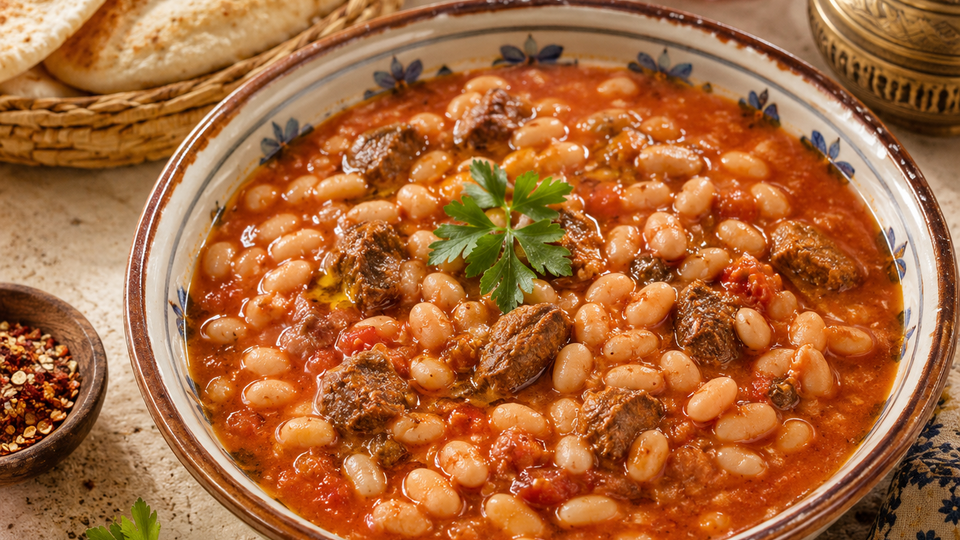
Ingredients
- 350 g dried white beans
- 800 g crushed tomatoes
- 1 onion
- 4 cloves garlic
- 2 tbsp oil
- 1 tsp cumin
- 1 bay leaf
- 1 chili, optional
- Salt, pepper, and fresh cilantro
- Egyptian rice or baladi bread
Preparation
🫘 Soak beans for 12 hours, drain, cover with fresh water, and cook until tender.
🧅 Sauté onion, add garlic, cumin, and chili, then tomatoes and bay leaf.
🍅 Reduce sauce, add cooked beans and a ladle of their water.
🍲 Simmer for 25 minutes covered, adjust seasoning, and serve with herbs, rice, or bread.
Introduction
🇩🇯 This Egyptian-inspired recipe is offered as an adaptation for a Djiboutian table, rather than as a traditional speciality originating exclusively in Djibouti. Historical, family and religious background below describes its cuisine of origin and should not be read as universal Djiboutian customs. The ingredients, quantities and method define the version proposed here.
🇪🇬 Egyptian cuisine developed along the Nile, in rural homes as well as in urban neighborhoods, influenced by markets, seasons, and numerous historical exchanges. Fava beans, baladi bread, rice, vegetables, herbs, garlic, lemon, oil, and meats form a daily culinary grammar whose proportions change according to regions and households. A written recipe therefore does not claim to impose a unique version: it offers guidelines to understand a technique, choose products, and carefully adjust the dish. 🌿
📜 Stews and purees hold a concrete place at this table: they feed several people, highlight simple ingredients, and create a sauce or texture that bread, rice, or grains can accompany. Coptic and Muslim traditions, family meals, visits, neighborhood markets, and seasons of fasting or feasting have contributed to diverse eating habits. It is more accurate to speak of living practices than to fix a dish to a single community or occasion. Within the same family, a stew can be daily, served to guests, adapted to a budget, or transformed by available vegetables. 🤝
🧑🏾🍳 Precision remains more important than complication. Prepare aromatics before heating the pot, wash herbs and vegetables thoroughly, and keep hot water or lightly salted broth handy. Sauté the onion without burning it, add garlic just long enough to flavor it, then taste after the sauce or puree has reached its final texture. Bouillon cubes, canned goods, and cheeses can already contain a lot of sodium: salt gradually. For meats and leftovers, separate raw from cooked, refrigerate within two hours, and reheat only once until the dish is piping hot. ❄️
🥗 The nutritional values indicated in the recipe cards are estimates per serving, and not medical advice. They change with the variety of vegetable or legume, the cut of meat, the amount of oil, the broth, and the plate size. A balanced table can combine a legume or meat, vegetables, a reasonable starch, and a low-sugar drink. Herbs, lemon, and raw vegetables add freshness without requiring more salt or fat. Serve chili separately so that each person can adjust the intensity. 🫘 Fasolia, the common name for white beans, belongs to the large family of dried legume dishes that nourish Egyptian tables. Its principle is simple: patiently cooked legumes join a fragrant tomato until the juice thickens and each bean retains its shape. Beans from the Americas were adopted into Mediterranean and Nilotic cuisines through exchanges; today they are associated with accessible, filling, and easy-to-share meals. Fasolia does not claim to be immutable: meat, broth, garlic, cumin, and chili vary according to the market and the family. 🍅
📜 At home, this stew also reflects a preservation know-how. Dried beans keep for a long time, allow cooking for several people, and become tender through gentle cooking. It can be a main vegetarian dish with bread and salad, or accompany meat during a more abundant meal. In Muslim and Coptic traditions, fasting, feasting, and daily meal habits are diverse; a meatless fasolia can adapt to certain times, but its meaning remains what each household gives it. 🤲
Cultural context
🗺️ Some households cook fasolia with diced beef or lamb, whose broth enriches the tomato; others keep it entirely vegetarian and rely on cumin, lemon, and herbs. In a quick version, well-rinsed canned beans replace dried ones, but their final cooking should remain brief so they don't mash. The secret is to cook the beans without salt until almost tender, as salt and tomato acidity can slow down their softening. Add the sauce only after this step. 🧑🏾🍳
🔥 Don't discard all the cooking water: a small ladle helps the sauce adhere and provides a velvety texture. Avoid vigorous stirring; instead, shake the pot. Cumin supports the sweetness of the bean, but an excessive amount quickly dominates. A drop of lemon at the end awakens the dish without making it acidic. 🌿
Tips
🫘 Salt beans after they are tender.
🍅 Reduce tomato separately.
💧 Keep a ladle of cooking water.
🌶️ Offer chili separately.
🗣️
Variations
🥩 Add 300 g stewing meat from the start for fasolia bil lahma. 🌱 For more vegetables, incorporate diced carrots or zucchini with the tomato. ⏳ With canned beans, rinse them and limit simmering to 15 minutes.
Accompaniments
SIDE DISHES: 🍚 Egyptian rice, baladi bread, crisp salad, and lemon. DRINKS: 🥤 Karkadé, fresh water, light tea, or lemonade. CONCLUSION: Fasolia reminds us that Egyptian cuisine knows how to turn a modest pantry into a generous meal. Soaking, gentle cooking, and well-reduced tomato transform the bean into a deep and welcoming sauce. Serve it simply, share the bread, and adapt the chili to your guests.
Nutrition notes
🥗 Estimated nutrition per serving. A vegetarian fasolia provides approximately 290 kcal, 14 g protein, 45 g carbohydrates, 6 g fat, 13 g fiber, and 0.6 g salt, excluding rice or bread. Beans provide plant-based protein, fiber, iron, magnesium, potassium, folate, and vitamin B1; tomatoes add vitamin C and carotenoid compounds. A meat version increases protein, iron, and fat. Figures vary with oil, broth, and portion size. If you are monitoring sodium, choose no-salt-added canned goods and taste before re-salting. This information is an estimate, not medical advice.