Avocado salad
Avocado salad — Alioune’s home version for four servings. The ingredients and method below define this version; a documented local preparation is distinguished from a contemporary adaptation.
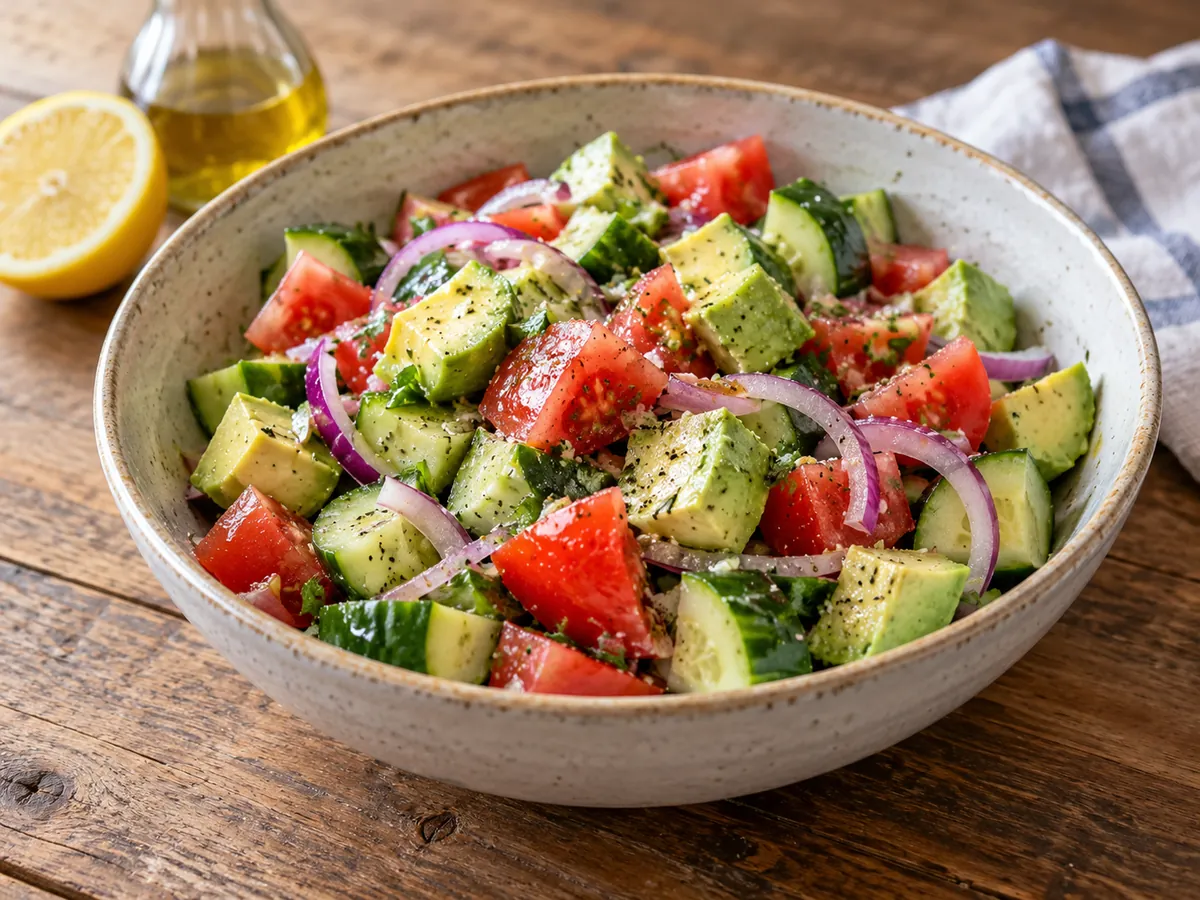
Ingredients
- 500g firm avocado flesh
- 350g ripe tomatoes
- 300 g cucumber
- 80g onions
- 30 ml of lemon juice, about one lemon
- 15 ml vegetable oil
- 2 g salt maximum, adjust as needed
- 1 g black pepper
Preparation
Wash and dry the tomatoes and cucumber. Prepare 350g of tomato and 300g of cucumber into edible parts. Peel the cucumber if its skin is too tough, then cut both vegetables into even pieces that are easy to scoop with a spoon.
Peel and finely slice the 80g of onion. Thin slices distribute better and avoid large, dominant pieces. Place the vegetables in a bowl large enough to lift them without crushing them, and keep them chilled if the rest of the dish needs to wait.
Squeeze the lemon and measure out about 30 ml of juice for a reproducible guideline. Mix in some of the 2 g of salt, the pepper, and the 15 ml of oil. Start with a light hand on the salt; you can adjust it after tasting a full bite.
Wash and dry the outside of the avocados before cutting them open. Remove the pits and skins, then weigh out 500g of firm flesh. Cut into fairly large cubes to retain their shape. Separate any damaged parts instead of hiding them in the mixture.
First, pour some of the dressing over the tomato, cucumber, and onion. Mix with two spoons, then stir in the avocado with the remaining dressing. Gently lift the pieces rather than beating the mixture; the goal is to coat the surfaces.
Taste a small amount of the mixture. Adjust the salt and, if necessary, the acidity with a small, measured amount of additional juice. A particularly watery tomato may yield more liquid; avoid automatically correcting this with more oil.
Divide into four portions, adding a little of the juices from the bottom of the bowl. Serve immediately, or cover and refrigerate until ready to eat. Use a clean serving spoon and keep any leftovers chilled rather than letting the bowl sit all evening.
Introduction
This salad combines avocado, tomato, cucumber, and onion in a simple lemon and oil dressing. The avocado should be ripe but firm enough to hold chunks; the cucumber adds crunch, and the tomato provides juice. The key is to prepare the vegetables before opening the avocado, then gently toss everything together to avoid turning it into a mush.
The recipe card is a contemporary creation by Alioune for the Congo-Brazzaville collection. It is not assigned a vernacular name or an exclusive traditional origin that would have been undocumented. It suggests a fresh appetizer or a side dish to accompany hot meals. The presence of avocado in a savory dish is a culinary choice; it cannot, on its own, summarize the eating habits of a country.
Cultural context
A salad has its place in a multi-course meal: its appeal lies in its freshness and the contrast it provides with sauces or grilled meats. The avocado already adds creaminess, allowing for a more subtle dressing. The recipe doesn't call for mayonnaise or cream; adding them changes the texture and nutritional value, rather than being an implicit, forgotten step in the process.
Vegetables and fruits are weighed according to the edible parts. Therefore, the 500g of avocado does not include the skin or pit. For no-cook preparations, the cleanliness of the cutting board, knife, and bowl is crucial from the start. Lemon enhances the flavor and partially slows browning; however, it does not disinfect the ingredients and does not allow the dish to be left out of the refrigerator for several hours.
Tips
A ripe but firm avocado cuts cleanly; a very soft fruit will give a texture closer to a cream.
Prepare the vegetables and seasoning before the avocado to limit the waiting time for its cut flesh to come into contact with the air.
Dry the ingredients after washing to avoid diluting the sauce with residual water.
Finely chop the onion; if you want a less pronounced flavor, reduce its quantity rather than masking the dish with sugar.
The weight of a whole lemon varies greatly; measuring its juice makes it easier to reproduce and calculate the seasoning.
Keep the pieces fairly large and incorporate the avocado last to preserve the contrast in textures.
This starter should not be left at room temperature for long. Refrigerate promptly and ideally consume on the day it is prepared.
Variations
A little parsley or spring onions can add flavor to the salad, so be sure to explicitly include them in the ingredients list. An oil-free version remains creamy thanks to the avocado but offers different nutritional benefits. Cooked shrimp or beans transform the salad into a different dish altogether: their quantity, storage, and potential allergens should be considered.
Accompaniments
Serve with fish, chicken, or legume patties. A portion of starchy food can complete the meal, depending on appetite. The salad already provides fat from the avocado; it's not always necessary to add a second creamy dressing.
Nutrition notes
Avocado provides lipids, fiber, and potassium; tomato and cucumber round out the vegetable content. Oil is included in the nutritional estimate. This salad remains relatively low in protein: its abundance of vegetables does not mean that it alone replaces all the elements of a meal.