Roasted peanuts
Roasted peanuts — Alioune’s home version for four servings. The ingredients and method below define this version; a documented local preparation is distinguished from a contemporary adaptation.
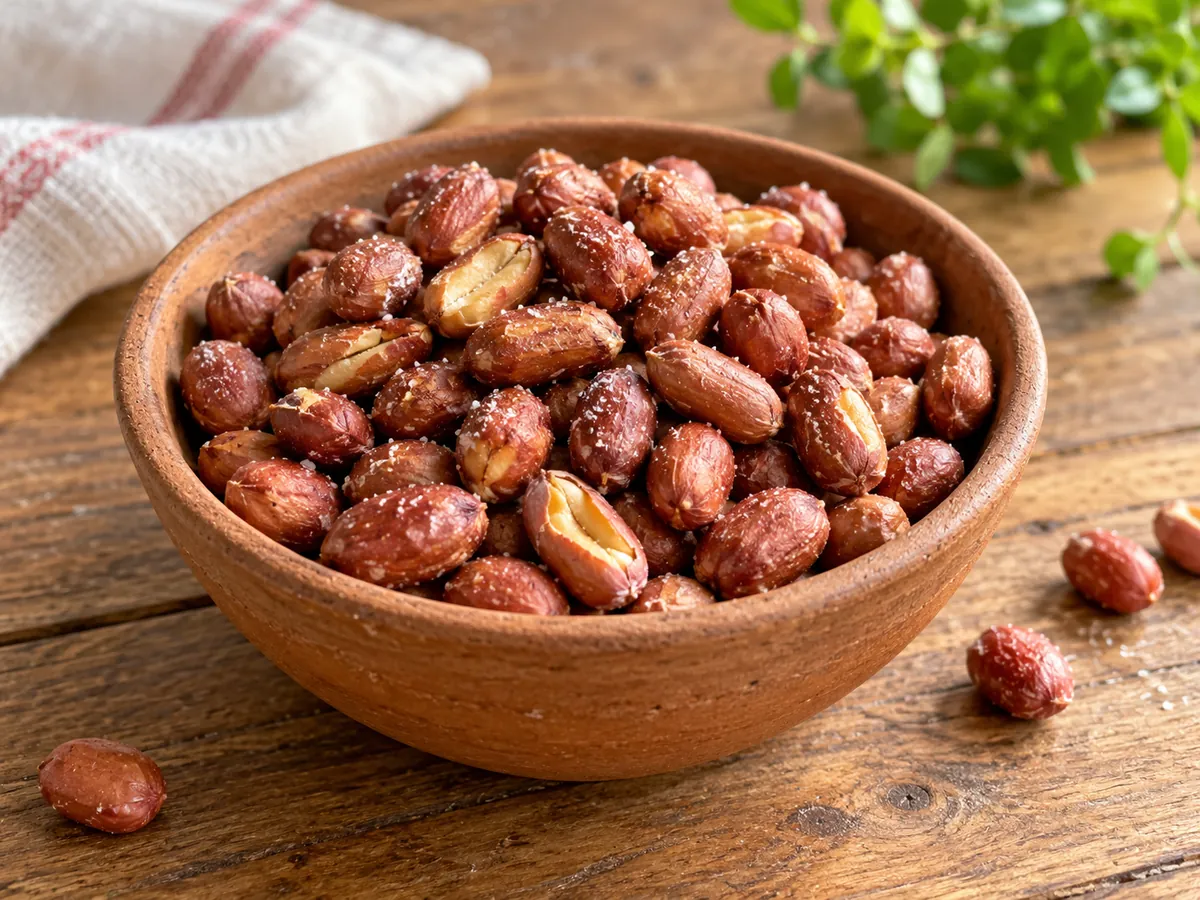
Ingredients
- 400 g shelled raw peanuts
- 2 g maximum salt, adjust to taste
- 15 ml drinking water
Preparation
Sort the 400g of raw, shelled peanuts onto a tray. Discard any damaged kernels and check their smell. Discard any batch showing signs of mold. Prepare a sufficiently large baking sheet and a spatula to stir the peanuts during roasting.
Preheat the oven to 160°C. Spread the peanuts in a single layer, without crowding them. The thin skins can remain if you like; removing them is not essential for roasting. Avoid mixing whole peanuts and lots of very small pieces in the same area.
Bake for approximately 18 to 25 minutes. Stir once after a few minutes, then again halfway through baking. Rotate the baking sheet if your oven is heating more on one side. Pay particular attention to the edges and any small seeds.
Scoop out a peanut with a spoon and let it cool before tasting it. Check the center: it should have lost its raw texture and have no bitter taste. The crunch also develops during cooling; it's not necessary to blacken the peanuts to make them firm.
Dissolve all or part of the 2g of salt in the 15ml of water. Pour over the hot peanuts and mix thoroughly to distribute this small amount. Keep your hands away from the baking sheet and use a spatula rather than touching the peanuts directly.
Return to the oven for about 3 minutes to dry the surface, keeping an eye on the color. Then remove the tray and spread the seeds again. If you choose a salt-free version, this salt water step is unnecessary; the product will remain plain.
Allow to cool completely in a thin layer before placing in a clean, dry container. Divide the batch according to the desired portions and indicate how many you will be serving. Do not close a container that still contains warm seeds: condensation will soften the product and lead to poor preservation.
Introduction
The roasted peanuts are prepared here in the oven, without added oil, then cooled before being stored. Roasting brings out their aroma and transforms their texture, but it must be done evenly: a surface that's already brown can hide a center that's still lightly roasted. The salt is dissolved in a small amount of water to distribute evenly, then a brief return to the oven removes this surface moisture.
This fact sheet describes a domestic technique from the Congo-Brazzaville collection, without presenting it as an exclusively national specialty. Peanuts are used in various African cuisines in the form of seeds, paste, or sauce. Roasted peanuts can be eaten in small portions or used as an ingredient in other dishes. These uses are related, but they do not make raw peanuts, roasted seeds, and commercially available sweet peanut paste interchangeable.
Cultural context
The peanut trade begins with selection and sorting. A healthy, properly stored product is more important than a very dark color intended to mask poor taste. A musty or rancid odor, or any visible spoilage, should lead to the product being rejected. Home cooking is not a method for salvaging a suspect batch or giving it a safety it did not initially possess.
When served, peanuts are energy-dense and best enjoyed in small quantities. The 400g on the label is for one batch; divided into four portions, it makes a substantial serving. For a snack, eight small portions, each half the labeled amount, are sufficient. If the peanuts are then used in a sauce, their nutritional value becomes part of that other recipe and should not be overlooked simply because they are used as a seasoning.
Tips
Choose peanuts from a reliable food supply chain; roasting does not restore damaged seeds.
A single layer promotes evenness. With a small tray, bake in two batches rather than significantly increasing the temperature.
Keep a close eye on the last few moments, as the seeds continue to heat up on the baking sheet even after being removed from the oven.
Taste only a cooled peanut: it allows you to judge the crunchiness and avoids unnecessary burning.
The amount of water is small and serves to distribute the salt; wetting the seeds heavily would require further drying.
Store in a dry container, away from heat and moisture, and prepare quantities appropriate to your consumption.
Clearly announce the peanut to guests; a small portion or removing the skin does not eliminate this allergen.
Variations
The plain version is prepared without salt and without the water used to dissolve it. A touch of spice can be added, in measured quantities, without transforming this variation into a named traditional specialty. Crushed seeds serve as a garnish; prolonged grinding results in a paste and completely changes its culinary use, even if the basic ingredient remains the same.
Accompaniments
Offer a small portion with a piece of fruit or an unsweetened beverage. Crushed peanuts can be added to a salad or sauce; simply indicate their presence and count the amount actually added. They don't automatically require a second source of fat to be enjoyable.
Nutrition notes
Peanuts provide plant-based protein, fats, and fiber, including magnesium. The absence of added oil does not make the portion low in fat. Nutritional values should be considered in relation to the actual portion consumed, rather than an indeterminate handful.