White rice with sounbareh
Known as kainda in Krio, sounbareh is used to flavour rice and leafy vegetables.
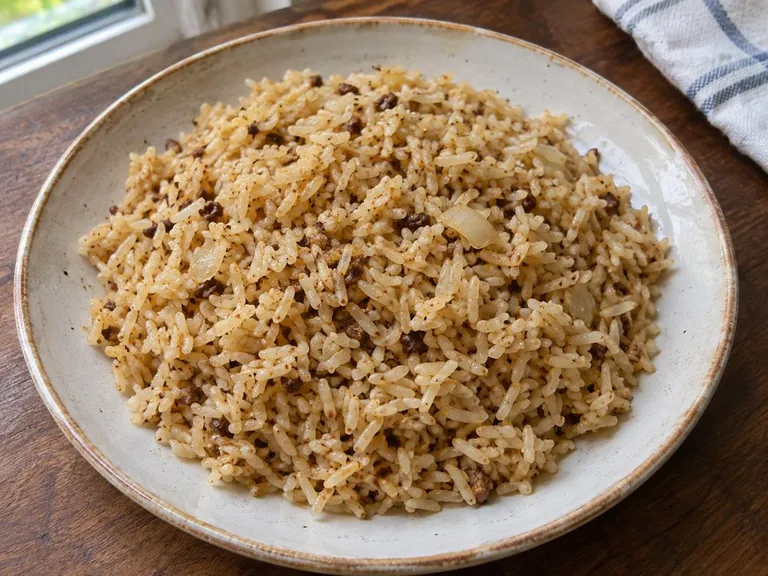
Ingredients
- 280 g white long-grain rice
- 500 ml water, adjusted to suit the rice
- 60 g onion
- 10 ml neutral oil
- 3–5 g food-grade sounbareh
- Salt to taste after cooking
Preparation
Rinse and drain the rice. Chop the onion very finely. Crumble the sounbareh with a spoon and dissolve 3 g in a little of the cooking water. Keep the remainder aside and adjust the amount in a future batch once you know how strong your product is.
Soften the onion in the oil for 4 minutes without browning it. Stir in the rice for a minute, then add the water and dissolved seasoning. Bring to a simmer, cover and cook on low heat according to the rice packet. Start checking after 15 minutes.
When there is no free liquid in the pot, turn off the heat and let the rice stand covered for 8 minutes. Fluff it with a fork and taste before salting. If the grains are still firm and the pot is dry, add 30 ml hot water and cook for a few minutes longer.
Serve with a leafy stew, aubergines or fish. Measuring the seasoning before dissolving it helps reproduce the flavour next time.
Cultural context
Known as kainda in Krio, sounbareh is used to flavour rice and leafy vegetables. Some versions combine fermented African locust beans with dried fish, chilli and salt. Check the ingredients of the product you buy.
Nutrition notes
Rice supplies most of the carbohydrates and oil supplies the added fat. The seasoning determines the amount of sodium and whether fish is present. The calculation assumes 4 g of seasoning and uses fermented African locust beans of the soumbala type as a reference. Check the product label for fish and salt.