Hot milk with toasted millet
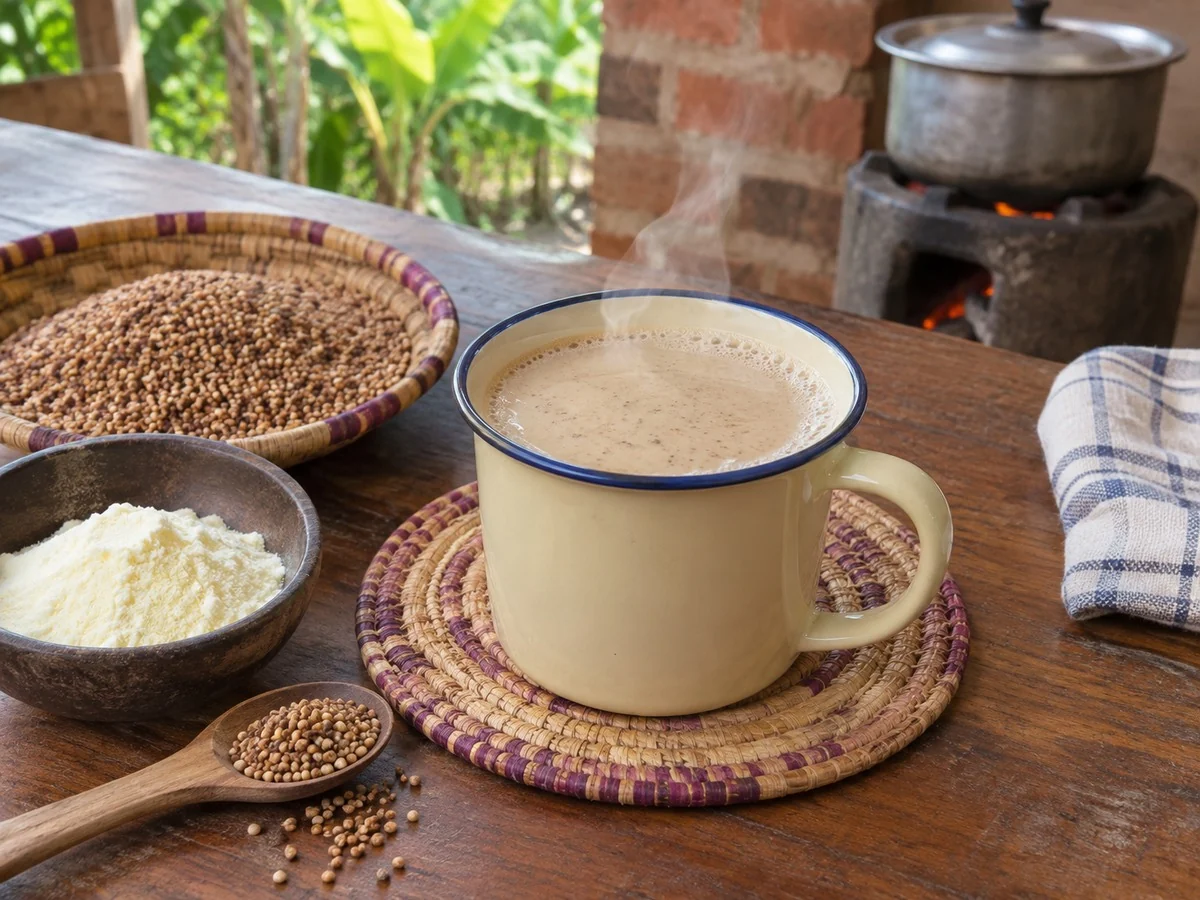
Hot milk with toasted millet is served in cups. Millet flour gives it a little body while leaving it thinner than porridge. Toast the flour dry to develop a roasted grain aroma. Once cooled, disperse it in cold water and stir it into warm milk. The recipe makes four cups. Sugar is optional. Taste after the cooked millet has flavoured the milk before deciding whether to sweeten it.
Ingredients
- 700 ml pasteurised milk
- 170 ml water
- 35 g millet flour
- ≤15 g sugar, optional
Preparation
Pour cold water into the bowl and whisk in the cooled toasted flour. Scrape the bowl and break up lumps. Keep the whisk handy to stir again just before pouring, as flour settles while the milk heats.
Warm the milk over medium-low heat until its surface starts to move, then lower the heat. Whisk the slurry again and pour in a thin stream. Stir until even, especially in corners where the flour can thicken first.
Cook gently while whisking or scraping the base with a spatula. Watch the edges as the milk simmers. Lower the heat if it rises. The drink should lightly coat a spoon and run off at once when tilted. Cool and taste a little to check texture and make sure it does not taste of dry flour.
Once the millet is cooked and still pourable, stir in optional sugar in stages. If the drink has thickened too much, add a little hot milk or water, stir and bring briefly back to a simmer. Serve warm enough to drink comfortably.
Introduction
Ingredients and equipment
Use 700 ml of pasteurised milk, 170 ml of cold drinking water, 35 g of edible millet flour and up to 15 g of sugar if desired. Have a small dry frying pan and plate, a heavy-based saucepan, bowl, whisk and four heatproof cups. Allow about ten minutes for preparation and eighteen for toasting, heating and cooking. Very cold milk or coarser flour can take longer. Use a tall saucepan because milk can rise quickly on a high heat.
Toasting the flour
Weigh the flour first. Spread a thin layer in the dry pan and keep the plate nearby. Heat gently, stirring right to the edges where the flour can colour faster. As soon as it develops a light toasted smell, tip it onto the plate to stop cooking. Aim for a light toast without brown specks. A heavy pan can stay hot enough to colour flour even off the heat. Let the flour cool before mixing.
To check colour, hold a pinch against the edge of the plate. Initial colour varies with the millet, so use smell too. If parts turn dark while others stay pale, lower the heat and stir more evenly next time. Very dark toast can dominate the milk.
Step-by-step preparation
1. Pour cold water into the bowl and whisk in the cooled toasted flour. Scrape the bowl and break up lumps. Keep the whisk handy to stir again just before pouring, as flour settles while the milk heats.
2. Warm the milk over medium-low heat until its surface starts to move, then lower the heat. Whisk the slurry again and pour in a thin stream. Stir until even, especially in corners where the flour can thicken first.
3. Cook gently while whisking or scraping the base with a spatula. Watch the edges as the milk simmers. Lower the heat if it rises. The drink should lightly coat a spoon and run off at once when tilted. Cool and taste a little to check texture and make sure it does not taste of dry flour.
4. Once the millet is cooked and still pourable, stir in optional sugar in stages. If the drink has thickened too much, add a little hot milk or water, stir and bring briefly back to a simmer. Serve warm enough to drink comfortably.
Adjusting the consistency
If it resembles porridge, check how much liquid evaporated. Loosen gradually and simmer more gently next time. A wide pan reduces faster. For two cups, choose a smaller pan where the whisk reaches the edges. Whisk out lumps gently and strain if needed. If the base scorches, leave the burnt layer behind and transfer only the part that still tastes pleasant.
Serving and nutrition
Divide into four cups. Milk contributes protein and calcium. Millet supplies carbohydrates, as does any added sugar. This drink contains milk. Quantities cover the drink alone. To reproduce portions, record flour quantity, milk type and final volume. Offer sugar separately for people who prefer different levels of sweetness. Stir before pouring the last cups if a little flour has settled.
Adjusting the toast and batch size
For half a batch, use a smaller pan so the flour does not spread into an almost invisible layer that colours too fast at the edges. For eight cups, toast in two batches then combine once cooled. Use a bowl wide enough to whisk without spilling. Check how the drink pours into the first cup. If it already seems thick while hot, loosen the saucepan before serving the rest. Add liquid in small spoonfuls to preserve the toasted flavour and taste before adding sugar. A texture adjustment alone does not call for more sweetness.
Cultural context
This home drink draws on two elements of the Ugandan collection, hot milk and millet flour used in porridges. The smaller amount of flour gives a texture you can drink from a cup without a spoon. Dry-toasting before cooking in milk also distinguishes it from plain millet porridge and sorghum porridge with milk. Fine flour keeps the drink even.
Nutrition notes
Estimated nutrition per serving. Before adjustment for cooking losses · Calcium 215 mg · Iron 0.7 mg · Potassium 290 mg · Vitamin A 76 µg RAE · Vitamin C 0.0 mg