Papaya and orange juice
This blended papaya and orange drink is thicker than squeezed orange juice. Papaya supplies pulp, while the orange juice helps the blades turn. Cold water adjusts the consistency according to ripeness. Add lime at the end. It can brighten sweet papaya, but taste it in the blended drink first. The recipe makes four small glasses. Stir before pouring because some pulp may settle.
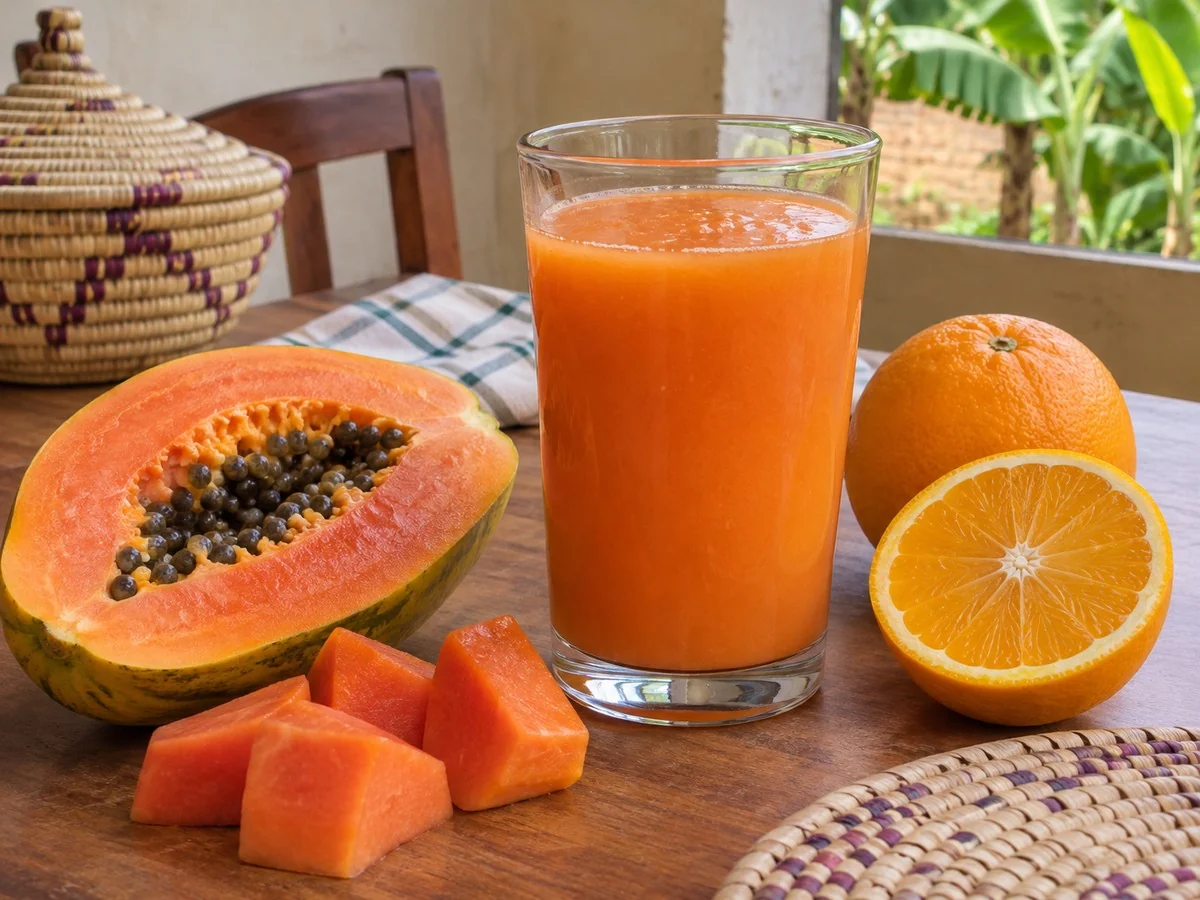
Ingredients
- 400 g papaya flesh
- 300 ml orange juice
- ≤180 ml water
- 15 ml lime juice
Preparation
Wash the outside of the papaya and citrus. Halve the papaya lengthwise and spoon out seeds. Peel and weigh the flesh. Dice small enough to move around the blades. If very soft, scoop it out and break up the largest pieces before adding.
Squeeze the oranges into the measuring jug. Remove any seeds and measure 300 ml. Squeeze lime separately and reserve it in a small dish so you can taste before adding it all.
Put orange juice in the blender, then add papaya. Close the lid and blend until there are no pieces. Start with fewer cubes in a small blender. Switch off before rearranging the fruit with a spatula. If the blades turn without catching the fruit, add some measured water or stir with the motor off.
Taste a spoonful and blend in some lime. If too thick, add cold water in stages, tasting after each addition since dilution also softens the orange flavour. The drink should pour while keeping some body. You may not need all the water.
Pour into the jug and let foam settle if it makes measuring difficult. Stir and divide among four glasses. Serve cold. If serving is delayed briefly, cover and refrigerate, then stir before pouring.
Introduction
Ingredients and equipment
Allow 400 g of ripe papaya flesh without skin or seeds, 300 ml of orange juice, up to 180 ml of cold drinking water and 15 ml of lime juice to taste. Weigh the papaya ready to blend. Squeeze orange juice fresh if desired. For bottled juice, choose one you know, since any added sugar changes the final sweetness. Use a clean board, knife, spoon, juicer, blender and measuring jug. Allow about fifteen minutes.
Choose a papaya that yields slightly to pressure. The flesh should be easy to cut with a spoon or knife. Put especially soft parts aside if difficult to handle. Have enough oranges for the measured volume, which depends on their size and juiciness. Squeeze and measure one at a time instead of estimating from their whole weight.
Step-by-step preparation
1. Wash the outside of the papaya and citrus. Halve the papaya lengthwise and spoon out seeds. Peel and weigh the flesh. Dice small enough to move around the blades. If very soft, scoop it out and break up the largest pieces before adding.
2. Squeeze the oranges into the measuring jug. Remove any seeds and measure 300 ml. Squeeze lime separately and reserve it in a small dish so you can taste before adding it all.
3. Put orange juice in the blender, then add papaya. Close the lid and blend until there are no pieces. Start with fewer cubes in a small blender. Switch off before rearranging the fruit with a spatula. If the blades turn without catching the fruit, add some measured water or stir with the motor off.
4. Taste a spoonful and blend in some lime. If too thick, add cold water in stages, tasting after each addition since dilution also softens the orange flavour. The drink should pour while keeping some body. You may not need all the water.
5. Pour into the jug and let foam settle if it makes measuring difficult. Stir and divide among four glasses. Serve cold. If serving is delayed briefly, cover and refrigerate, then stir before pouring.
Adjusting texture and acidity
With firm papaya, begin with orange juice alone and wait until the fruit is completely blended before checking thickness. Pieces often look firmer than their pulp turns out to be. Soft papaya may need no added water. Pour straight into the jug and adjust only lime. A few drops may be enough with tart oranges. If citrus dominates, add diced papaya rather than diluting the whole jug with water.
For smooth juice with pulp, blend just until the last pieces disappear. To strain, work in small quantities and check the volume collected. Use smaller glasses if the yield drops. Keep one unstrained portion to compare the textures.
Serving and nutrition
Pour a little into each glass, stir the jug and top them all up to divide the pulp evenly. Papaya and orange juice contain naturally occurring sugars. Water adds volume. To compare batches, record the amount of juice and water used and any pulp discarded. These affect fruit concentration per glass. Serve leftover lime separately for diners who like more acidity. Quantities cover the drink alone.
Adjusting the batch to the blender
For a double batch, divide the papaya by weight and measure orange juice into two containers so each batch starts with the same proportions. Combine before adding lime. It is easier to judge the acidity this way. Add water by degrees while stirring in the jug. If serving different glass sizes, measure the yield first so you do not need to over-dilute at the last minute.
Cultural context
The Mildmay Institute of Health Sciences collection includes mixed fruit drinks. This home blend of papaya and orange complements the Ugandan collection’s mango, passion fruit, pineapple and watermelon juices. Papaya gives body, orange loosens the texture and lime provides a final adjustment. The recipe keeps the blended pulp. Straining changes yield and mouthfeel and can help with particularly fibrous papaya.
Nutrition notes
Estimated nutrition per serving. Before adjustment for cooking losses · Calcium 34 mg · Iron 1.1 mg · Potassium 361 mg · Vitamin A 70 µg RAE · Vitamin C 86.4 mg